








After Cyclone Ditwah, Sri Lankans call for renegotiation of debt agreement
Civil society groups and activists are echoing a call from various segments of Sri Lankan society to renegotiate the agreement with the International Monetary Fund in light of the damage caused by climate change. The focus is on the Extended Fund Facility programme whose austerity measures are a further obstacle to economic revival. The demand is to put people first in restructuring the economy. Meanwhile, the number of people killed and affected by the cyclone continues to rise.
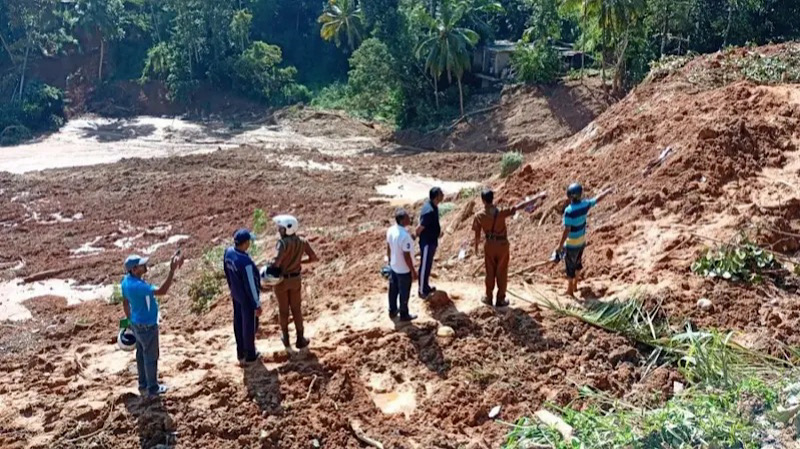
Colombo (AsiaNews) – Faced with the devastation caused by Cyclone Ditwah, the Law and Social Trust (LST) is urging the renegotiation of the agreement with the International Monetary Fund (IMF) on debt and climate, echoing a call from a broad spectrum of Sri Lankan society.
Amid a major emergency caused by Cyclone Ditwah, at least 38 non-governmental organisations and social movements working for the victims, along with 75 prominent environmentalists and activists, have signed a public plea to the Washington-based institution.
Meanwhile, the death toll stood at 644 on 15 December, with 183 still missing, and 1,344,898 people affected in various ways, for a total of 385,093 households.
The devastation wrecked by Ditwah reflects the impact of climate change on tropical countries like Sri Lanka, exacerbating the effects of the country’s economic crisis, characterised by a sovereign debt default of approximately US$ 35 billion in 2022.
While most Sri Lankans are grappling with severe austerity measures, including tax increases, benefit cuts, and reduced social security measures, the government is captive to the IMF's Extended Fund Facility programme.
The IMF's control of public spending not only limits the government's ability to respond to the ongoing humanitarian crisis, but also severely hinders investment in infrastructure, reviving livelihoods, and further adapting to climate change.
“Ditwah underscores systemic climate injustice. Sri Lanka contributes less than 0.08% to global fossil carbon emissions yet suffers intensifying climate impacts, including floods, droughts, and landslides,” reads the LST statement.
Unsustainable development projects and industrial monoculture crops have caused deforestation, soil degradation, and ecosystem destruction.
Decisions that led to the current situation, the group laments, have favoured “big capital and global markets over local communities and indigenous peoples' rights and are also responsible for Sri Lanka's disproportionate debt burden.”
“Debt-financed mega-infrastructure projects such as the highways, deep-sea ports, & energy parks have bypassed environmental safeguards, displaced people, destroyed their livelihoods, heightened vulnerabilities, and fueled human-elephant conflicts, leaving marginalised groups, especially peasant farmers, small-scale fishers, plantation workers and pastoralists trapped in cycles of economic and ecological harm," the LST plea highlights.
“More climate finance as grants, not loans, alongside reparations from high-emitting nations are also needed,” it adds. “IMF conditions perpetuate a debt-climate trap, hindering building resilience and eroding social protections amid 6.3 million facing food insecurity.”
From a debt and climate justice perspective, civil society groups, including social movements, trade unions, and rights groups, are calling for an independent, multi-level assessment of losses and damages (with representatives of affected communities and civil society).
In this regard, the statement emphasises, quantifying the impacts of Cyclone Ditwah is essential for compensation purposes.
Economic losses include housing, agriculture, other livelihoods, and infrastructure, while non-economic losses include disability-adjusted life years (DALYs) resulting from deaths/injuries, biodiversity degradation in Ramsar wetlands, and cultural/heritage erosion of marginalised communities.
The assessment uses ecosystem services, Human Rights-Based Approach (HRBA) metrics, and peer-reviewed standards, linking totals to debt relief compensation.
Civil society groups are also calling for immediate action on the debt crisis triggered by the 2022 default on US$ 35 billion in external obligations, including US$ 14.7 billion in high-interest international sovereign bonds.
The austerity measures under the IMF's Extended Fund Facility – which require a 2.3 per cent primary surplus by 2025 and gross financing requirements below 13 per cent of GDP from 2027 – have required the elimination of subsidies, privatisation, and restrictions on public spending.
Given the emergency, the initiative's promoters finally put forward several demands, including:
- an inclusive assessment of losses and damages led by affected communities with representatives of indigenous communities, small food producers, women, fishermen, plantation workers, civil society organisations, technical experts, and government agencies;
- an end to the freeze on energy subsidies, fuel prices, indirect tax increases, and cuts to social welfare;
- a restructuring of the IMF's EFF conditions, exempting losses and damages and climate investments from fiscal targets;
- rejection of currency devaluation, interest rate hikes, and public wage/employment caps that exacerbate disaster vulnerability;
- a restoration of sovereignty over the country’s economy by introducing control over the Central Bank of Sri Lanka;
- a guarantee that reconstruction programmes implemented after the cyclone include a strong component of citizens’ participation and consultation, along with monitoring by key independent state bodies;
and finally,
- restructuring the economy by placing the interests of small food producers, workers, women, children, and ecology at its core.

.png)










