Bangkok (AsiaNews) – Thailand's lower house of parliament, the House of Representatives, yesterday approved an amnesty law by a vote of 306 in favour, 141 against, and two abstentions, which would erase criminal liability for involvement in political events during the complex 20-year period from 1 January 2005 to 16 July 2025.
The proposed Act on Promoting a Peaceful Society was amended and approved on 30 June by the Senate, a non-elected body made-up of party-appointed members considered representative of society and its interests.
The measure affects a large number of people from different political, social, and ideological backgrounds, including royalist Yellow Shirts, as well as populist Red Shirts, a rural-based group led by then exiled former Prime Minister Thaksin Shinawatra and his family.
The Yellow Shirts blockaded Bangkok's airports in 2008, while the Red Shirts laid siege of downtown Bangkok in May 2010, which ended in a bloodbath following military intervention.
All of them, many of whom were key figures in parliamentary politics, as well as in often fierce street clashes, will be granted amnesty, allowing them to return to active politics but not a pardon for crimes resulting from civil lawsuits.
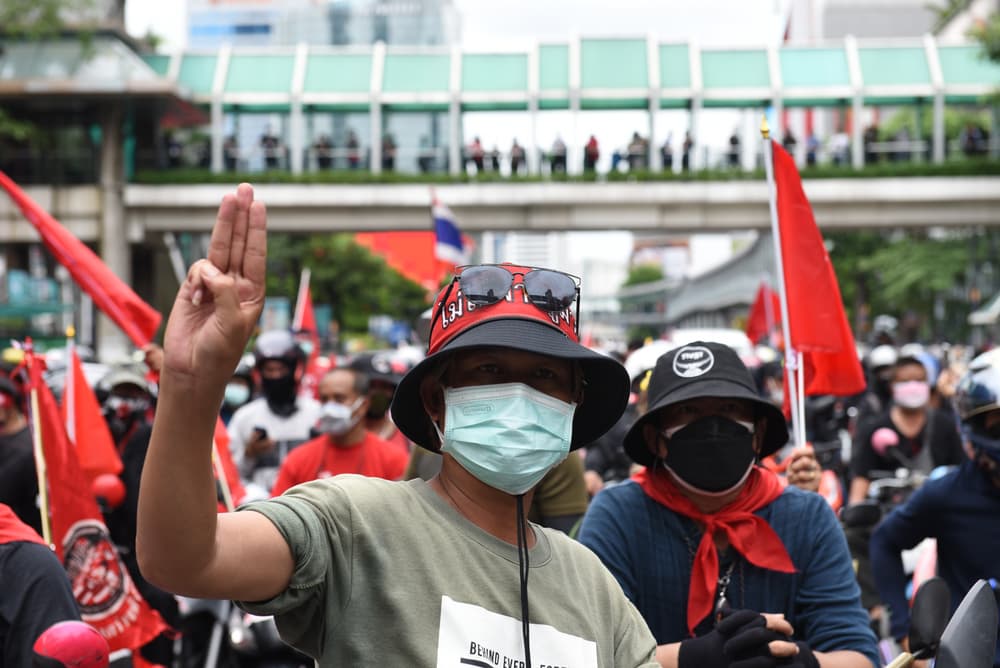
Overall, the bill approved yesterday affects several thousand young people involved in more recent events characterised by demands for greater openness and change.
According to Thai Lawyers for Human Rights, 1,997 people were prosecuted for taking part in unauthorised demonstrations or expressing political opinions at the height of the protest movement that began in July 2020 and continued into the following year.
Some 290 were charged with lèse-majesté under Section 112 of the Criminal Code, which was, once again, broadly applied, particularly against student leaders, by the government of former General Prayut Chan-ocha, from 2019 to 2023.
However, while many involved in the movement for change and democracy will be eligible for amnesty, the same will not be true for those charged with violating Section 112.
The latter provides for very severe penalties to prevent political manipulation or criticism of the royal family, to whom are associated aristocratic elites, the military, and some family-based economic groups, targeted by critics of the system.
It is significant that, in a delicate balancing act at a time that, in many respects, seems open to calls for greater participation and acceptance of issues previously ignored or repressed, the law does not provide for a pardon for people convicted of corruption, assault, or murder. Conversely, the bill would grant amnesty to those, including military and law enforcement, who cracked down violently on protesters.
This and other ambiguities undermine part of the proposed law's weight.
Many believe, like Olarn Thinbangtieo, a political scientist at the Faculty of Political Science and Law at Burapha University, that the most significant political issue now concerns young people prosecuted under Article 112, rather than previous conflicts.
“While political leaders are being granted an amnesty despite the divisions that affected the country for more than a decade, the actions of young people have had far less impact on the overall political structure. They deserve an opportunity to move on,” the political scientist explained.
“In many cases, their age, maturity and intentions did not cause lasting damage to the country. They have also learned important lessons from their experiences and have come to understand the realities of politics, including that the people and parties they placed their hopes in eventually left them behind,” he added.
Following yesterday's vote, the bill now needs royal assent from King Rama X and publication in the Royal Gazette.