








Amnesty refutes Cambodia’s claims, saying that online scam centres continue to expand
Illegal online activities are thriving in Cambodia despite a government crackdown. A report by the human rights organisation documents abuse, torture, and violence based on dozens of interviews with survivors, who, even when they manage to escape, are treated as irregular migrants, not victims of trafficking. Meanwhile, the government continues to issue new licences to casinos linked to these centres.
Phnom Penh (AsiaNews) - Winta (not her real name) was 16 when she was trafficked for the first time in 2018, after her mother's death in East Africa. A man had promised her a job on a cruise ship.
Instead of employment, she found herself travelling through Sri Lanka, Myanmar, and Laos, until she was sold and ended up in one of Cambodia's many scam centres, which, despite government claims, continue to thrive and proliferate.
Seven years later, in early 2026, Winta, who endured torture, was eventually released along with other online scam slaves.
Her story is detailed in Amnesty International's latest report on scam centres, compounds, and sometimes small towns, where people are lured with fake promises of work and then held against their will and forced to generate earnings online through various types of scams.
The report, Falling Through the Cracks, highlights how the initiatives of the government led by Prime Minister Hun Manet have achieved far less than expected, while making things worse for the people trafficked to Cambodia (and elsewhere in Southeast Asia).
After they are freed, victims often find no help and end up returning to work in the compounds, often run by businessmen with dual Chinese and Cambodian nationality.
In July 2025, Prime Minister Hun Manet signed a nine-point order launching a "campaign to combat online scams.” The Cambodian government, still effectively run by the prime minister's father, Hun Sen, who now heads the Senate, ordered provincial authorities, law enforcement agencies, courts, and the Commercial Gambling Management Commission of Cambodia (CGMC) to crack down on online scam centres.
Since then, the authorities announced the closure of more than 250 scam centres, opened criminal cases against 1,089 individuals, and deported 13,039 foreign nationals involved in online fraud.
In February of this year, the Ministry of the Interior launched a nationwide campaign called Operation XXL, promising to eliminate the compounds by April.
Although, “The problem of online scams has fallen to just 50%," said Minister Chhay Sinarith, no evidence has been provided to support that claim; on the contrary, the Amnesty report debunks the government's assertions and paints a radically different picture.
Based on visits to 75 identified compounds and interviews with 73 survivors, the human rights organisation found that the government took action only against 24 centres, just one in four.
In at least three, abuses continued even after the police operations, while the online scam business continued to expand despite the much-vaunted crackdown.
Amnesty, in fact, after identifying 53 compounds in June last year, confirmed the existence of another 33, bringing the total number of known facilities to 86. However, experts say the real number is most likely higher.
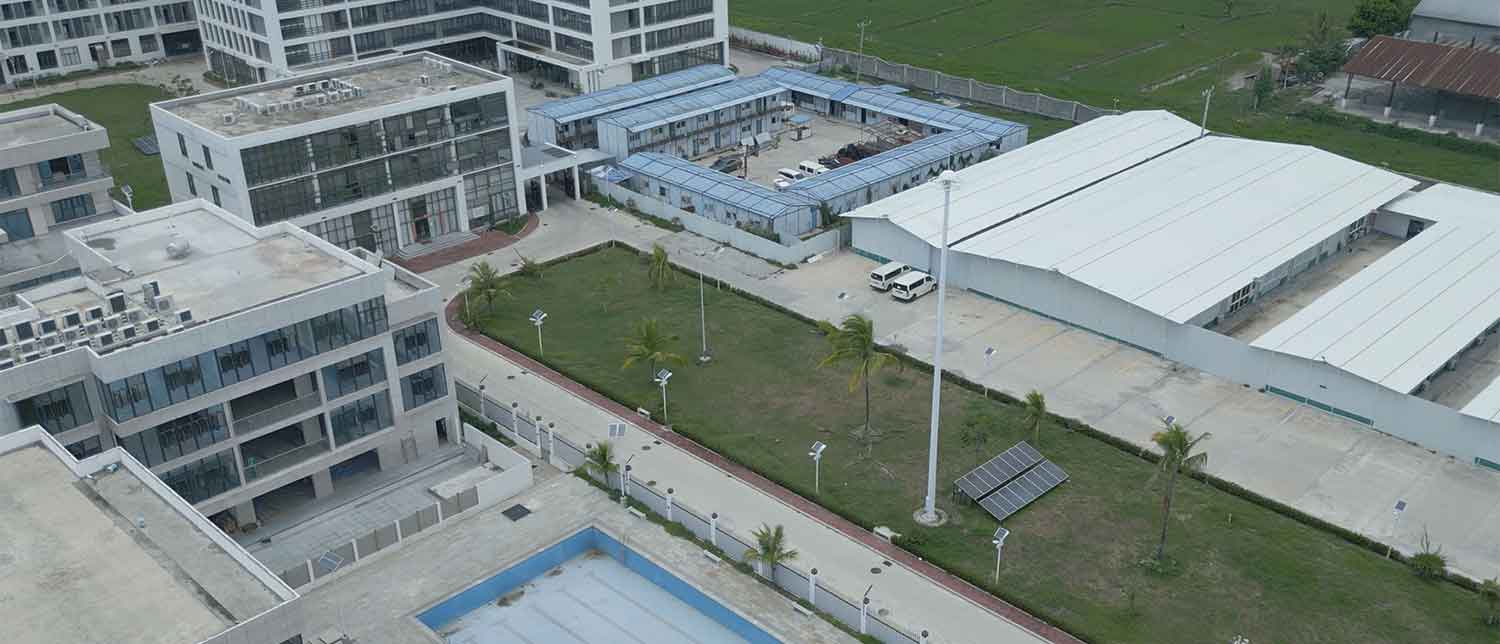
Scam centres are located in remote areas, often protected by forest, or are camouflaged in cities like casinos or restaurants, the only difference being the presence of guards outside.
The new sites are concentrated along the borders, particularly in the provinces of Svay Rieng, Banteay Meanchey, Tbong Khmum, Prey Veng, and Mondulkiri, Amnesty explains in its report.
The structure of these compounds, the advocacy group notes, is like that of a prison: barbed wire fences, barred windows, video surveillance, guards armed with rifles or electric batons, and double gates.
All 73 survivors whose interview accounts are included in the report described being recruited through deception, then locked up and threatened with violence or torture if they refused to participate in online scams.
All meet the international legal definition of human trafficking victims, but none have been recognised as such by the Cambodian authorities.
Abuses and human rights violations have long been systematically perpetrated within scam centres, including beatings, electric shocks, and solitary confinement.
Six women reported being raped by those described as the site’s managers, even though they are often not actually at the top of the online scam business hierarchy.
A Brazilian survivor said she was raped after being offered as a "reward for good work" to other scam slaves. A 20-year-old woman from Uganda reported multiple rapes by a Chinese boss and then forced to take abortion pills. A friend of hers in the same compound, also a rape victim, was found in a bed covered in blood.
One fact makes it clearer that the Cambodian government's intention to get rid of online scam centres is merely a cover-up.
In December and January (at the height of the crackdown), the CGMC approved licenses for 16 casinos directly linked to scam centres whose existence was already known. These include Crown Casinos in Poipet, Bavet, and Chrey Thum, as well as the Majestic Hotel & Casino in Sihanoukville (whose former president was arrested in January 2026 for illegal recruitment, fraud, and money laundering).
Amnesty International found practices of human trafficking, forced labour, torture, and rape in nine other complexes, none of which saw their licences revoked as of the date of the report’s publication.
One of the most emblematic cases concerns the compound on Mount Bokor, Kampot province, where three structures (named KA01, KA03, and KA04) were built on land granted in 2011 to Sokha Hotel, a private company also awarded a licence for the Thansur Bokor casino in 2022.
Although police had already intervened in 2023, compound KA03 was still active in November 2025, three months after a highly publicised raid following the death of a South Korean, allegedly killed after being tortured.
The survival of scam centres is ensured by collusion between the operators of online scam centres and Cambodian police.
Some survivors said that centre managers were notified of police raids ahead of time. In other cases, victims were moved from one compound just before checks were made.
A Moroccan man who went to the police after managing to escape described how the officer accompanied him back to the compound to retrieve his passport and then demanded his watch and all his money as compensation, claiming that "the police are poorly paid" in Cambodia.
Four Thai victims were arrested by police in the city of Poipet during their transfer between compounds. They were held in cells overnight and offered to pay a bribe or "call your employer at the compound" and return to work.
When survivors do manage to leave the compounds, they encounter a system that treats them as irregular migrants rather than victims of trafficking. None of the 73 survivors interviewed by Amnesty received assistance from Cambodia.
Many were taken to immigration detention centres, without access to legal counsel nor their embassies; in some cases, they were subjected to violence from other detainees.
In at least five cases, police threatened survivors with arrest or return to the compounds.
The Cambodian government even converted a former scam compound with heavy security into a detention centre to handle the influx of released people. Amnesty warns that such a decision risks reviving victims’ trauma, since they find themselves again in a facility like the one they fled.
The problem is exacerbated by the progressive dismantling of international anti-trafficking funding. Cuts to USAID in 2025 have decimated NGOs active in Cambodia.
At the time of the report's publication, there was only one shelter for victims of scam compounds in the country, with a capacity of just 100 people.
Alongside with its crackdown on compounds, the government cracked down on people who tried to document police operations. During the campaign, for example, four journalists were arrested.
Reporter Mech Dara, Cambodia’s leading investigative journalist on scam centres, was detained in February 2026 by military police and forced to delete photographs taken near two compounds.
Another journalist was arrested in Poipet after publishing news about a local compound; two others were held after reporting that one of the centres was still operational.
The Voice of Democracy, which had published more than a hundred articles on the centres, was forced to shut down in 2023 by order of then-Prime Minister Hun Sen.

.png)
05/07/2024 19:21










