








Asian teams at the most politicised World Cup in history
From the FIFA Peace Prize to Trump to short-term visas for Iranian players, the 2026 edition will be the biggest with 48 teams and 104 matches, but also very controversial. Nine Asian teams will take part, with two newcomers: Jordan and Uzbekistan. The hopes of a continent rest with South Korea and Japan. Despite billions invested in football, China failed to qualify.
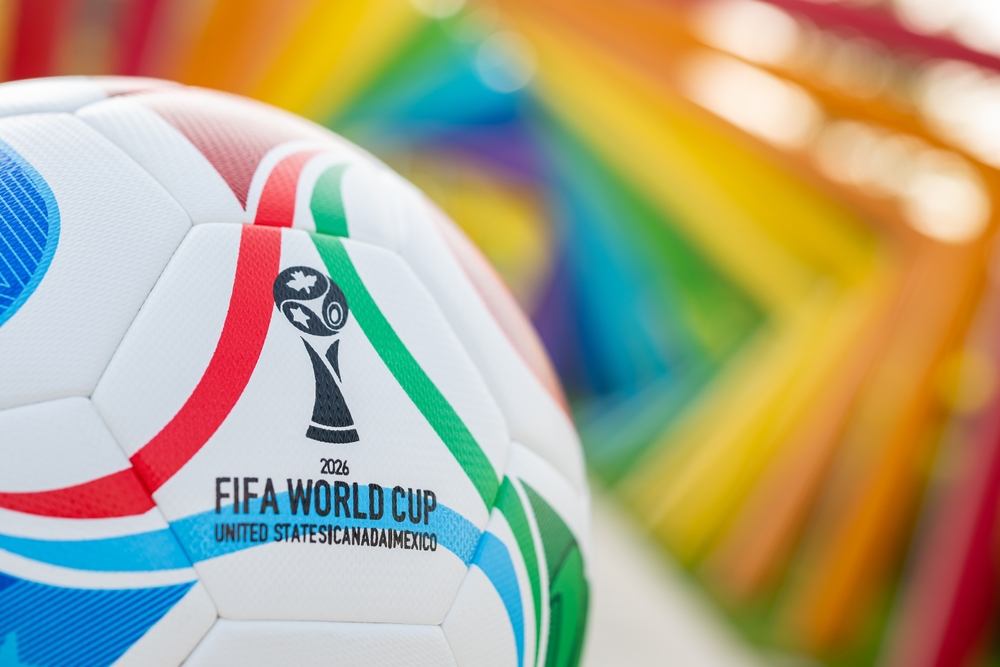
Milan (AsiaNews) – The 2026 World Cup in the United States, Canada and Mexico was to be "the most inclusive" ever according to its organisers, starting with Switzerland's Gianni Infantino, president of the Fédération Internationale de Football Association (FIFA),[*] the sports’ self-regulatory governing body.
Instead, Iranian players will be allowed into the US on short visas valid only for the day of their matches; Iraqi footballers were stopped at customs for meticulous checks; while the Uzbek team was subjected to intensive, tarmac-level security screenings, as if its members were potential terrorists set to carry out an attack.
At the same time, Mr Infantino, the godfather of the most popular sport in the world, invented a FIFA Peace Prize for the president of the United States, Donald Trump, as the host of the tournament.
Overall, a few hours from the opening kick off at 1 pm Mexico City time (7 pm GMT) pitting Mexico against South Africa, the competition has become a nightmare for some Asian teams, subjected to abuse and repression that defeat the premises of the sporting event.
Several firsts
This edition will have the most teams, 48 against 32 at the last edition, including three host countries. It will also have a record number Asian teams, nine: Iran, Japan, Uzbekistan, South Korea, Jordan, Qatar, Saudi Arabia, Iraq and Turkey (however, the latter’s domestic teams play in Europe).
Two of these, Jordan and Uzbekistan (along with Cape Verde and Curaçao), will make their debut.
“[T]he World Cup is becoming more inclusive and giving more countries the opportunity to participate,” said Ronojoy Sen, a senior research fellow at the Institute of South Asian Studies at the South Asian Studies Programme, National University of Singapore.
The larger number of Asian teams “also underlines the importance of Asia in global politics,” he explained. “While that might mean a dilution of quality and a longer tournament, it does showcase a greater diversity.”
Two big news for the 2026 edition, the 23rd: the coach of Uzbekistan’s team is Italian world champion Fabio Cannavaro. Currently ranked 50th, the Central Asian country’s only star, Abdukodir Khusanov, plays as a defender for Manchester City in the English Premier League.
Another first is Jordan, 63rd in the FIFA ranking, with no famous player. Known as Al Nashama (The brave), the team is led by former Moroccan player Jamal Sellami.
Although not boasting a great football tradition, Jordan has managed to establish itself in high-level tournaments, taking second place in the 2023 AFC Asian Cup, losing in the final to Qatar, which hosted the last edition of the World Cup in 2022.
In football lore, two of Asia’s best-known teams are the "Reds" of South Korea and the "Samurai Blue" of Japan; both should pass the group stage but are not likely to make it to the final round and victory.
In Qatar 2022, Japan beat Germany and Spain in the group stage, before losing in the knockout stage against Croatia. Still vivid in people’s memory is the sight of Japanese fans trying to clean up the stands of the stadiums after matches.
With the most participations (12), the South Korean team reached the semi-finals in 2002 in a tournament organised jointly with Japan, but its star seems to have faded in recent years.
The football war
In spite of the record number of participants and the complexity of a show that will last 39 days (11 June–19 July) with 104 matches and controversy over ticket prices, the main issue of this cup is the war launched by the United States (and Israel) against Iran, both of which will be represented on the pitch.
In an editorial dedicated to the World Cup, described as "chaotic and controversial", Singapore-based The Straits Times highlights how "war, suffering" have dominated the headlines in the weeks leading up to the tournament, affected less by "football fever" than by the political crisis between Iran and the United States (host to 78 of the 104 matches) and the host country’s rigid entry policy.
The editorial notes that this “is the first time in history that a host has been in a military conflict with a participating nation directly before the tournament.”
The World Cup has not been immune from problems and criticisms in the past. In 2022 in Qatar, the “beautiful game” was marred by accusations against the host country over alleged widespread migrant labour abuses, including deaths, in stadium construction; previously, controversy surrounded Russia 2018 because of Moscow’s annexation of Crimea, despite western opposition, four years earlier, as well as allegations of state doping at the 2014 Winter Olympics.
Terrence Burns, a leading sports consultant who took part in 15 Olympic and two FIFA World Cup bids, said that the 2026 edition is "unique" because of the current geopolitical landscape.
“I worked on that bid (2018) and the current state of the world was unimaginable when we won,” he said. “Most World Cup editions carry one or two political subplots. This one carries half a dozen and the US’ geopolitical posture is itself one of them.”
The political issues associated with the event include the presence of Immigration and Customs Enforcement (ICE) agents at sporting venues and border controls, seen by some observers and players, as a violation of human rights.
For the Rajaratnam School of International Studies, “In terms of perception, entry into the United States, for certain nationalities, has become unpredictable, intimidating, if you wish, just simply because of US immigration policy, the presence of ICE. So it may depend on what airport you enter at in the United States, what passport you carry. So in that sense, it remains to be seen.”
According to a joint FIFA-World Trade Organisation (WTO), the event should add US$ 41 billion to global GDP, creating more than 800,000 jobs, 185,000 in the United States.
Beneficiaries include airlines, food and beverage companies, sportswear, broadcasting and social media companies, according to the Bank of America.
China, the missing giant
Asia also saw one of the biggest sporting disappointments, with China’s failure to qualify. Over the past few years, Beijing has poured billions into football, a key pillar for global leadership according to Chinese President Xi Jinping.
This time, the members of the national team will attend the competition as spectators, an obvious blow to the world's second-largest economy.
In the past, President XI had famously expressed “three wishes” vis-à-vis football, namely participating in the tournament, hosting it and winning it.
In April 2016, the Chinese Football Association issued a landmark blueprint for global dominance by mid-century. This includes building 70,000 football fields across the country and recruiting 30 million school children to play the game by 2020. But after 10 years, the results are far from the targets set, with the national team sliding from 82nd place in 2016 to the current 94th out of 211.
China failed to qualify for this edition because of a heartbreaking defeat against Indonesia. Its single participation goes back to 2002 in Korea-Japan, when it was knocked out in the group stage without scoring a single goal.
Between 2015 and 2017, Chinese Super League (CSL) clubs spent US$ 1.12 billion buying players, accumulating a net deficit of over US$ 818 million according to Transfermarkt data.
In early 2016, the domestic transfer record was broken four times in a single month with the arrival of football stars like Oscar, Paulinho, Carlos Tévez and Hulk.
The real estate market has been closely linked to professional football. In 2018, the owners of all 16 top clubs had interests in the sector. However, super-investments and crazy spending were not made to last, and quickly turned into a bubble that burst.
Still, there are also some encouraging signs for Chinese football, less from billion-dollar deals than more judicious decisions. Last January, China in fact reached the final of the AFC Under-23 Asian Cup for the first time, losing only to Japan, a continental powerhouse.
Over the past the number of amateur players has nearly doubled, with young people showing renewed interest in the sport.
If this World Cup remains an “American dream”, the future of Chinese soccer has shifted perspective: no longer from the top down, but from the ground up to reach new heights.
[*] 'International Association Football Federation.

.png)










