








Baskin: From Beirut to Tehran, Netanyahu's wars are leading Israel to 'self-destruction'
The Israeli activist, a participant in the Gaza peace talks, slams the leadership of a “desperate” prime minister who, beyond the never-ending war, has “no successes to present on any front." The country, which will go to the polls in October, is at a “turning point”. The humanitarian situation in Gaza is still "terrible," while talks continue for a diplomatic solution.
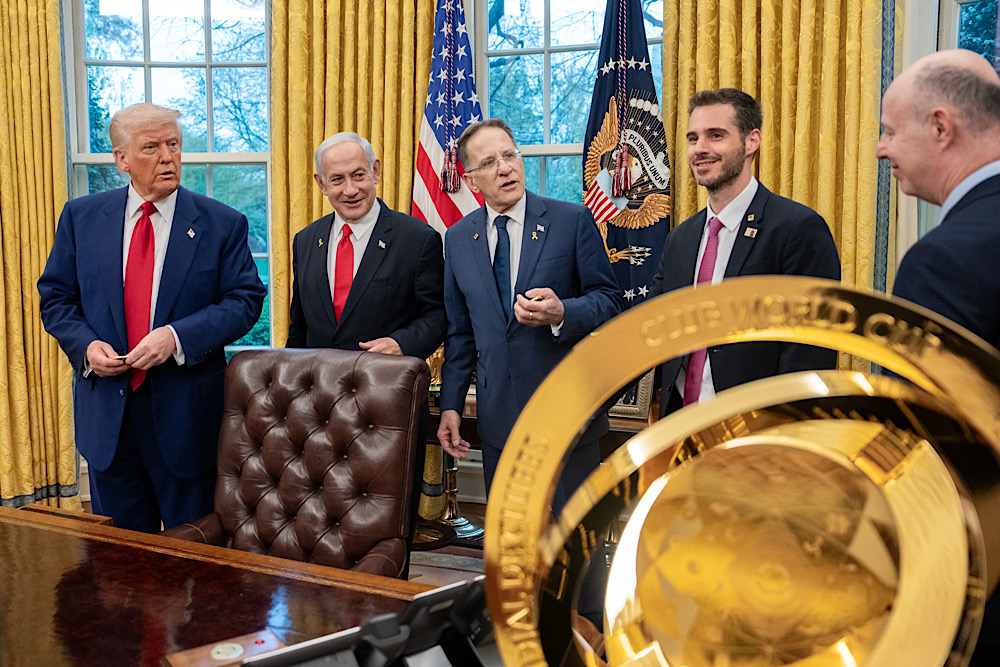
Jerusalem (AsiaNews) – So far, Israeli Prime Minister Benjamin Netanyahu has had “no successes to present on any front”, neither in Gaza nor with Iran, which is why he persists in attacking Lebanon, trying to please the Israeli “public”, but Hezbollah cannot be defeated by bombing Beirut, this according to Gershon Baskin, an Israeli political activist and leading expert on the conflict and an active participant in talks between Israel (and the United States) and Hamas for peace in Gaza.
He spoke to AsiaNews about the escalation in the Middle East, with the Jewish state striking on multiple fronts. Israel, in his view, is facing "a turning point” ahead of the elections in October. “If Israel re-elects Netanyahu and his government, then in my mind Israel is without hope.” Instead, “The only chance is if Israel elects a different government. And then possibilities for bringing Israel back to its senses exist. Right now Israel is on a course of self-destruction.”
Baskin, who writes for the Jerusalem Post, is the founder of the Israel Palestine Creative Regional Initiative (IPCRI), and a leading expert on the Israeli-Palestinian conflict, and has worked to secure an agreement between Israel and Hamas. He played a key role in the release of Gilad Shalit, an Israeli soldier held by the Hamas for nearly five and a half years, and was a member of the Israeli-Palestinian delegation that met with Pope Francis in October 2024. He has closely followed the development of negotiations, working to open and maintain active channels of dialogue, especially with the United States and the Palestinians, in despite an Israeli leadership long bent on war.
Below is Gershon Baskin's full interview with AsiaNews:
The Israel-Lebanese front is front-page news, with Israel that continues to attack. Why has Netanyahu chosen to intervene so aggressively in Lebanon while the US and Lebanon are seeking a diplomatic solution backed by US President Donald Trump?
Netanyahu has no successes to present on any front. Not in Lebanon, not in Iran and not in Gaza. And we're heading to elections. Netanyahu needs to have some achievements at least to show that he's fighting. Because that's what the public wants. The majority of the public believes that to Israel's security problems is for it to use more force. This is part of the Israeli dialogue, the Israeli narrative, which, of course, is fostered by Netanyahu and the right-wing in Israel.
Is the government trying to settle scores with Hezbollah or is it trying to scores with Israelis ahead of the upcoming election?
Of course. Israel, everyone knows that Israel can't bring about the disarmament of Hezbollah by bombing Beirut. That’s not going to happen. The only way possibly to disarm Hezbollah is for the military to conquer all of Lebanon. And no one's going to do that.
There is a precedent, the wars in the 1980s, but one that is not favourable. What path can be followed?
The only way to deal with Hezbollah in reality is through an agreement between Israel and Lebanon and the United States and France and the European Union and the Arab countries, especially the Saudis. That's the way to move forward. Because for the first time in history, the government of Lebanon, the president, the prime minister, and even within the Shiite community, they're sick and tired of Hezbollah. They don't want Hezbollah to control them anymore. A political agreement is what's necessary, but Netanyahu will never do that because that's against what he believes in.
What can happen at a time when things are getting even more tragic?
What Netanyahu's going to try to do now is to challenge the dictate of Trump. Because right now Israel is a state under the control of the United States of America. And this goes against what Netanyahu wants to show his own base. He wants to show that he's strong and independent and that he does not take orders from Trump. But he can't do that. He doesn't have the freedom to do that. And he will give in to Trump's pressure because he has no choice.
How would you describe the relationship between Trump and Netanyahu, as well as the US and Israel nowadays?
The relation between the US and Israel is the relation between Trump and Netanyahu. That's what it comes down to. It's true that the army has high-level contact and cooperation with the US Army. But the US Army is under the direct orders of the president. So what Trump dictates is the reality of the relationship. Israel is in danger in the United States like it is around the world. Israel is losing support of the entire international community, except for a few countries where Israel is still strong. But a majority of Americans are turning against Israel. And Trump sees that also.
Netanyahu seems sometimes not to pay attention to what Trump says. We saw that recently with Iran and Lebanon.
Netanyahu is fighting a battle for his political survival, to stay out of jail. He's desperate. And he will test the boundaries with Trump. There are people who say that Israel could not have bombed Iran without an agreement from the US side. I believe that. But after they did three rounds of bombing in one day, Trump said that's it, enough.
You worked a lot trying to end the war and for peace and reconstruction in Gaza. What is the situation in the Palestinian enclave?
What I understand, as of last week; this week might be different. I'm trying to find out. From conversations I had with Americans who were involved in the peace plan, the Americans decided that the negotiations with Hamas are finished. Now, that might be changed because there are reports that negotiations are continuing, but I don't know if the Americans are involved. The mediators, Egypt, initiated it, and Hamas is in Cairo now. I'm not sure who they're talking to. I'm not sure if the American delegation is there or not. I don't know. But as of last week, the American plan was that they're moving ahead now with a plan without Hamas. And the idea is that the National Committee for the Administration of Gaza, in fact, will go into the green zone, the part of Gaza controlled by Israel. They will begin a vetting process of moving two million Palestinians out of the yellow zone into the green zone, where the economic activity will begin with reconstruction, temporary housing, infrastructure. The new Palestinian government, the new Palestinian police force, and the international stabilisation organisation force will be located in the green zone. And as that happens, the US will pressure Israel to withdraw, gradually, from the green zone. This is the plan as of last week. Again, everything could be changing now if Hamas agrees to the disarmament plan, which they didn't agree to until last week. Things could change.
Is a peace plan in Gaza possible without Hamas?
The American plan, what they told me, is that the only people who will remain in the yellow zone are Hamas and other militants. And then, as he said, we know how to deal with them, then. Their idea is to move everyone out of this yellow zone, and maybe that's why they agreed that Israel will take another 10 percent to make the zone smaller, and all the development and all the humanitarian aid will go into the green zone.
How is the humanitarian situation on the ground?
The humanitarian situation is terrible, and it's not going to improve as long as Hamas is running the show in the yellow zone. It can improve greatly if the Americans move forward with this plan to move people into the green zone.
Israel is fighting on multiple fronts, internally and externally; just think of the daily violence in the West Bank. What impact will this have on the upcoming election.
Negatively. As long as Netanyahu's government is in power, and Netanyahu is the prime minister, things here are going to be very bad. And I believe that Netanyahu will try to start an active war a few weeks before the elections in order to postpone the elections. In any one of the fronts.
How would you describe Israel today?
Israel today is a country at a turning point. If Israel re-elects Netanyahu and his government, then in my mind Israel is without hope. It's a country without hope. The only chance is if Israel elects a different government. And then possibilities for bringing Israel back to its senses exist. Right now, Israel is on a course of self-destruction.
Radical, right-wing ministers like Ben-Gvir and Smotrich seem to dominate internal policies and politics. Will they dominate the country’s politics int the future? Do they have great support in the country?
No, they don't. In the polls, Ben-Gvir gets about eight seats, and Smotrich is at the borderline of the threshold. Whether or not he crosses the threshold is in question. They have power because they have a plan. Netanyahu can't say no to them, because if they leave the government, his government falls. And he doesn't want that to happen. As we move closer to elections, it becomes less relevant. Soon, the Knesset is going to decide on the date of new elections. And then the government can't do anything dramatic. I mean, it's a government in transition. But still, these two guys have power because they have a plan, and no one else does.
But it's important to note also that Europe is impotent. Europe decides that Ben-Gvir and Smotrich are not allowed in Italy. Big deal. Who cares? They have no plans of going to Italy. They have no plans of travelling to Europe. What are you putting sanctions on two people where the sanctions need to be put on the settlements or on the Israeli government in total? Not on Ben-Gvir and Smotrich. It's a stupid policy.
What should Europe and European countries do to counter this government’s pro-occupation policies and growing settlements on Palestinian land?
Well, the first thing they should do is cancel the association agreement with Israel. Make it conditional. As long as Israel continues its policies of settlement and doesn't deal with the violent settlers, the association agreement between the European Union and the State of Israel should be frozen. Israel should not enjoy a free trade agreement with Europe while Israel is in gross violation of international law.
Still trade and the arms sales continue undisturbed.
Arms trade has increased over the last year between Europe and Israel.
Finally, is there a credible alternative to this government, to this leadership. Is there someone who can point the way?
Yeah, there is another way. Any one of the candidates would be better than Netanyahu, but that alone is not itself. There's two years and eight and a half months of President Trump left in office. This is our opportunity for a change. President Trump did go down the road of saying this Middle East conflict needs to end. The core of the conflict is the Israeli-Palestinian conflict. The road to a Palestinian state needs to be now. And it's in the power of Trump to make it happen. But he can't do it with Netanyahu in power. It has to be after elections in Israel. And the European Union, the Arab countries and the United States have to force the Palestinians to hold elections. One year ago today, President Abbas, in his letter to Macron and Mohamed bin Salman, promised elections for president and parliament in Palestine. He needs to be forced to conduct those elections. The Palestinians need agency. They need new leaders too. We're going to have a very different Knesset after elections.
(Photo Credit: White House)

.png)
07/05/2025 23:19










