








Bihar: hundreds of weddings ‘on hold’ due to the Gulf War
Over 400 soon-to-be-weds, migrant workers in various countries across the region, are unable to return home and tie the knot due to the suspension of flights. Families are in despair, having completed their preparations yet facing an uncertain future. Some are considering video calls for an ‘alternative’ ceremony, but weddings are not merely a personal choice but community events woven into the social and economic fabric.
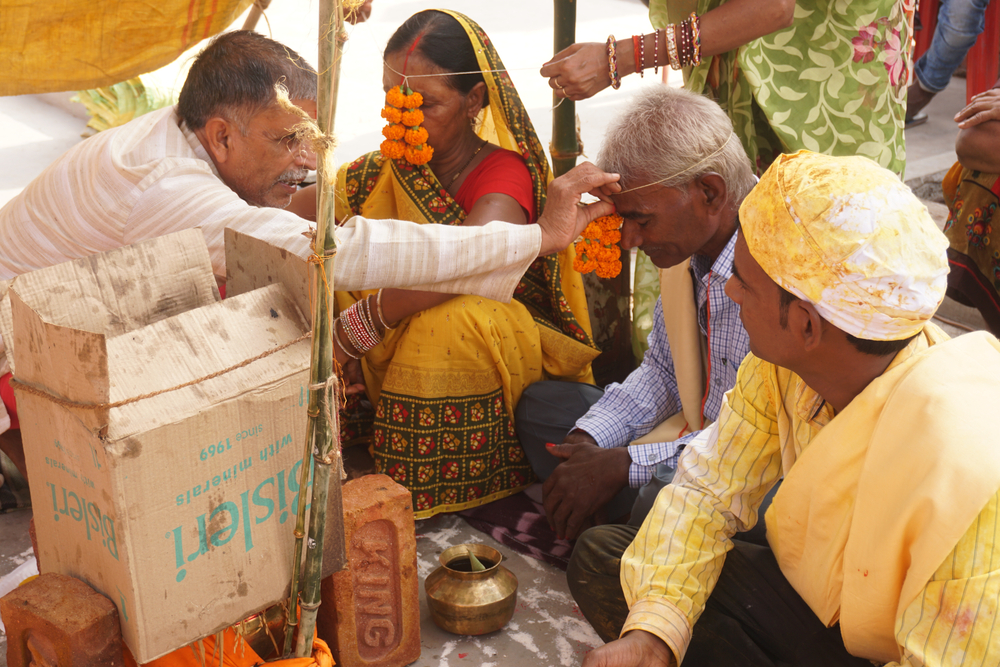
Delhi (AsiaNews) - The war in the Middle East launched by the United States and Israel against Iran on 28 February is affecting, albeit indirectly, even ordinary families in rural India. In this case, we are not speaking directly of international trade, global transport or oil, but of one of the most eagerly awaited and important moments in people’s lives, which has been turned upside down: marriage.
The most immediate consequence, which is a source of great distress, stems from the fact that the large migrant workforce from Bihar in the Gulf region is unable to return for ceremonies that have long been planned.
Weddings planned and prepared long in advance, venues booked, invitations already sent out, menus finalised, yet the bride and groom are missing: at least 400 are stranded in the Gulf countries, leaving their families back home in a state of uncertainty and despair.
Hundreds of brides and grooms from villages in Bihar, in north-eastern India, particularly from Khandai in the district of Gaya, are stranded in Kuwait, Qatar, Bahrain and Saudi Arabia, unable to return because there are no available routes, whether by ship or by air.
Consequently, just as many weddings scheduled for March and April have already been postponed or are at risk of being cancelled, partly because no positive developments are in sight in the immediate future.
The wedding season was meant to bring celebrations, music and new beginnings, but now the atmosphere is heavy with uncertainty. Over 400 young men, many of whom are future grooms, remain stranded in the Gulf states, unable to return home as rising tensions in the Middle East disrupt travel and daily life.
In villages such as Khandail, weddings are not merely personal milestones; they are community events woven into the social and economic fabric. Families had spent months preparing, booking venues, printing invitations, organising parties and gathering relatives.
However, as the conflict has intensified, airspace has been closed, flights have been cancelled and ticket prices have skyrocketed. For many families, the wait has become an emotional ordeal.
Parents who had been counting down the days until their children’s return now anxiously follow news updates, hoping for a safe window to travel. Brides and their families, too, find themselves caught between hope and disappointment, unsure whether to postpone the ceremonies or proceed in some other way.
Some have even begun to consider unconventional solutions, such as virtual weddings via video call, a reflection of both resilience and desperation. Yet for many, such arrangements seem like a compromise in a tradition that values physical presence, rituals and community participation.
AsiaNews has gathered some stories of engaged couples who are now waiting to find out what their fate will be, inextricably linked to the war. Originally from the village of Khandail, the young Minhaz was due to get married on 30 March, with his father Rafi Khan having completed all the preparations, including the ceremonial turban, guest invitations and catering.
However, he has been stranded in Kuwait for weeks due to flight cancellations. “I apologised to the bride’s family and the villagers,” said his father Rafi Khan, “and asked them to set another date once the situation in the Gulf has calmed down.”
Furthermore, the son of Jalil Shah – from the Jehanabad district – works in Qatar and has had his flight cancelled twice. His wedding is also scheduled for 30 March, but the situation remains uncertain. “We have completed all the preparations,” says his father, “if my son arrives, the ceremony will go ahead as planned… in any case, we remain hopeful.”
In some families, two couples from the same extended family are abroad – one in Bahrain and another in Qatar – and neither is able to return for their respective ceremonies. Relatives were now considering holding “online nikah” ceremonies (wedding rituals conducted via video call) if the couples were unable to return in person in time, with the cost – of the few available connections – continuing to rise to prohibitive levels. Families are facing losses due to cancelled bookings and advance payments, whilst the cost of rescheduling continues to rise; for those with limited resources, these setbacks have very significant consequences.
The story of these betrothed couple is more than a personal inconvenience; it is a reminder of how global conflicts can have consequences even in the most intimate spheres of a person’s life on the other side of the planet, transforming moments of joy into tests of patience and resilience.
Postponed weddings leave the brides’ families in Bihar in a state of deep distress: parents struggle with anxiety over their daughters’ futures and the fear of social judgement, whilst every organised ritual and decoration becomes a painful reminder of deferred joy and of entire families trapped in a state of helpless waiting and intense emotional tension.

.png)
11/08/2017 20:05
04/09/2008










