








Cardinal of Tehran calls for a ceasefire born in hearts
In a reflection sent to AsiaNews on the eve of the prayer vigil for peace called for tomorrow by the Pope – which coincides with the anticipated start of talks between the United States and Iran in Pakistan – the cardinal recalls that peace is not an “external matter”, but “arises from within” and becomes “word, gesture and way of life”. If conscience “is silenced, aggression grows”. The cross “shows that true power is not that which crushes, but that which remains faithful to the truth”.
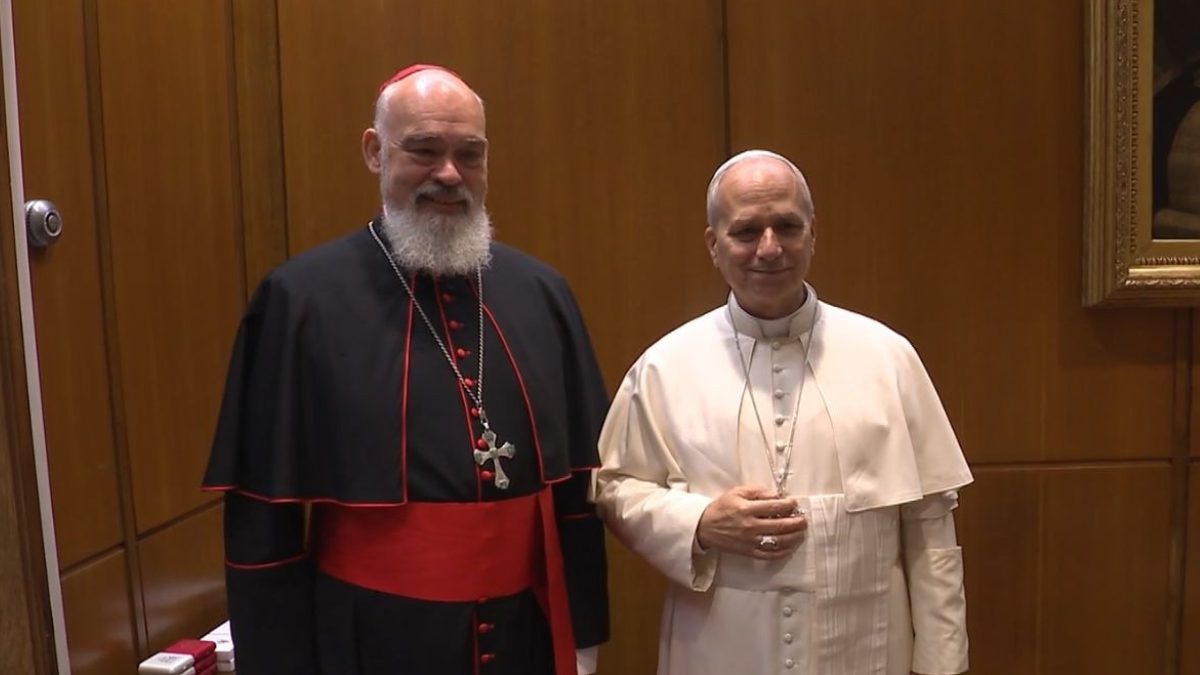
Rome (AsiaNews) - “The ceasefire poses a personal question to us: what am I nurturing in my heart? Peace or resentment? Truth or expediency? Because peace is not merely an ‘external’, political or international matter. It is born within, and then becomes word, gesture and way of life” and when truth itself “is set aside, peace weakens. When conscience is silenced, aggression grows” both within families and in society. This is what Cardinal Dominique Joseph Mathieu, Archbishop of Tehran-Isfahan for the Latin Rite, writes in a reflection sent to AsiaNews in the wake of the fragile truce reached between the United States and Iran and on the eve of the peace talks in Islamabad mediated by Pakistan (and China) this weekend. Also tomorrow at 6 pm, the special prayer vigil for peace presided over by Pope Leo in St Peter’s Basilica will take place. The cardinal, who in recent weeks had to leave the Iranian capital due to the conflict, recalls the practicality of the Christian faith: “We must do everything possible,” he emphasises, “to avoid war, and even in conflicts the moral law remains valid. Not everything is permissible, ever. Peace requires consistent choices, not just good intentions.” Reflecting on the meaning of Easter, and on the eve of talks that might quell the winds of war that have blown fiercely across the Gulf in recent weeks, Cardinal Mathieu recalls that “the peace of the Risen One” is not “naive” but “resists violence without imitating it. It is a humble and persevering force, which rejects the logic of fear and intimidation”. And the cross “shows that true power is not that which crushes, but that which remains faithful to the truth and thus saves. From this,” he concludes, “Christian peace is born”.
Below is Cardinal Mathieu’s reflection sent to AsiaNews:
In a time marked by wars and ceasefires, uncertainties and divisions, the cross reveals to us that peace is not a mere ideal: it is a Paschal path, which passes through the truth.
The truth is seen in the life of Jesus: in silence, in obedience, in self-sacrifice even unto the cross. The cross shows us that true power is not that which crushes, but that which remains faithful to the truth and thus saves.
From this springs Christian peace. Not as a mere desire, but as a real gift: “Peace be with you”. It is the peace of the Risen One, capable of transforming the heart and, through the heart, the world too.
This is the peace we are called to understand today: a peace that is “unarmed and disarming”. It does not arise from a calculation of strength, but from God. It is a gift “from above”, yet not a passive one: it must be welcomed, cherished and lived out.
For this reason, it is not naive. It is a peace that resists violence without imitating it. It is a humble and persevering force, which rejects the logic of fear and intimidation.
And yet the Gospel warns us: when truth is set aside, peace grows weak. When conscience is silenced, aggression grows – in relationships, in families, in society – until it seems normal.
So the ceasefire poses a personal question to us: what am I nurturing in my heart? Peace or resentment? Truth or expediency?
For peace is not merely an ‘external’ matter, political or international. It is born within, and then becomes word, gesture, way of life.
The Christian faith is very clear on this point: we must do everything possible to avoid war, and even in conflicts the moral law remains valid. Not everything is permissible, ever. Peace requires consistent choices, not just good intentions.
And so we understand: truth is not a mere detail. It is what prevents justice from becoming revenge and peace from becoming an empty compromise.
Moreover, this peace concerns not only relationships between people, but all of life: peace with God, peace among people, peace with creation. It is a reconciliation that embraces everything.
How, then, can we live it out in a concrete way?
First of all: to welcome peace as a gift. We cannot build it on our own. It must be sought, received,
and safeguarded.
Next: seek the truth without giving in to vengeance. Justice without reconciliation becomes harshness; peace without truth becomes an illusion.
Finally: practise concrete disarmament. In words, in judgements, in reactions. Sometimes this means listening more, speaking with greater truth, breaking a chain of aggression. And, as far as possible, supporting what prevents conflict and builds bridges.
These are simple choices, yet demanding ones. For the temptation is always that of ‘half-measures’: distancing oneself in words, without truly changing. But conscience does not wash its hands of the matter.
But Christ does not break. His faithfulness opens a path: a humble, persevering, unarmed and disarming peace, capable of overcoming evil without reproducing it.
Let us therefore ask for the grace to truly listen to his voice, not to be part of the lie, and to become – in our own small way – peacemakers: a peace founded on truth, justice and mercy.
*Latin Archbishop of Tehran-Isfahan
(Photo taken from Vatican media)

.png)










