








Catholic Church rejects subsidies, calls for greater welfare spending
At a time of economic crisis, exacerbated by the Gulf War, Archbishop D'Cruze turns down government allowances for clergy. Instead, he calls for money to be used in programmes aimed at the most vulnerable. He also requests aid for the construction and renovation of churches and cemeteries.
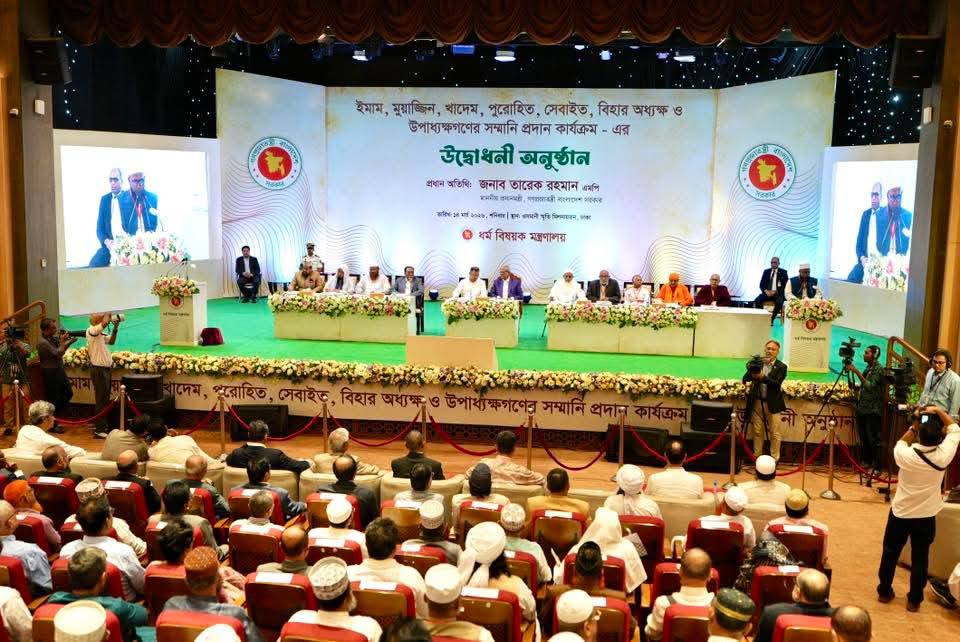
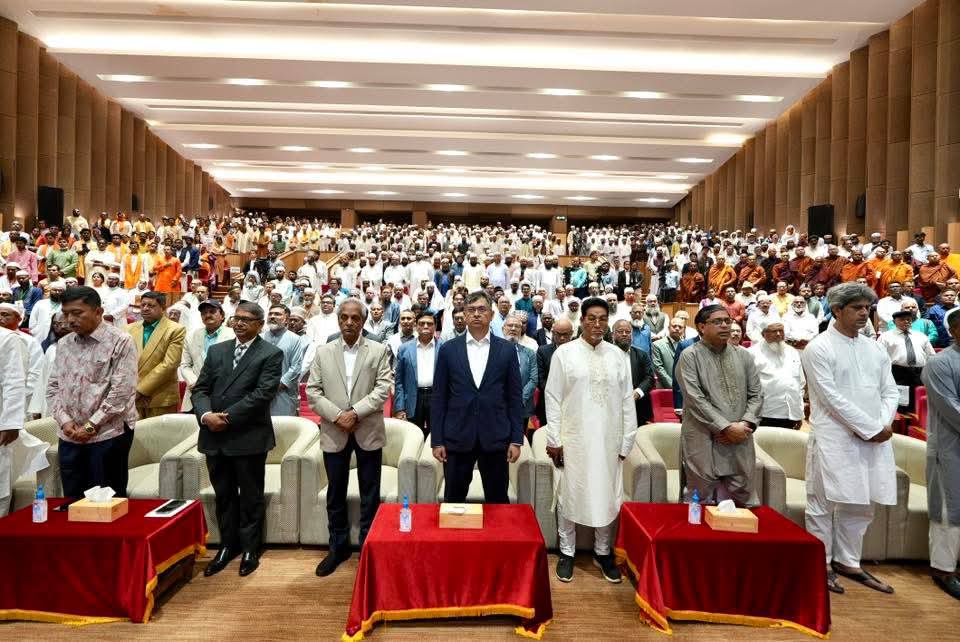
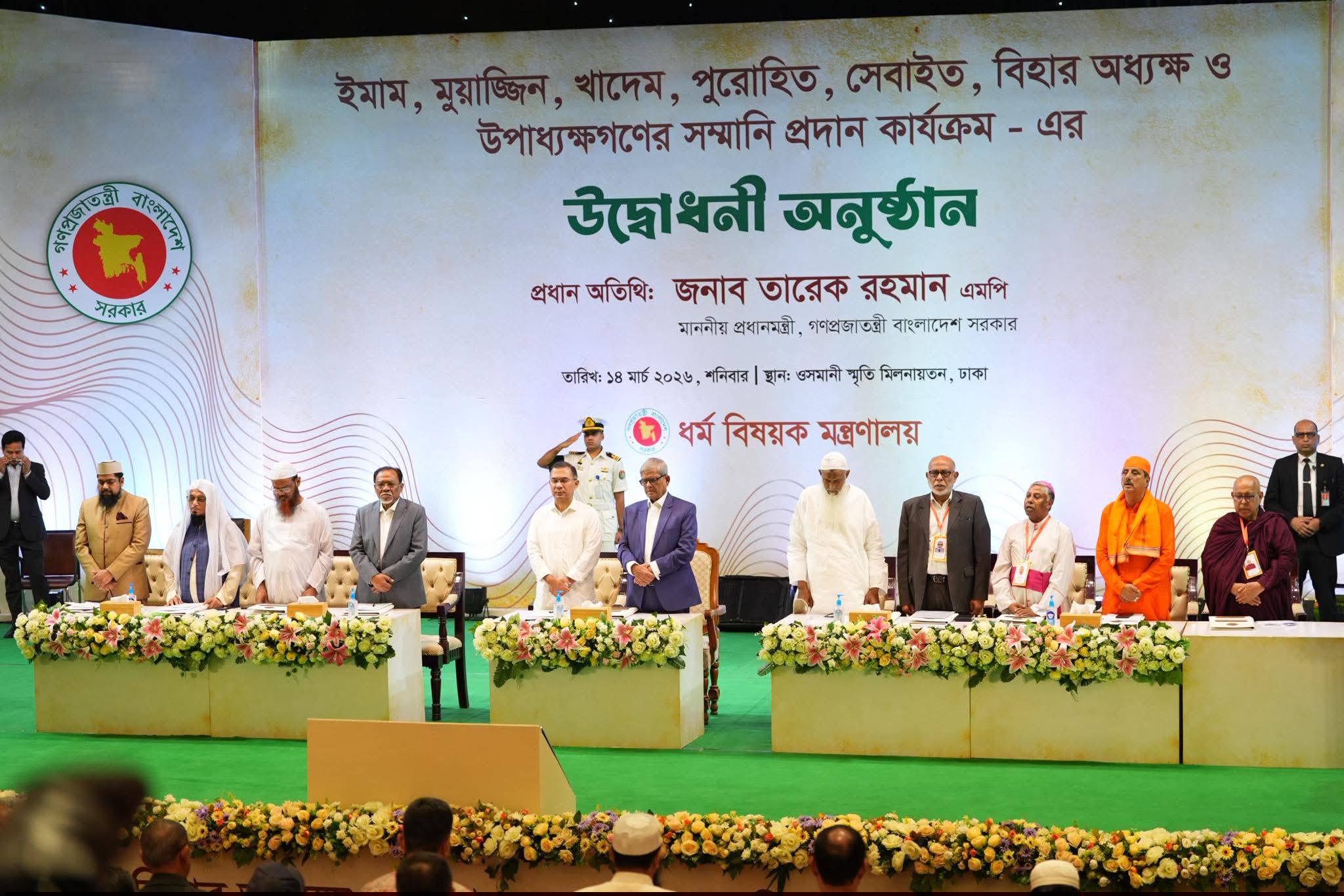
Dhaka (AsiaNews) – The Catholic Church in Bangladesh says no to subsidies and public funds at a time of severe economic crisis linked to the country’s political turmoil of the past year and the Gulf War that broke out at the end of February, with serious consequences for transportation and fuel.
The Church says no to state allowances for priests, but calls for money to be used to support welfare initiatives that benefit ordinary people regardless of religion, with particular attention to the most vulnerable and marginalised.
Prime Minister Tarek Rahman today launched a new government programme that provides monthly allowances to imams, muezzins, and religious leaders of various denominations, seen as a step towards strengthening religious harmony and social justice.
The announcement was made this morning at the Osmani Memorial Auditorium in Dhaka.
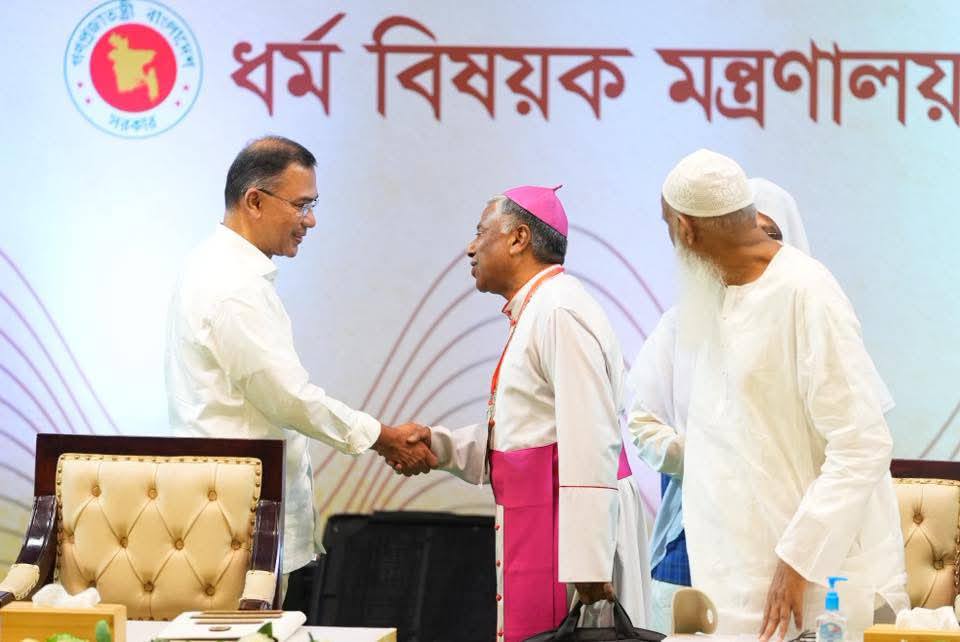
Archbishop Bejoy N. D'Cruze, OMI, of Dhaka and president of the Catholic Bishops' Conference of Bangladesh, publicly expressed his reluctance vis-à-vis the proposed allowance for Catholic clergy.
Speaking as the guest of honour at the ceremony, the prelate stated that priests, friars, and nuns live a consecrated life characterised by renunciation and do not receive salaries for their ministry.
He stressed that the discipline of the Catholic Church places limits on accepting government allowances for individuals.
“Priests do not have personal property or families of their own,” Archbishop D'Cruze explained. “Their lives are entirely devoted to God and to the service of the people. For this reason, I humbly express my inability to accept the allowance proposed for priests.”
The prelate noted that his position applies only to Catholics and that pastors of other Christian denominations are free to accept. “If pastors of other churches wish to receive this honour, we have no objection,” he said. “Many of them support families and have different needs.”
The archbishop of Dhaka explained that, in the Catholic tradition, the spiritual bond between the clergy and the faithful is reflected in voluntary offerings, which help sustain pastoral life.
“Christians support their Church personally and communally. Through gifts and donations, they express love and generosity towards God. Priests dedicate their lives freely to preaching the Gospel and offering spiritual and pastoral service," he explained.
Conversely, while members of the clergy do not accept personal allowances, the Church hopes the government will instead support the community's welfare work through the Ministry of Religious Affairs or the Christian Religious Welfare Trust.
In this regard, he proposed boosting educational assistance for poor children, expanding health services for low-income families, and providing greater support for widows and people with disabilities.
He also urged aid for the construction and renovation of churches and cemeteries, emphasising that such initiatives would benefit the entire Christian community.
Lastly, he congratulated Prime Minister Rahman on the launch of the programme, but also expressed hope that the government would positively evaluate the Catholic position.
Some Protestant pastors are expected to accept the honorarium, since many receive little or no regular salary from their congregations.
While no Christian clergy received funds at today's event, officials indicated that a list is being prepared for those who wish to participate in the programme in the future.
The initial phase covers one mosque in each union and municipality, for a total of 4,908 mosques. For other religions, two temples have been selected per upazila, for a total of 990 Hindu temples.
Buddhist monasteries in 72 upazilas were also included, with two chosen in each area, for a total of 144 monasteries. Since churches are present in 198 upazilas, two were selected in each, for a total of 396 Christian churches.
Under the programme, monthly allowances have been set as follows: 5,000 taka (US$ 40,00) for imams, 3,000 taka (US$ 25,00) for muezzins, and 2,000 taka (US$ 16,50) for khadems (mosque attendants).
For other religious groups, temple priests will receive 5,000 taka (US$ 40,00), while sebayets (temple custodians) will receive 3,000 taka (US$ 25,00). Buddhist abbots will receive 5,000 taka (US$ 40,00), and assistant monks will receive 3,000 taka (US$ 25,00). Christian priests will receive 5,000 taka (US$ 40,00), and assistant priests will receive 3,000 taka (US$ 25,00).
In addition, each Hindu temple, Buddhist monastery, and church will receive a monthly institutional allowance of 8,000 taka (US$ 65,00) under the programme.

.png)
27/11/2020 14:48
13/04/2023 18:29










