








Delhi scraps new earthquake-proofing regulations: relief for businesses, safety concerns
The decision by Narendra Modi’s government to revoke a code that came into force in November to improve infrastructure safety in high-risk areas has drawn strong criticism from the scientific community, whilst builders have welcomed the reduction in costs and regulatory constraints. Several new infrastructure projects are set to be built in high-risk areas such as the Himalayas and the Andaman and Nicobar Islands.
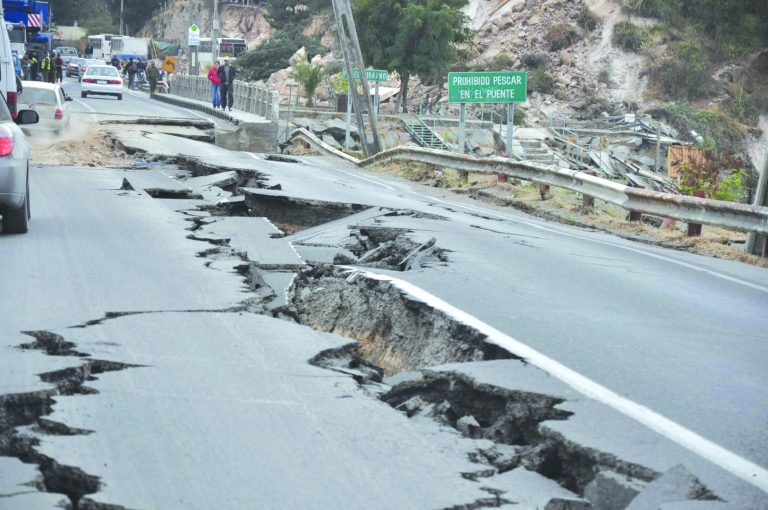
New Delhi (AsiaNews) - The Indian government has recently revoked the seismic code introduced in November 2025 to boost the construction sector, fuelling concerns across the scientific community about the future of the country’s high-risk areas.
The legislation had taken into account the earthquake resistance of infrastructure and provided guidelines for building regulations and the planning of new projects. Among the various guidelines, drawn up with the help of the Indian scientific community, was also a new map showing the regions with the highest seismic potential.
In the previous document, dating from 2016, Indian territory was divided into four seismic zones plus a fifth high-risk zone. In the updated classification released last November, a new category had been introduced: Zone 6, considered to be of the highest risk.
This included much of Kashmir and the Himalayan range, parts of Gujarat, the north-east of the country, and the Andaman and Nicobar Islands – areas whose seismic vulnerability had previously been underestimated.
The now-revoked map had been drawn up by incorporating previously overlooked data, such as fault systems, attenuation characteristics, tectonic context and lithology: a targeted and fundamental study for a country highly exposed to earthquakes.
The study highlighted in particular the tectonic threat along the boundary between the Indo-Eurasian plates, responsible for devastating events such as the 2001 Bhuj earthquake and the 2015 Nepal earthquake.
The revoked code also introduced stricter safety measures, such as tougher regulations against structural irregularities and more in-depth geotechnical analyses. These changes had immediately alarmed construction firms, which had approached the Ministry of Housing and Urban Affairs (MoHUA), highlighting financial difficulties that would have a significant impact on the implementation of various projects, including those for the construction of metro systems.
According to others, however, the new classification would have slowed down development in regions already economically fragile, with the risk of encouraging illegal construction, which already accounts for around 80% of housing in the country.
The government led by Prime Minister Narendra Modi justified its decision by arguing that the code had been introduced without adequate consultation with the companies involved, creating significant uncertainty in the sector: many projects had been put on hold because they did not comply with the new guidelines, others were approved with a six-month transition period, whilst construction costs had in some cases risen by up to 20%.
It is therefore unsurprising that the repeal has been welcomed by developers. The scientific community, however, takes the opposite view, regarding this U-turn as a danger: the code’s provisions would have made infrastructure safer and better prepared for seismic disasters, introducing standards calibrated to the actual risk in different regions.
“A missed opportunity to strengthen India’s resilience to disasters,” commented the experts, emphasising that the code also aimed to align national practices with updated international standards.
Globally, in fact, most countries adopt PSHA (Probabilistic Seismic Hazard Assessment), a method that estimates seismic risk through simulations based on the probability of ground motion. Until now, however, India had relied on a more static and simplified model, which is less accurate in predicting the impact of earthquakes on infrastructure.
The issue of seismic risk in India is by no means marginal: around 61% of the territory, where 75% of the population lives, is exposed to moderate or strong tremors. The consequences of the repeal are of particular concern in the most vulnerable areas, such as the Himalayas and the Andaman and Nicobar Islands, where ambitious (and controversial) government-funded infrastructure projects are underway.
One example is the large port planned for Galathea Bay on Great Nicobar Island, which would fall within the new Zone 6, the highest-risk category. With the repeal, builders can revert to applying the 2016 standards, which scientists now consider outdated.

.png)
07/02/2019 17:28










