








Dhaka: anger and dismay over the rape and murder of eight-year-old Ramisa
The girl had just won first place in her class exam and was about to celebrate her achievement, but was instead raped and murdered. Police arrested 34-year-old neighbour Sohel Rana and his wife. The pain of her classmates and the calls for justice (or revenge) reverberate across a shocked nation. For advocate Singha, child abuse “reflects a deep social failure” in society.
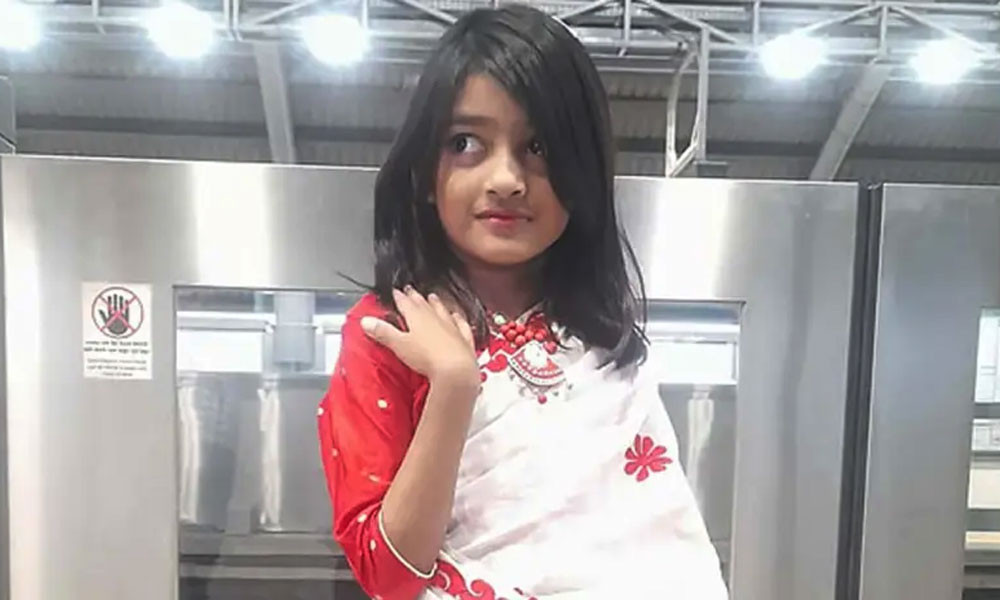
Dhaka (AsiaNews) – What should have been a moment of joy turned into an unspeakable tragedy. Eight-year-old Ramisa Akhtar, a bright second-grade student who had just secured first place in her class exam, was preparing to celebrate with her classmates. Instead, she was brutally tortured and murdered.
Her funeral prayer was held last Wednesday night after the Isha prayers in Madhyam Sealdi, a village in Ichhapura Union, Sirajdikhan (Munshiganj). She was laid to rest beside her grandparents in the family graveyard. The grief of her family, however, continues to reverberate across a country shaken by this tragedy.
The young girl was killed in the Pallabi area of the capital earlier this week. According to police, the main suspect, Sohel Rana, 34, a tenant in a neighbouring apartment, confessed to the crime in court. Investigators say he attempted to dismember the child’s body to conceal the rape and murder. His wife, Swapna Akhter, has also been arrested.
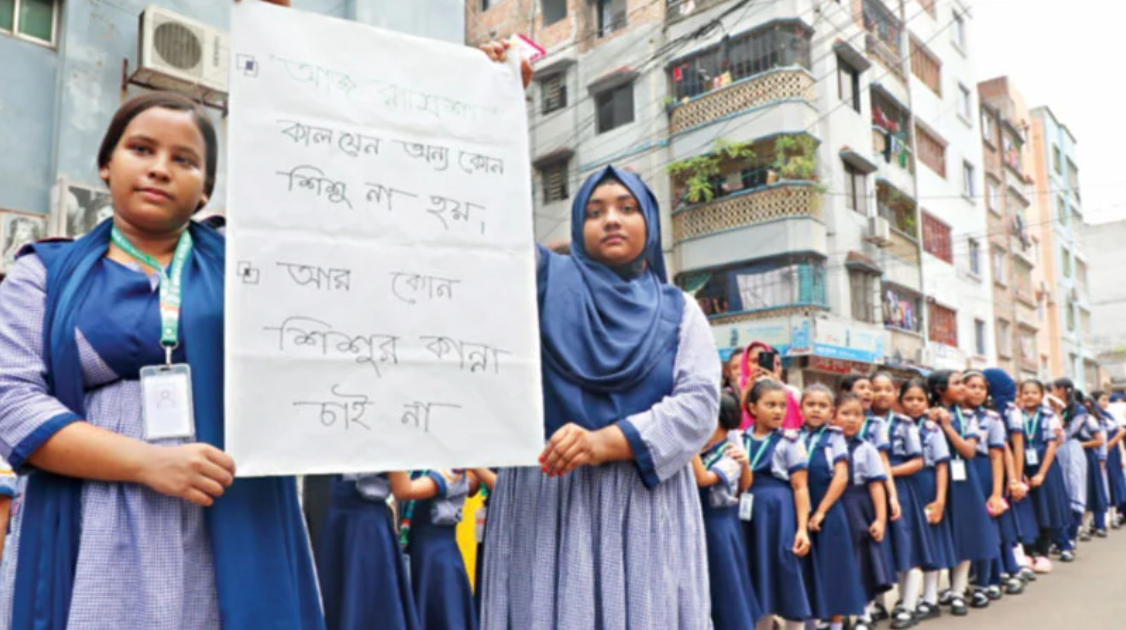
Ramisa was a student of the Popular Model High School in Pallabi, known to her teachers as calm, polite, and exceptionally talented. Her sudden death has left classmates, teachers, and family members devastated. Her father, Abdul Hannan Mollah, returned to her school after the burial, where he broke down in tears inside her classroom. Students gathered around him, weeping as they struggled to comprehend the devastating loss.
The brutality of the crime has ignited widespread protests across Bangladesh. On Thursday, human chains, demonstrations, and rallies were held in Dhaka and beyond, demanding swift justice and maximum punishment for those responsible. In some areas, angry residents surrounded police stations, while social media platforms have been flooded with calls for accountability.
The killing has once again highlighted the vulnerability of children and girls in Bangladesh. Many observers see the incident not as an isolated tragedy, but as part of a wider pattern of violence driven by weak law enforcement and a culture of impunity.
Advocate Christian Rebecca Singha, a Supreme Court lawyer who regularly handles cases related to human rights and violence against women and children, told AsiaNews that the problem extends far beyond a single case.
“In Bangladesh, not only girls and children, but also women of all ages feel unsafe – whether at home, in workplaces, or on the streets,” she said. “Ramisa’s rape and murder is not just tragic; it reflects a deep social failure to protect the most vulnerable.”
Singha stressed that although Bangladesh has strong legal provisions, including life imprisonment for rape and the death penalty when rape results in death, implementation remains weak. “The gap is not in the law, but in enforcement and social accountability,” she explained. “Delays in investigation, weak prosecution, and intimidation of witnesses often allow perpetrators to escape justice.”
Singha also underlined the importance of preventive measures. “Legal punishment alone cannot stop these crimes. We need stronger moral and social education within families and schools,” she said, emphasising the role of values-based education and community awareness. “If respect for human dignity is not taught from childhood, laws alone will not be enough.”
A recent joint study by the Supreme Court and BRAC, a Bangladesh-based international development organisation, reveals the depth of the crisis. The conviction rate in cases of violence against women and children stands at only 3 per cent, while about 70 per cent of accused individuals are acquitted. Although laws stipulate that such cases should be resolved within 180 working days, in reality the average duration is more than three and a half years.
Ramisa’s grieving father voiced a sentiment that resonates across the country. “I don’t want justice, because you cannot deliver justice,” he told reporters, reflecting widespread public distrust in the system.
Analysts say restoring confidence will require not only exemplary punishment in individual cases, but also structural reforms to ensure timely and effective justice.
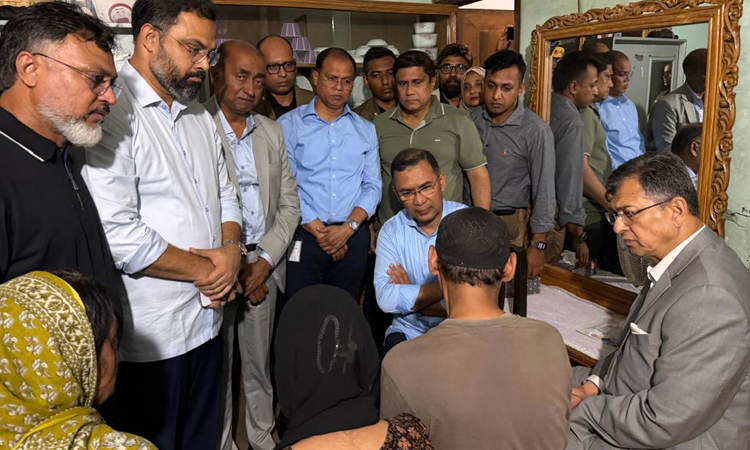
Bangladeshi Prime Minister Tarique Rahman visited Ramisa’s family at their home in Pallabi, offering condolences and assurances of support. During the visit, the child’s parents broke down as they spoke about their loss. The prime minister pledged to look into improving their living conditions, acknowledging their concerns about safety.
Beyond individual cases, the scale of violence against children in Bangladesh remains alarming. According to the Human Rights Support Society (HRSS), 643 children were killed following rape or torture between September 2024 and April this year – an average of more than 32 deaths per month. In the first four months of this year alone, 203 children were killed.
The HRSS further reports that between January 2025 and April 2026, at least 1,890 children were victims of torture. Among them, 483 were killed, 580 were raped, and 318 were sexually assaulted, while 1,407 endured physical and mental abuse.

.png)
08/07/2019 15:38
07/02/2019 17:28
23/04/2022 14:36
04/01/2022 13:02
11/04/2016 16:37










