








Europe’s strategies in Central Asia
EU Special Representative Stiprais is calling for an update to cooperation policies that takes account of the increasingly close ties between the countries in the region, which have been highlighted by Kyrgyzstan’s election to the UN Security Council. The “shared” Kambarata hydroelectric power station and the local satellite internet connection system are the flagship projects.
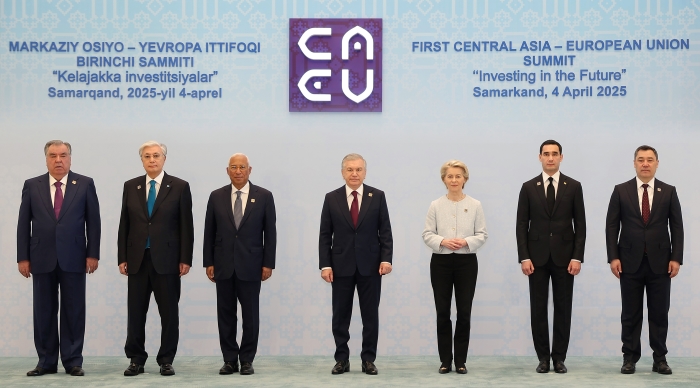
Brussels (AsiaNews) – The European Union could update its strategy for Central Asia, adopted in 2019, as stated by the EU Special Representative, the Latvian Eduards Stiprais, in an interview with Gazeta.uz.
Since then, the region has changed and gained greater political autonomy, although the countries still lack coordination at a technical level, he noted: “We now have another complementary tool, the joint roadmap of the European Union and Central Asia, which provides a more operational approach to implementing the strategy”.
This roadmap was adopted in 2023, so it now allows for a fairly rapid response to changes, adding new priorities and refocusing efforts. Stiprais adds that “the process of updating the Central Asia strategy could begin in the not-too-distant future, given that almost seven years have passed since its adoption”.
This process will require close consultations between the European Union’s Member States and the European institutions, and this could be largely linked to preparations for the next Central Asia–European Union summit, following two years of work since the Samarkand summit.
Rather than the intentions of the European partners, it is “Central Asia itself that has changed”, says the diplomat, recalling the period when the region’s neighbouring countries were practically not on speaking terms, for a variety of reasons. The real turning point came when it was realised that Central Asia is not merely a geographical designation, but a region capable of becoming a fully-fledged geopolitical actor – a realisation that emerged essentially six or seven years ago.
Consequently, the European Union’s approach has also changed, and a structured dialogue has emerged – at both the highest political level and the technical level – on sector-specific issues.
An excellent example of this change is the universal support from neighbouring countries that Kyrgyzstan received during its campaign for a non-permanent seat on the United Nations Security Council. In fact, this lobbying effort was a collective endeavour, in which all the countries of Central Asia were involved.
Kyrgyzstan competed against the Philippines and secured a landslide victory, and representatives from the ASEAN countries (the Association of Southeast Asian Nations), where this format of regional cooperation has existed for over half a century, wondered why they had not been able to achieve the same.
Stiprais emphasises that “based on our experience, we see enormous benefits for the region in closer cooperation, both for internal development and for building relations with the outside world”, citing the Global Gateway initiative as an example, to ensure that projects carried out in the various countries of the region are truly complementary.
Speaking about the development of the transport corridor, “it makes no sense to invest huge sums of money in a stretch of road or railway if it then ends in a dead end at the border”.
The Kambarata hydroelectric power station in Kyrgyzstan “is also a wonderful project, and we look forward to its completion with great hope”. This is a globally unique project, in which one country upstream and two countries downstream of the Syr Darya are set to develop it together – not only by jointly financing and constructing it, but also by managing it together once completed. Once finished, the project will serve as an extraordinary example for many other regions to follow.
Another project on which Europeans and Central Asians are working closely together is the development of internet access via satellite communications. Unlike Elon Musk’s Starlink, this project will be owned by the participating Central Asian countries themselves, which will have technical control over the system and ensure the security of communications via this internet network. This should give a further boost to internet access not only in Tashkent, Dushanbe and Bishkek, but also in the most remote areas of Central Asia.
Very close cooperation is also developing in the economic sphere and on issues related to the digital transition and the green transformation of the economy, as well as in many other areas of social life.

.png)
24/07/2023 12:18
29/07/2022 10:33










