








Explaining the end of the war to the Russians
Behind Putin’s remarks at the Victory Day parade regarding the “possible end of the war” (albeit at an unspecified time) lie the risks that a further prolongation of the conflict would now pose to the stability of Russian society. Thus, despite the deadlock in negotiations, Moscow is attempting to revise its propaganda narrative to give the impression that it has nonetheless achieved its objectives in the ‘special operation’ in Ukraine.
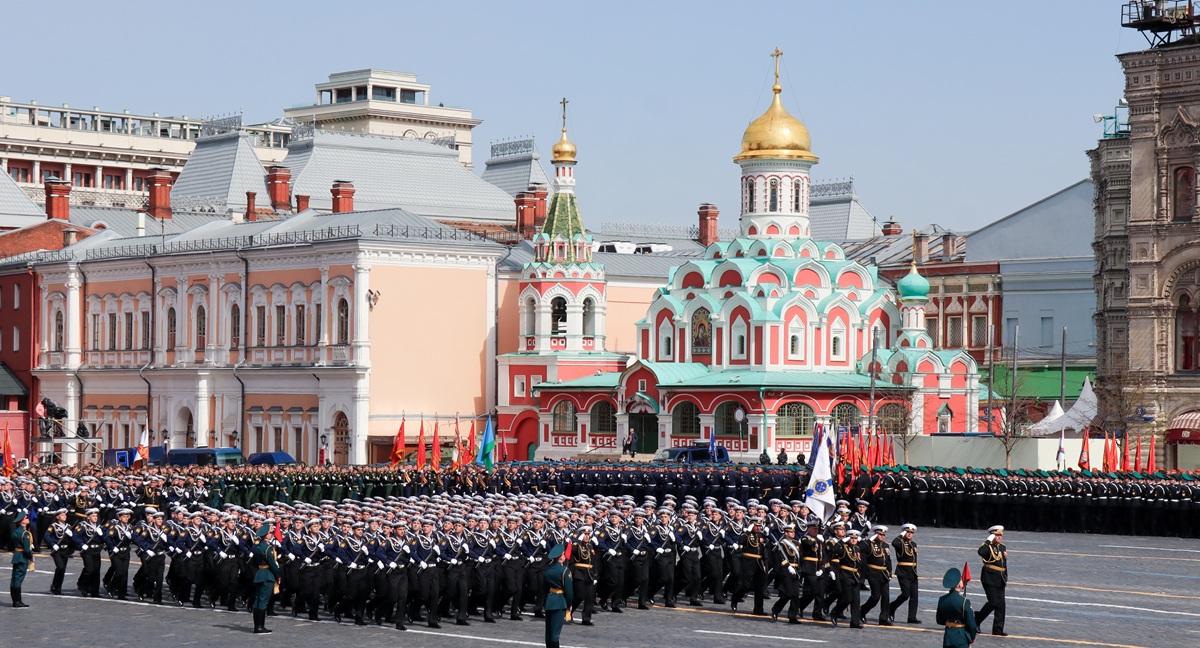
Moscow (AsiaNews) – The most surprising phrase in Vladimir Putin’s speeches on the day of the sombre 9 May parade was the “possible end to the war”, albeit at an unspecified time.
Driving this long-awaited turning point – especially for the people of Ukraine – are concerns over the continuing decline of the Russian economy, the difficulty in rallying the population behind further “special operations” and also fears of Ukrainian counter-offensives, which are causing alarm from Moscow’s Red Square right through to the northern and Siberian territories, with many Russian cities shrouded in the smoke and fumes of factories set alight by increasingly penetrating drones.
There are even unconfirmed rumours of possible uprisings against the regime from circles close to the president himself, and for these reasons the Kremlin administration has been trying for months to craft an ‘image of victory’ that could justify an end to the armed conflict.
This involves a revision of the main propaganda narratives, designed to confirm the objectives declared for nearly five years now, without giving the impression of having failed to achieve them.
The investigative centre Dossier has therefore sought to examine these disguised ideological shifts in the texts and documents currently being put forward by Putin and his aides.
In a presentation given by one of the president’s closest advisers, Sergei Kirienko, it is stated that “the continuation of the war could require a general mobilisation and the total conversion of the economy to meet the needs of war”, listing the risks this would entail: the depletion of resources, further tax increases, a contraction in business, drone attacks, a demographic crisis and much more.
The scenario the Kremlin considers most credible, and on which it has insisted since the meeting between Putin and Trump in Alaska in mid-August 2025, is the conclusion of two separate agreements: one between the US and Russia, and another between the US and Ukraine.
The terms of this agreement are the complete cession to Russia of the Donetsk and Luhansk regions, and the division of the Kherson and Zaporizhzhia regions, establishing a front line whereby Russian forces would withdraw from the Sumy and Kharkiv regions, and the Americans would lift sanctions on Moscow, whilst those imposed by the European Union would remain in place.
In reality, negotiations are effectively at a standstill, and there is no mention of a timeline for implementation.
The propaganda claims confirming Russia’s ‘victory’ remain those stating that Moscow has ‘averted a humanitarian catastrophe in the Donbas’, and that its army has proven itself ‘the most efficient in the world’, given that it had to ‘face opposition from fifty states’, as Putin reiterated from Red Square.
Successes are highlighted in territorial gains, the opening of a land corridor to Crimea and the incorporation of millions of Russian-speaking citizens. Furthermore, it is emphasised that “Russia has rid itself of all its corrupt and treacherous elites”.
It is reiterated on several occasions that “there will be good news for Russians” with the end of the war, with a normalisation of daily life, putting an end to blockades and censorship that are provoking increasingly angry reactions, with many social projects and a global business recovery, a “controlled thaw” even in literature and cinema, a climate of “political serenity” starting with the upcoming parliamentary elections in September, and it will even be permitted to utter the word “peace” once more.
The Z-bloggers and ultra-patriots might react to all this by denouncing the “defeat”, but they will in turn be silenced as “emotional excesses”, and Russia will once again become a paradise of prosperity and sobornost, mutual love between the Tsar and the people.

.png)
12/02/2016 15:14










