





-war:-Asian-Muslims-prepare-for-Hajj-65303.html&is_video=&description=Faith+stronger+than+the+%28fear+of%29+war%3A+Asian+Muslims+prepare+for+Hajj)


Faith stronger than the (fear of) war: Asian Muslims prepare for Hajj
This year, the major pilgrimage to Makkah is set for 24-29 May. The desire to participate outweighs the fear of war, although concerns remain about rising prices, last-minute cancellations, and delayed return journeys. Saudi Arabia is using artificial intelligence to manage security and monitor pilgrims. Two million people are expected to participate.
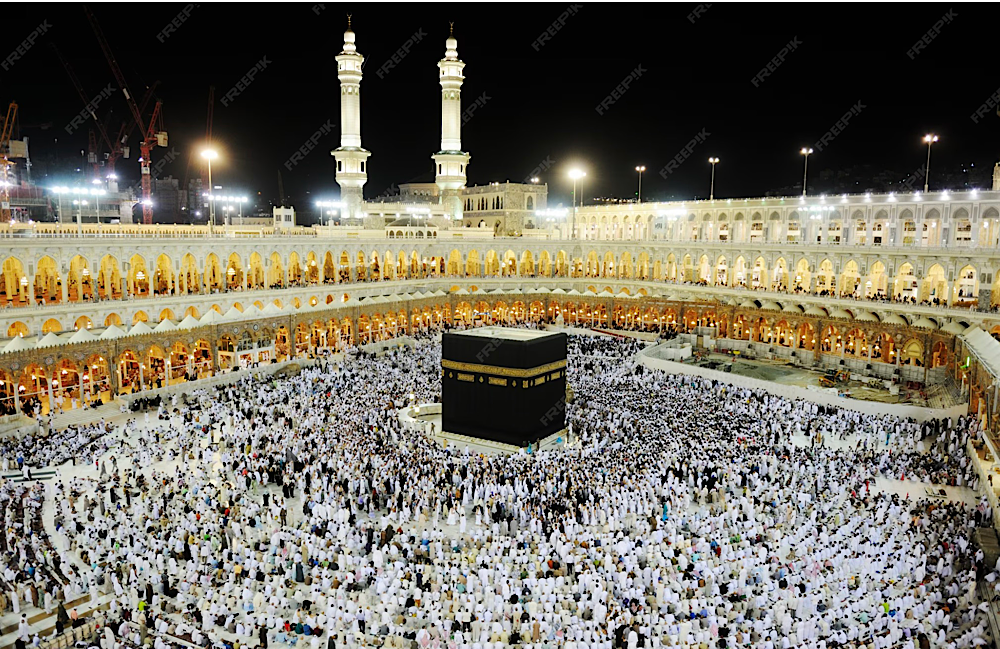
Riyadh (AsiaNews) – A few weeks from now, hundreds of thousands of Asian Muslims will fly to the Gulf, untouched by the conflict inflaming the region since the United States and Israel attacked Iran, but hopeful that the fragile truce will hold.
For many, come war or peace, what matters is taking part in the Hajj, the annual pilgrimage to Makkah that represents one of the most significant moments in the life of Muslims.
While the world closely follows ceasefire talks in Islamabad, Muslims in Indonesia, Pakistan, India, and Bangladesh, home to the largest Muslim populations in the world, are determined to take part in the pilgrimage, one of the largest mass gatherings in the world, their faith stronger than the fear of missiles and drones.
The Hajj is one of the five pillars of faith, and every Muslim in good health has to perform it at least once in their lifetime; this year, it is scheduled to start in the evening of Sunday, 24 May until Friday, 29 May.
In the past, Saudi Arabia has used the event as a political weapon, denying entry visas and participation to Iranian (Shia) or Syrian pilgrims. The pilgrimage (along with the lesser pilgrimage, Umrah) has also been marred by accidents and attacks, with thousands of deaths.
In 2015, a stampede killed at least 2,300 people; in 2006, more than 360 pilgrims died during the stoning ritual, in which stones and pebbles are thrown at three tombstones symbolising the rejection of Satan; in 1989, a double attack outside the Grand Mosque left one dead and 16 injured, with 16 Kuwaitis executed for the attack.
In Asia, home to approximately 1.3 billion Muslims, or two thirds of the world's total Muslim population, many have waited years for the opportunity to participate in the pilgrimage, with visas assigned based on quotas set by Saudi Arabia.
It is currently unclear how many will perform the Hajj, but the total number, including those already living in the kingdom, both nationals and migrants, is expected to reach two million.
Many of those who received permits, issued since February, have already paid for their flights and accommodations, spending thousands of dollars in total, some of which are non-refundable in the event of a last-minute cancellation.
The Hajj, along with the year-round Umrah, contributes more than US$ 12 billion annually to the Saudi economy, this according to Saudi Market Research, which is part of Eurogroup Consulting, a major player in the industry.
Any resurgence of hostilities in the Gulf or flight ban could seriously impact pilgrims, forcing longer stays in Saudi Arabia or more arduous journeys home.
Many pilgrims are well aware of the situation but are optimistic and confident about their ability to fulfil their Muslim duty and reach the holy sites in Makkah.
Indonesia is expected to send 204,362 pilgrims based on the number of visas assigned by Saudi Arabia. As the world's most populous Muslim nation, it has the highest quota of visas for pilgrims, who will depart in 525 separate groups from 14 departure points across the country.
Despite rising jet fuel costs triggered by Iran's closure of the Strait of Hormuz after the United States and Israel launched attacks on 28 February, Indonesia has made every effort to ensure pilgrims do not face additional costs.
For now, departures remain confirmed, despite the increased costs that the government has decided to cover.
After Indonesia, Pakistan generally receives the second-largest quota for Hajj. This year, approximately 180,000 Pakistanis are expected to go at a cost ranging between US$ 4,000 and US$ 5,500 per person.
The first Hajj flight from Pakistan is scheduled to leave Lahore Saturday. Pilgrims say they are happy that plans are, for now, going ahead as scheduled.
Pilgrimages have taken place regularly in the past, even during wartime, noted Navaid Hamid, former president of the All India Muslim Majlis-e-Mushawarat, a group that includes several Muslim organisations.
A ban was imposed only in 2020 due to the COVID-19 pandemic, affecting pilgrims from abroad, while locals, albeit in limited numbers, were still able to perform the ritual.
“In the past also, when there was the Iran-Iraq War and other disturbances [in the Middle East], the Hajj used to be a very peaceful event. Even if the [current] conflict escalates in the region, there are other routes which can be adopted for transporting Hajj pilgrims from India to Saudi Arabia," said the Indian Muslim.
Finally, 78,500 people are expected to leave Bangladesh, home to over 150 million Muslims, for Makkah this year, approximately 4,500 of whom will travel under a government arrangement, while the other 74,000 booked private agencies for their travel plans.
Meanwhile, Saudi Arabia is tightening its laws and regulations, restricting access to permit holders only, and imposing heavy fines, deportations, and entry bans on violators.
The measures aim to improve crowd control, security, and supervision by targeting both unauthorised pilgrims and the networks that facilitate them, increasingly making use of technology and artificial intelligence.
Electronic systems are being used for the first time to manage pilgrims' movements, as part of an operational plan covering 60 languages through an advanced digital system across Al-Masjid Al-Haram and Al-Masjid An-Nabawi.
Sheikh Abdulrahman Al Sudais, who chairs the General Presidency for the Affairs of the Two Holy Mosques, stressed that the use of AI is an important step forward, in line with the Year of Artificial Intelligence declared by Saudi Arabia for 2026.
Saudi Minister of Hajj and Umrah Tawfiq Al-Rabiah confirmed the introduction of new electronic systems to track movements, along with improved signage that also displays departure and return times at the exits of the camps hosting pilgrims, along with other more general instructions.

.png)
04/09/2008










