





-sparks-controversy-over-tribalism-64567.html&is_video=&description=Film+%28withdrawn%29+sparks+controversy+over+tribalism)


Film (withdrawn) sparks controversy over tribalism
The comedy ‘Ruyn kim’ (meaning ‘What family are you from?’) sought to poke fun at the prejudices that remain widespread in Kazakh society. But even the last-minute removal of explicit references to the Žalairy (Tokaev's ethnic group) or the Šapiyrašty (that of former president Nazarbaev) was not enough to avoid the wrath of some politicians who claim that it ‘undermines national unity from within’. In the end, the production company itself suspended screenings.
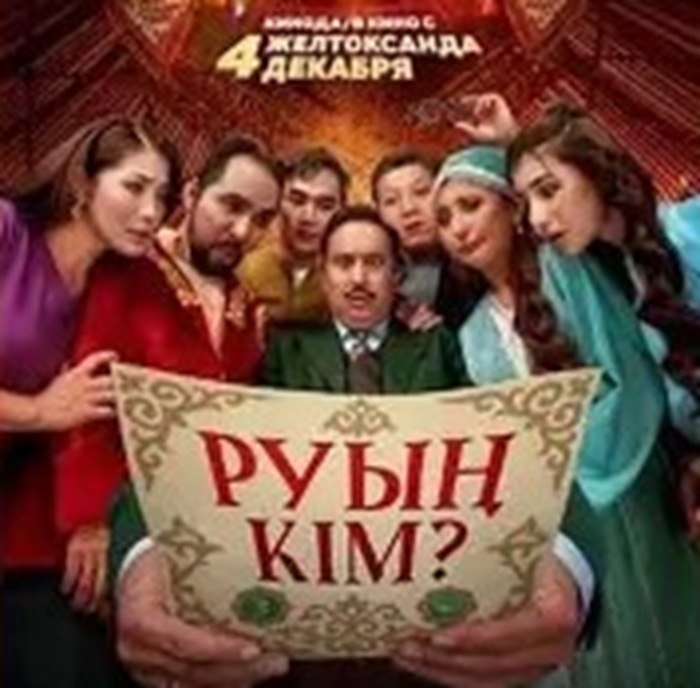
Astana (AsiaNews) - A major controversy has developed in Kazakhstan following the release of the comedy film entitled Ruyn kim?, ‘What family [ethnic group] are you from?’. The film was shown in cinemas for only a few days before being suspended following criticism from MP Erlan Sairov of the Amanat party, who accused it of ‘propagating tribalism and threatening to disintegrate the Kazakh people’.
The screenwriter sees this as an act of censorship, which even before the film's release had forced the removal of references to ethnicity from the dialogue, as this is the ethnicity of the current president, Kasym-Žomart Tokaev.
Sairov also insists that “the content of the film, which links young people to the psychology of their ethnic origin, expresses a dangerous trend that could destroy our national unity from within”.
In reality, the question “what family are you from?” is quite common among Kazakhs when meeting someone for the first time, and in social communications in various contexts, and the answer indicates the ethnicity of the interlocutor.
The MP, however, considers it a threat and is calling for the formation of a permanent commission at the Ministry of Culture and Information to verify the “ideology” proposed by upcoming films.
The film's producers, Tiger Films, initially thought of using the criticism as a publicity vehicle, but then decided not to escalate the tension and withdrew the comedy from cinemas.
The company's director, Akbota Kajsenova, assured that the film's authors had the best of intentions and “sought to show, through humour and satire, how ethnic divisions and attempts to elevate one ethnicity above all others are nothing more than widespread prejudice”.
The production did not break any laws, and the voluntary suspension of screenings was decided ‘to avoid ambiguous interpretations and unnecessary discussions’.
The author of the screenplay for Ruyn kim?, Nuržan Erkinuly, noted that colleagues and viewers who attended the first screenings of the film ‘did not detect any destructive elements or any intention to divide Kazakh society’.
He also added that ‘we are not so stupid as to spend a lot of money to produce something that would upset everyone over tribal issues’; on the contrary, the aim was to promote the perception of true popular unity.
The impression is that there is indeed an increasingly marked censorship in Kazakhstan, which prevents people from expressing themselves freely on sensitive issues that previously did not cause any particular scandal. In this way, ‘people's free creativity is oppressed, and viewers are deprived of their freedom of choice,’ says Erkinuly, ‘dictating to the public which films they can and cannot see.’
Sairov replied that ‘we are not talking about censorship’, but that ‘in the current conditions of geopolitical turmoil, it does not seem appropriate to divide Kazakhs according to their origin’, because this would give external forces the opportunity to divide the country. The MP does not specify what interference he is referring to, although the most obvious remains that of the Russians, and to some extent also the Chinese.
The politician's concern is shared by many, who observe the “trend of tribalism” in many situations in various regions where people exalt their own Batyry, the “Avi” of different ethnic groups, and remember the founders of various villages and towns descended from ancient nomadic tribes.
Tokaev himself has denounced this trend on several occasions, especially in meetings with the Akimy, governors and mayors, during his visits to different parts of the country, where he has recommended avoiding the proliferation of monuments to figures known only within the region, and even toponymic commissions should avoid naming streets and squares after local ancestors.
In the film trailer, one of the protagonists states that it is necessary to make friends among the strongest ethnic groups, such as the Žalairy, Tokaev's ethnic group, or the Šapiyrašty, that of former President Nazarbayev, which still has many figures in positions of power.
These references were then deleted in the film's screening, with cuts and dubbing, but they are still evident from the context of the various scenes, in which the Kazakhs recognise their “geographical nature” deriving from many past stories, ancient and modern, of an immense country with many scattered peoples and much suffering.

.png)
09/06/2021 11:52
09/01/2017 14:52










