








From the Palaeolithic to a thousand-year-old porcelain: the Oscars of Chinese archaeology
China's National Cultural Heritage Administration published a list of the 10 most important discoveries in 2025 with excavations in very different regions of the country, covering both the dawn of Chinese civilisation and the evolution of imperial dynasties. This is part of Xi Jinping's drive to boost cultural identity.
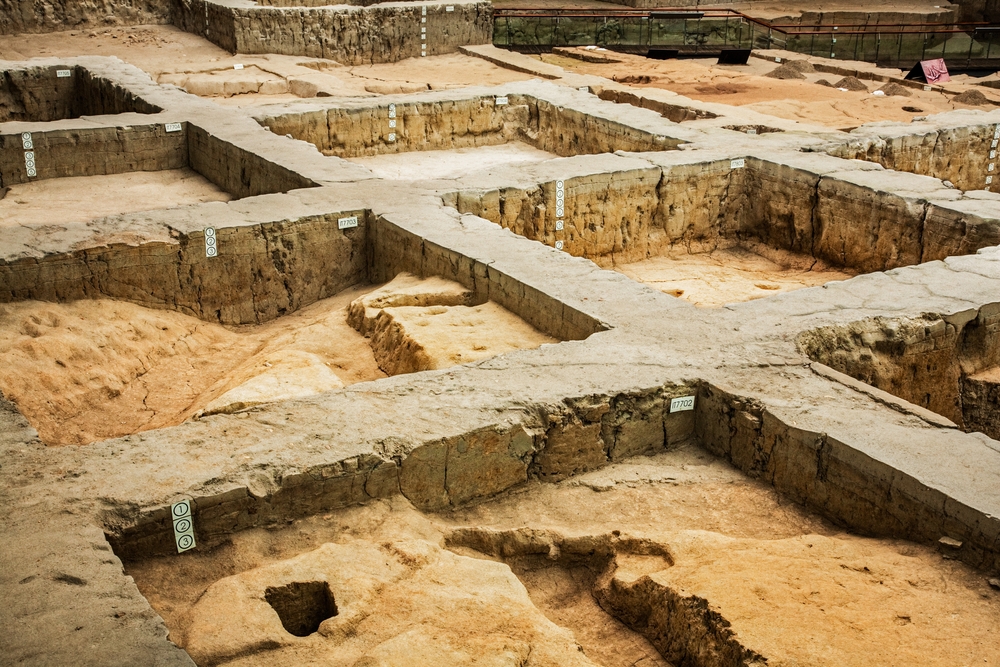
Beijing (AsiaNews/Agencies) – One of the most significant aspects of the cultural policy of the People's Republic of China is the use of its immense archaeological heritage.
President Xi Jinping has repeatedly spoken of the need to develop an archaeology with Chinese characteristics, aimed at strengthening the country's cultural identity and showcasing its millennia-old history.
One way to further boost this effort is an initiative by the National Cultural Heritage Administration to publish a list of the 10 most important discoveries of the year, which are popularly described in China as the "Oscars" of local archaeology.
The list for 2025 was released today, offering an interesting glimpse into the government’s current perspective on China’s history and identity.
It is no coincidence that the discoveries listed cover a broad geographical area, from the forests of the Changbai Mountains in the northeast to the slopes of the Helan Mountains in the northwest, offering new perspectives on different phases in the 5,000 years of Chinese civilisation.
This has shed new light on areas ranging from prehistoric human activity and the formation of the first Neolithic cities to state organisation and craftsmanship in the imperial era.
One of the most significant discoveries reported in 2025 concerns a large number of Palaeolithic sites in the Changbai Mountains, Jilin Province. The area, which covers more than 100,000 square kilometres, has led to the identification of more than a thousand new sites containing stone tools.
In particular, the obsidian tool industry provides significant evidence of technological evolution and human adaptation between approximately 220,000 and 13,000 years ago.
This discovery is destined to profoundly change the academic understanding of prehistoric human activity in Northeast Asia, highlighting cultural exchanges between different regions and helping to identify the most ancient roots of Chinese civilisation.
Another important discovery comes from Nanzuo in Gansu Province, northwest China. This site, dating back to the late Yangshao culture and covering approximately six million square metres, features a complex urban structure with a large central complex built of rammed earth and a multi-level settlement.
Scholars believe the site demonstrates how the traditional Chinese urban system, based on a central axis, emerged approximately 5,000 years.
The artefacts discovered – including painted pottery, turquoise objects, and brick-like materials – indicate a high level of craftsmanship, an already stratified society, and the existence of long-distance trade with other regions along the Yangtze and Yellow Rivers.
In eastern China, excavations at the Langya Terrace site in Shandong province have provided the first concrete archaeological confirmation of historical accounts of the eastward inspection voyages of Qin Shi Huang, China's first emperor.
Located on a coastline surrounded by sea on three sides, the site is considered the oldest and largest state-building project in the Qin Empire (221–206 BC) hitherto discovered in the east of the country.
Scholars note that this find shows how the Qin and Han dynasties consolidated political power and developed a growing focus on the sea, offering new insights into governance strategies during the formation of a unified state.
Finally, in the Ningxia Autonomous Region, at the Suyukou site near the Helan Mountains, an official kiln has been identified, designed to produce porcelain for the royal family of the Western Xia Dynasty (1038–1227 CE), who belonged to an ethnic minority.
It is the largest and best-preserved complex of fine white porcelain kilns in the region. The artefacts produced correspond to those found in royal tombs and palaces.
This site provides rare material evidence of state-controlled production and fills an important gap in the history of Chinese ceramics, also illustrating the transition of Western Xia society from a nomadic lifestyle to a more complex one based on agriculture and handcrafts.

.png)
20/01/2024 18:31
10/07/2020 13:33










