








Israel expropriates Nabi Samuel, but for the Palestinians the target is al-Aqsa
A new chapter in the silent war on heritage in the West Bank. The tomb of the prophet, north of Jerusalem, managed by the Islamic Waqf, has been seized in the latest act of the “Judaization” of Palestinian sites. Peace Now: the aim is to “expand and deepen the annexation”. Rumours of a plan by the Netanyahu government to strip Jordan of custody of Islam’s third holiest site.
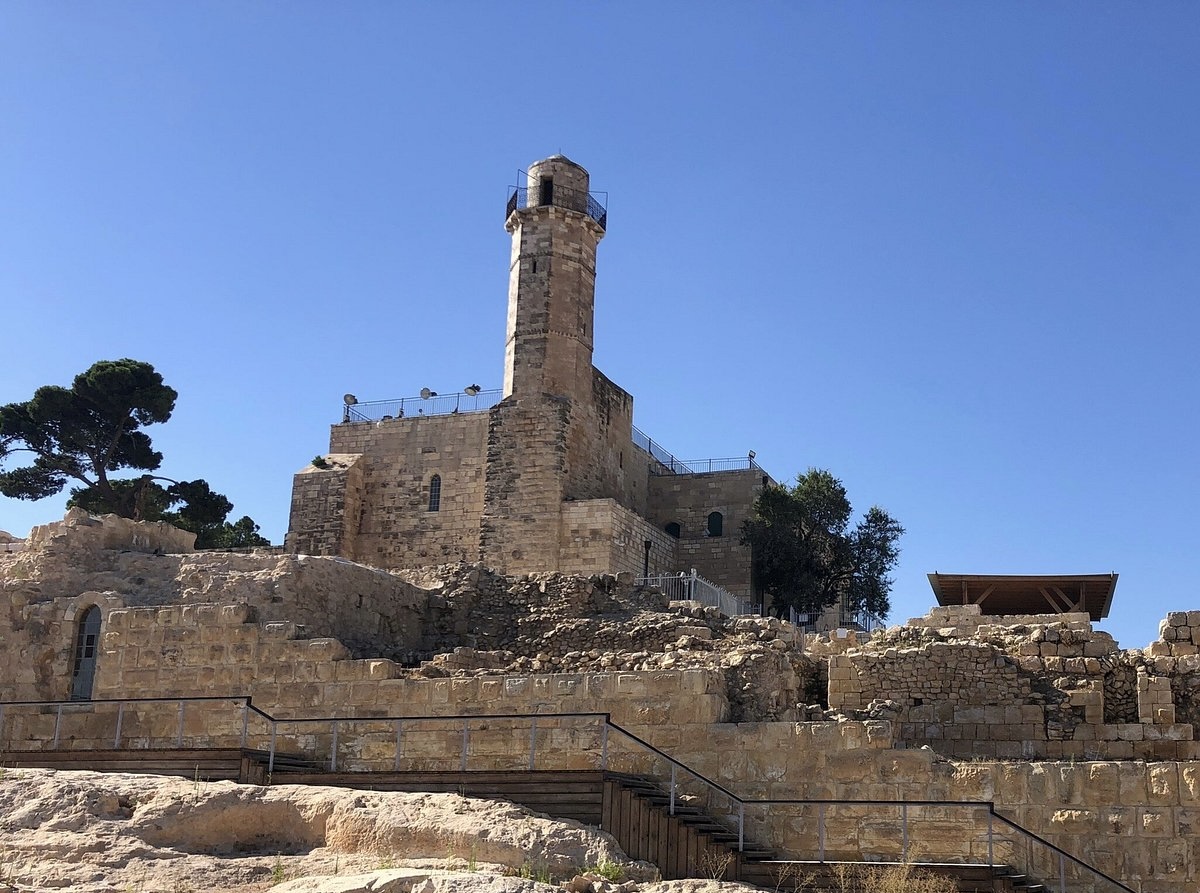
Milan (AsiaNews) - The order by Israeli authorities to seize the famous tomb of the prophet Samuel (Nabi Samuel), north of Jerusalem, and the surrounding land has opened a new chapter in the Jewish state’s campaign to expropriate Palestinian property and antiquities. A silent war on Palestinian archaeological and cultural heritage has been launched by Prime Minister Benjamin Netanyahu’s government, which is also promoting a controversial bill to secure control over it.
The bill has been put on hold for the time being because it is effectively “unpresentable” in the eyes of the international community, but amendments are being considered so that it can be approved in the near future. In recent days, 60 Israeli archaeologists have submitted an urgent petition to the High Court of Justice to block the appointment of a new director-general at the Israel Antiquities Authority (IAA) by Heritage Minister Amichay Eliyahu. On the Palestinian side, the fear among NGOs and activists is that the real target of the religious far-right and pro-settlement factions is the Al-Aqsa Mosque in Jerusalem, the third holiest site in Islam.
A new step towards annexation
The prophet Samuel is a figure revered by Jews and Christians, but also in the Muslim tradition. In recent days, the Israeli Civil Administration issued an expropriation order (H/02/26) “for public utility purposes” for the tomb and the 28 acres surrounding the building, a major tourist and religious centre in the West Bank, in the area between Jerusalem and Ramallah, hitherto managed by the Islamic Waqf. A decision that has sparked outrage and protests, with repeated voices of condemnation for what has been described as the latest act of ‘Judaization’ of Palestinian sites. The Israeli anti-occupation activist group Peace Now highlights that, for ‘the first time’, the Jewish state’s civil administration is expropriating ‘a Waqf holy site in the occupied West Bank’.
The land includes the Palestinian towns of Beit Iksa and Nabi Samuel, which cover the area where the historic mosque is located. The justification given by the Civil Administration, which reports to a unit of the Israeli Ministry of Defence, is that a development project will be launched “to preserve the archaeological site of the tomb of the Prophet Samuel”. However, Palestinian analysts and scholars speak of yet another example of Israel’s “use of archaeology and religion” to “undermine Palestinian land and identity”.
“Once again,” states Peace Now in a note, “we are faced with decisions by a civil administration, operating under Finance Minister
[of Finance Bezalel] Smotrich, which are aimed at expanding and deepening the annexation. From plans to expand settlements and unprecedented declarations of ‘state land’, the civil administration has moved on to taking control of heritage sites and is now appropriating religious sites, creating tension in some of the most peaceful and sensitive places in the West Bank. The Israeli government’s messianic agenda should have been halted long ago. Instead, every day seems to put us further at risk and create the conditions for turning a political conflict into a religious war”.
During the Byzantine period, Emperor Justinian ordered the construction of a church on the site where Samuel was believed to be buried. The site was situated on top of a hill 6 km north-west of Jerusalem, at 885 metres above sea level, and was of interest to the Crusaders, who called it the ‘Mount of Joy’, as it was the first point from which they could see Jerusalem. The mosque features elements dating back to the Ayyubid and Mamluk periods and includes a shrine which Muslims believe contains his tomb, making it a significant place of pilgrimage for the Muslim faithful.
The expropriation of Nabi Samuel is merely the latest in a series of projects to develop Jewish sites on Palestinian land: in November, the Israeli Civil Administration seized 444 acres around the archaeological site of Sebastia; two months later, the Israeli army stripped Palestinians of control and administration of the Ibrahimi Mosque in Hebron, a move reportedly intended solely to undermine the site’s Islamic identity. Speaking to Middle East Eye (MEE), Khalil Toufakji, an expert on maps, borders and settlements in the city of Jerusalem, states that the role of the Islamic Waqf authorities in Nabi Samuel is now limited to “opening and closing the gates”. He is also convinced that, in the near future, Joseph’s Tomb, a religious site in Nablus under the control of the Palestinian Authority (PA), will also end up being seized by Israel.
The assault on heritage
In recent weeks in the Knesset, the Israeli parliament, the nationalist right has attempted to bring forward for debate, before the dissolution for elections, a bill that would create a new authority for the management and control of heritage in the West Bank, effectively taking ownership of archaeological sites. Furthermore, on 26 May, Smotrich himself and representatives of his party, inspired by religious Zionism, undertook an election tour of the ‘Pools of Solomon’, a reservoir in the West Bank managed by the PA. On that occasion, the pro-settlement minister described it as “inconceivable that this magnificent and unique place should be in the hands of Palestinian terrorists” and added that he wished to “work to change this”. Regarding the Knesset bill on antiquities and heritage, Netanyahu has ordered a review, instructing Cabinet Secretary Yossi Fuchs to seek “alternatives” because, as it stands, it is “unpresentable” to the international community. The Prime Minister is said to have put the brakes on the approval process, as the text would ultimately undermine Israel’s foreign relations.
The plenary recently approved the bill at first reading, which grants the Antiquities Authority, once established, absolute control over archaeological sites in the occupied West Bank, with a further extension to the Gaza Strip. The text, presented by Likud MP Amit Halevi, provides for the creation of an Authority under the Ministry of Culture. The body would be “fully responsible for managing all matters relating to heritage and antiquities in the area”, with powers including land confiscation, archaeological excavations, their management and law enforcement. The Knesset’s Education and Culture Committee is currently discussing the bill and was due to draft the final version, presenting it for a second and third reading, but Netanyahu’s intervention has put the process on hold.
The sovereignty of al-Aqsa
For the Palestinian Authority (PA), the plan for expropriations and annexations promoted by Israel, particularly in the Jerusalem area, is said to target a building symbolic of Islam: the al-Aqsa Mosque, control of which they wish to wrest from Jordan. The governorate of the holy city states that the plan, if implemented, will have “serious repercussions for security and stability in the region”. The United States and Israel are reportedly actively pursuing a new agreement on the Muslim site “aligned” with the interests of the Jewish state. In a statement released on 26 May, the governorate stated that the plan aims to “impose” Israeli “sovereignty” over the Islamic site and to “fundamentally alter the long-standing status quo”.
“The Hashemite custodianship of Islamic and Christian holy sites in Jerusalem is an internationally recognised historical, legal and political authority,” the statement continues. For this reason, it “serves as a fundamental safeguard to protect the Al-Aqsa Mosque compound and preserve – it specifies – its Arab and Islamic identity”. Jordan’s ruling family traces its custodianship of Muslim and Christian holy sites in the Holy City back to 1924, when Palestine was under British Mandate rule. Its role was subsequently recognised in the 1994 peace treaty with Israel, which highlighted Amman’s “special role” regarding the Islamic holy sites in Jerusalem. Nevertheless, for years Jordanian officials and Palestinian leaders have warned that the agreement has been steadily eroded by successive Israeli governments and undermined by far-right groups calling for Jewish control over the compound.

.png)
12/02/2016 15:14
07/02/2019 17:28










