








Java: Pilgrimage modelled on the Camino de Santiago, tracing historical roots of mission
“Bethlehem van Java” is a walking route through the key sites in the history of the local Church. The first event, held at the end of June, saw over 70 participants gather in Muntilan. The next is scheduled for November and is expected to attract a larger number of the faithful. It is a way of embracing the faith of those who came before us and promoting evangelisation.
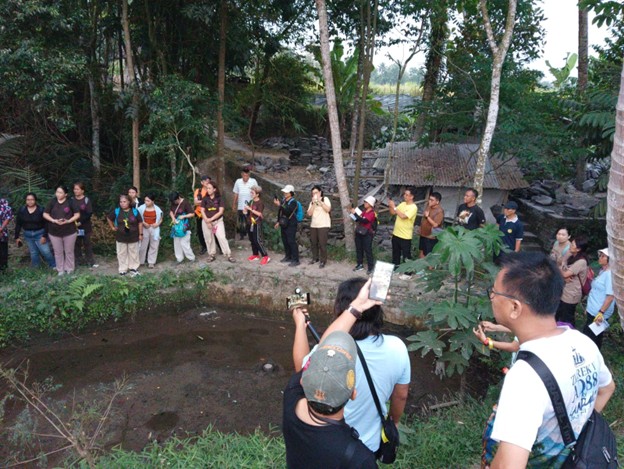
Jakarta (AsiaNews) – An Indonesian “missionary walk” inspired by the far more famous route to Santiago de Compostela in Spain, will retrace the roots of the faith and mission of the Catholic Church in the Central Java region of Indonesia.
Entitled “Bethlehem van Java”, the pilgrimage route unfolds through the key sites of the local Catholic Church. The title, explains the Catholic website LiCAS.news, has long been associated with the small town of Muntilan, a place deeply rooted in the history of the Catholic mission on the island.
This tradition began with the founding of Xavier College, the boys’ boarding school established by the Dutch missionary and pioneer Fr Frans van Lith, SJ; this was joined by the girls’ boarding school set up by the Ursuline Sisters of the Holy Family (OSF), which stands near the Mendut Buddhist temple in the neighbouring regency of Magelang.
Over the decades, the two institutions have educated generations of Catholics who have gone on to serve communities throughout Indonesia.
Although the school and boarding house in Mendut no longer exist, the history of the Catholic mission has endured through the generations, preserved in the schools and at the Muntilan Mission Museum, where visitors can trace the origins of the Church’s evangelising work in Java.
The first ‘Camino Misionero’ took place on 27 and 28 June, with over 70 participants gathering in Muntilan to experience two days of prayer, historical reflection and fraternal fellowship.
Most of the participants came from Jakarta and other major cities in Indonesia. Parishioners from parishes near Muntilan also joined the initiative as volunteers, helping to organise the activities throughout the two-day event.
The pilgrimage enabled participants to visit some of the most significant sites in the history of the Catholic mission in Java: these included the village of Kembaran, the FIC Brothers’ House, Van Lith High School, the Sanjaya Pastoral Centre (PPSM), the Kanisius Foundation (YKCM), the parish church of Muntilan and the Mission Museum.
Conceived as a blend of history, spirituality and community life, the Camino Misionero began on Saturday 27 June with a historical walking tour from the Sanjaya Pastoral Centre of the Archdiocese of Semarang to the Missionary Heritage Site in Muntilan.
In the afternoon, participants attended a number of formation sessions and visited the Mission Museum, before gathering for an evening of fellowship. The day concluded with evening prayers at the historic Catholic cemetery in Muntilan, known as Kerkhof Muntilan.
The following day, the pilgrims walked from Kerkhof Muntilan to Mendut Church, situated opposite the Mendut Buddhist temple.
The route continued to Kerkhof Mendut before concluding at St Peter’s Church in Borobudur, where Fr Yohanes Wahyu Rusmana celebrated Holy Mass.
As the name clearly suggests, the “Camino Misionero” draws inspiration from the more celebrated and famous Camino de Santiago.
Like its Spanish counterpart, the pilgrimage aims to be more than just a physical journey: it combines spiritual renewal, historical learning and community life, encouraging participants to deepen their understanding of the Catholic mission in Java and to strengthen bonds of faith and brotherhood.
The organisers see the inaugural pilgrimage as the start of an ongoing movement that will introduce a greater number of Catholics to the missionary heritage of the local Church and of the Indonesian Church more generally.
The next Camino Misionero, provisionally scheduled for November, is expected to involve a larger number of pastoral workers and attract participants from across the archipelago.
Through the pilgrimage, the organisers hope that the history of the Church’s mission in Java will not simply be remembered, but experienced first-hand, inspiring a new generation of Catholics to carry forward the missionary spirit in the spirit of faith, service and fraternal communion.
Photo: Licas / Martinus Sudartomo

.png)










