








Kazakhstan's future post referendum
President Tokayev secured the endorsement he sought with the usual “Soviet-style” vote margins. He now faces the challenge of truly making Astana a model for the region, with a political system capable of balancing the strength of the state with popular consent. The first test will be the parliamentary elections scheduled for this summer.
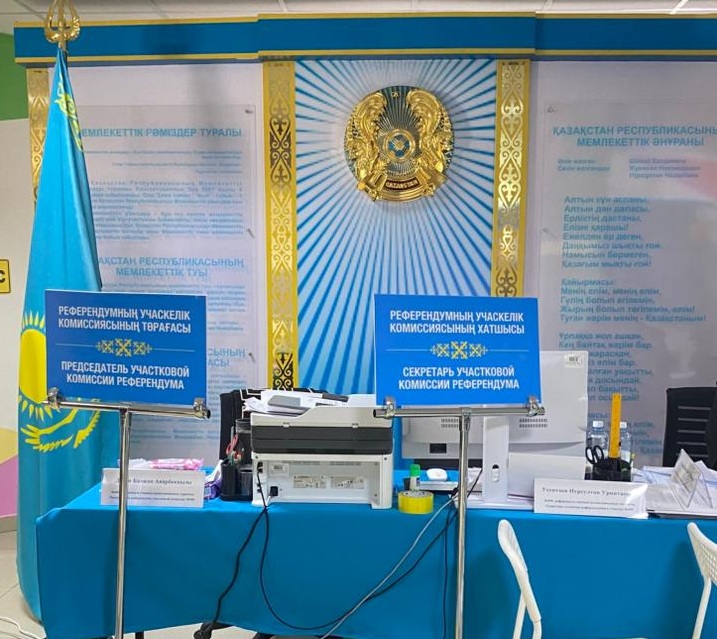
Astana (AsiaNews) - The referendum on amendments to Kazakhstan’s constitution, held on March 15, gave President Kassym-Jomart Tokayev the endorsement he so desired, with the usual “Soviet-style” percentages exceeding 80% and a voter turnout of over 70%.
Now Tokaev must succeed in putting the “New Kazakhstan” into practice—a system that promises to combine the strength of power with popular consent, neither a democracy nor an autocracy, but a model that could serve as a reference for other countries in the Central Asian region, which are also deeply committed to seeking appropriate changes, and perhaps even for many other countries and regions around the world.
The Director for the Asia Sector of the Organization of Islamic Cooperation (OIC), Saudi national Imran Sadihov, commented on the Kazakh referendum, praising the high level of public participation, which saw active engagement in social discourse in the months leading up to the vote, helping to shape “an awareness of the country’s constitutional future.”
The referendum itself was very “peaceful and orderly,” with a significant presence of international observers. The Secretary-General of the Shanghai Cooperation Organization, Oleg Kopylov, also stated that his organization’s observer mission “found no violations of procedures” that could have influenced the referendum’s outcome.
The run-up to the vote featured numerous cultural and artistic events, in addition to rallies and meetings organized by political institutions. At the Philharmonic Academy named after Erkegali Rakhmadiev, the campaign of the national coalition “For the People’s Constitution of a Just and Progressive Kazakhstan” came to a close; the coalition had organized thousands of meetings at various levels, engaging over a million people in discussions about the country’s future.
After the results were announced, Tokayev sought to meet with representatives of the country’s youth movements, stating that “the new constitution is the foundation of our independence and sovereignty” and urging young people to take a leading role starting with the upcoming parliamentary elections to be held this summer, to elect deputies to the new unicameral chamber or Kurultaj, the “People’s Assembly.”
In the capital, Astana, all social and professional groups were involved, including representatives from the worlds of education and science, healthcare and transportation infrastructure, as well as the construction sector and small and medium-sized enterprises, and so on. At the final assembly in the Philharmonic Theater, the results of this massive grassroots effort were presented, featuring speeches by deputies of the “old” Mažilis such as Ajdos Sarym and Marat Bašimov, leaders of the coalition in favor of the new constitution.
Also speaking were the secretary of the city branch of the Amanat party, Mukhammed Bolysbek, the secretary of the Auyl party, Ulan Abdykhanov, and several other politicians and social activists. The assembly opened with a lively concert program featuring the famous singing duo Ulykpan Zholdasov and Farida Zholdasova, the contemporary dance group Alem, the winner of The Voice Qazaqstan Kuralaj Mejrambek, and many other artists.
The chairman of Uzbekistan’s election commission, Zajniddin Nizamkhodžaev, was also present as one of the international observers and gave a very positive assessment of the referendum, as reported by Kazinform, having received comprehensive explanations prior to the vote that outlined all stages of the campaign, which in his view “constitute an excellent example of how a truly participatory democracy can be built.”
The impressions of many observers and commentators agree that Kazakhstan’s experience could serve as a “new milestone” for the entire region, highlighting the extensive and meticulous preparation at all levels, and hoping that beyond the concerts and applause, it will demonstrate real progress in the country’s governance, respect for rights, and international relations.
Photo: Nurken/Wikipedia

.png)
24/10/2019 17:56










