








Blessed Mazzucconi and the Church of Papua New Guinea today
This year marks the bicentennial of the birth of the Italian missionary killed on Woodlark Island in 1855. For this occasion, the bishops of Papua New Guinea and the Solomon Islands recently asked PIME’s former superior general, Father Ferruccio Brambillasca, to speak about the relevance of the testimony of the institute's first martyr. We publish extensive excerpts from his address.
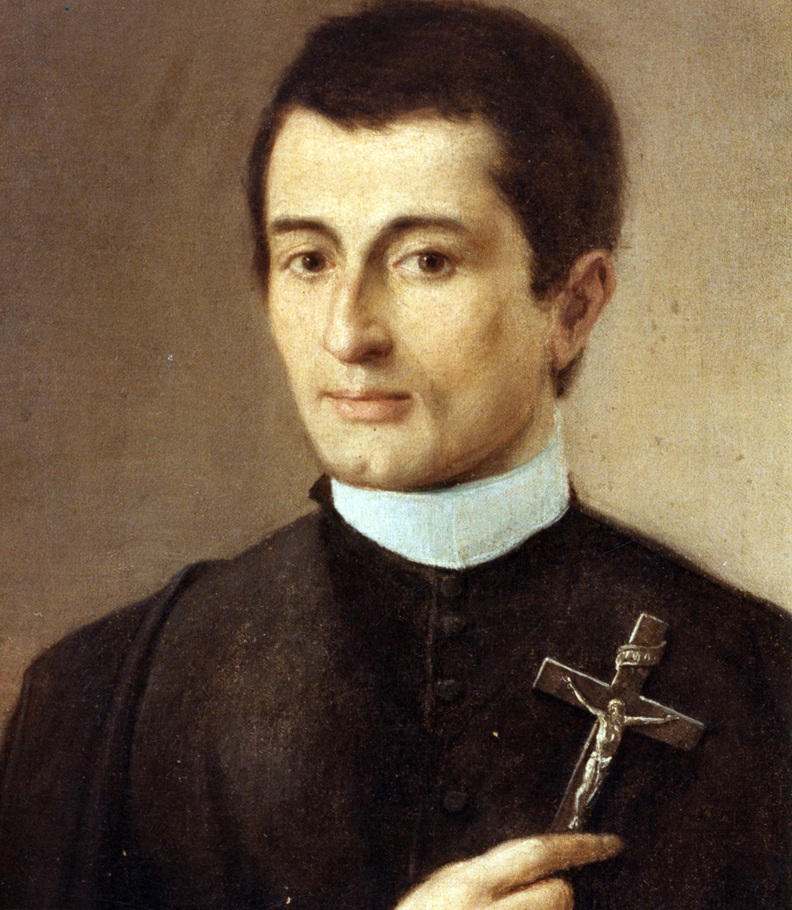
Killed on Woodlark Island when he was just 29, beatified in 1984, Giovanni Battista Mazzucconi is the first martyr among the PIME missionaries.
This year marks the 200 years since his birth, in Lecco, Italy, on 1 March 1826, an anniversary celebrated in Italy but also in Papua New Guinea, the country to which he gave his life.
For this reason, the Catholic Bishops’ Conference of Papua New Guinea and the Solomon Islands recently asked Father Ferruccio Brambillasca, former superior general of PIME and currently a missionary in the Diocese of Fukuoka, Japan, to offer to their assembly a reflection on what this figure can still teach the Church today.
We publish below extensive excerpts from Father Brambillasca's address.
In the 175 years of PIME history, 19 missionaries have died in violent circumstances.
When missionaries receive their mission cross, they repeat words written by Mazzucconi:
“Blessed will be the day when I am asked to suffer for the Gospel.
But even more blessed will be the day when I am worthy to give my life for it.”
When he arrived in Woodlark, he wrote:
“The mission means being close to the people and learning their language.
Then, when God wills, we will speak to them about Him.”
This is very important.
Mission begins not with speaking – but with presence.
Not with teaching – but with listening.
Mazzucconi also experienced failure, suffering, and discouragement.
He once wrote:
“Someone might think we have done nothing this year.
But I tell you, we have done a lot, because we have suffered a lot.”
This is a very different way of thinking.
From a human perspective, his mission seemed a failure.
But from a spiritual perspective, it was a success.
His life teaches us something important:
success in God’s eyes is not the same as success in human eyes.
Bishop Panfilo also wrote about him: “From a human point of view, the first mission in Woodlark and Rook Islands ended in tragedy. It looked like a complete failure. But from a spiritual point of view, it was a great success. His life, even more than his death, is an example for those who want to serve the Church. It is also an example for people who face difficulties, suffering, and disappointment.”
Where is our home?
Sometimes I ask myself: where is my true home?
We all need a place where we feel we belong.
But as missionaries, we discover that home is not only a place.
Home is something inside us.
If we are at peace within ourselves, we can feel at home anywhere.
I believe Mazzucconi felt at home in Papua New Guinea, even in difficulty.
Because he was at peace inside, that place became his home.
Where does Jesus send us? There are no borders and no limits. We are sent to everyone. The Gospel is for all people – not just for some, not only for those who are open or welcoming, but also for everyone.
That is why Mazzucconi returned to Woodlark after he recovered from illness, even though he knew it was a difficult place for mission.
His spirituality
What can we learn from his spirituality?
- Courage and humility (He was ready to go too far and unknown places to bring the Gospel, accepting suffering with humility)
- Love for the Cross (He did not see the cross as a problem, but as God’s way of bringing salvation)
- Joy, even in difficulty (Even in difficulties, he remained joyful. As Pope Francis says, joy is the sign of a true missionary)
- Patience and optimism (: He accepted people as they are, with patience. His faith gave him hope and light. He saw opportunities even in difficulties and had inner peace.
- Spirit of sacrifice (He had a strong spirit of sacrifice)
- Radical faith (Even in a short time, he lived the Gospel fully)
- Fidelity to the Gospel (He stayed faithful to the Gospel without compromise)
He gave everything.
Not many visible results – but total self-giving.
And this is what makes him great.
To speak about Blessed Giovanni Mazzucconi here, where he gave his life, is not just remembering someone from the past. It is something deeper. His life challenges us, speaks to us, and can even change us.
The Church lives through memory – but not a memory that is fixed like in a museum. It is a living memory that shapes who we are and guides our future.
The Church in Papua New Guinea did not begin with buildings or structures. It began with people meeting each other, with journeys, and with lives given.
Among those lives, Blessed Mazzucconi has a special place – ot because he did many visible things, but because he gave everything.
What does his witness mean for us today?
1. A holy Church
First, we are called to holiness.
Holiness means living love fully.
It is not something distant – it is something beautiful, joyful, and concrete.
We are all called to be witnesses.
Not only priests, not only bishops - but all baptized people.
Suffering alone is not martyrdom. It becomes martyrdom when it is a witness. The word “martyria” means, “to bear witness.” Death can be the final and strongest act of that witness. But we are all called to witness to Jesus every day. Moreover, to do that, we must learn to die to ourselves.
Martyrdom is the highest form of witness.
But daily life is also a form of witness.
We must learn to “die to ourselves” every day.
2. A prophetic Church
Second, we are called to hope.
There is a saying often attributed to Martin Luther: “If I knew the world would end tomorrow, I would still plant an apple tree.” Whether he said it or not, the idea is important. It means having hope that goes beyond what we can see.
Hope means trusting that there is a good future, even though there is a cross. Blessed Mazzucconi gives us this kind of hope – a hope that believes God is still with us, walking with us, and still able to surprise us.
Hope means believing in a future, even when we do not see it.
I remember asking missionaries in Myanmar if they wanted to leave during a difficult time.
They said: “No. We will stay with the people.”
This is hope.
Hope stays.
ope remains.
Hope trusts.
You are here as bishops because you said “yes” to a call to serve your community. Maybe it was not something you would have chosen on your own, but you accepted it out of love. Moreover, isn’t that already a powerful sign of hope?
3. A mystical Church
Third, we are called to be a mystical Church.
As Bishop Thomas Menaparampil said, martyrdom is a kind of mysticism – it is even an experience of deep union, almost like ecstasy. Often, we focus only on the suffering in martyrdom, but its deepest meaning is the martyr’s close and personal encounter with Christ at the moment of giving his life.
Martyrdom is not only suffering.
It is a deep union with Christ.
As the early Christians said:
“Christ is present with the martyr.”
This means that even today, Christ is present wherever the Church suffers.
So, martyrdom is a true expression of Christian mysticism. It is not something optional or extra. It is part of being a disciple who follows Jesus and carries the cross. This means that martyrdom is also a call to the Churches of Papua New Guinea and the Solomon Islands to rediscover their deeper spiritual identity – their way of living in the world as people shaped by the cross of Christ.
The image of Jesus, humiliated and crucified, is not just something from the past. It is still a reality in the Church today. Because of this, the Church needs to examine itself honestly. Has the message of Christ’s resurrection led us to think too much in terms of success and triumph? The Christian path is not about worldly victory, but about love, sacrifice, and a life shaped by the cross, just like Jesus lived.
The Church is not meant to show human glory, but only Christ. Therefore, we have to ask: what kind of visibility are our Churches looking for today?
4. A crucified Church
Finally, we are called to be a crucified Church.
Jesus shows His power not by dominating – but by giving His life.
This is very different from the logic of the world.
Jesus is the centre who becomes “periphery.” He shows His authority by giving Himself up. This is what it means to call Him the “crucified Lord.” Normally, a lord stays at the centre of power. However, Jesus shows His lordship by being crucified. From the cross – from the very edge – He reveals true authority. There, His power and His love become one. His love has authority.
The Church must not seek power or prestige.
It must reflect the image of the crucified Christ.
This means humility.
This means service.
This means love that is ready to suffer.
Where there is life, there are structures and institutions. The Church is also an institution, but a unique one – formed by the crucified Lord. The life of the Church should reflect the image of the crucified Jesus. It should be a life willing to accept humiliation in order to save others from humiliation.
Pope Francis said, “the Church is the Church of martyrs: they suffer, they give their lives, and we receive God’s blessing through their testimony”. And then, “there are also hidden martyrs, those men and women, faithful to the power of the Holy Spirit, to the voice of the Spirit, who make way, who seek new ways to help their brothers and sisters and to better love God”. Moreover, for this reason they “come under suspicion”, they are “defamed, persecuted by so many modern Sanhedrins who believe themselves masters of the truth”.
Today, even the church can be hit with false accusations.
Being falsely accused can really destroy a person.
When lies are told about what we believe in most deeply, it is hard to stop thinking about it.
In recent years, nothing has damaged the church’s reputation more than this.
In a way, being falsely accused can feel like a kind of martyrdom.
Conclusion
The martyrdom of Blessed Giovanni Mazzucconi reminds us of a fundamental truth:
The Church grows through witness.
Not through power.
Not through success.
But through the gift of self.
For the Church of Papua New Guinea and Salomon Islands, this means continuing to build communities that are rooted in the Gospel, capable of reconciliation, open to mission, faithful in trials.
Mazzucconi planted a seed with his life.
Now, it is our task to help that seed grow.
May his example guide you in your ministry.
May it strengthen the Church in Papua New Guinea and the Solomon Islands.
And may it inspire all of us to live the Gospel more deeply.
* PIME missionary

.png)
07/07/2024 12:55
20/05/2019 17:04










