








Kyrgyzstan’s bid to tap into the halal industry
Bishkek is stepping up its efforts to gain a foothold in the global market for products certified according to Islamic religious standards. To make the whole process more accessible to businesses, a dedicated portal has been launched for applying for certification, whilst a QR code displayed on products allows consumers to access specific information.
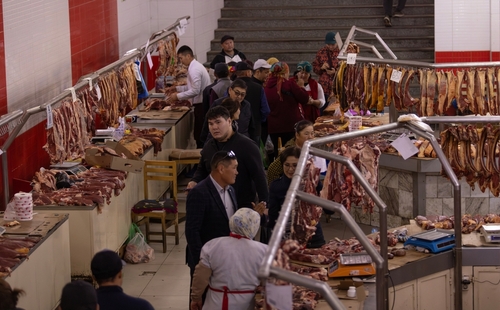
Bishkek (AsiaNews) - The Halal industry is now a powerful global market with billions in investment and revenue that continues to grow, and Kyrgyzstan is stepping up its efforts in this direction. There is still much work to be done, because whilst the ‘Halal’ label is seen everywhere, this does not necessarily mean that a product or service actually complies with Sharia law.
Experts estimate that last year alone, 2.43 trillion dollars were spent worldwide across various sectors linked to Halal production, ranging from food to medicines, fashion, travel and media.
By 2028, this figure could rise to 3.36 trillion, representing a 5.3% increase, according to analysts at Kaktus.media. Islamic finance assets were valued at 4.93 trillion in 2023, set to reach 7.53 trillion in 2028, representing an 8.9% increase.
The top five countries leading the Islamic economy in products and services for Muslim consumers are Malaysia, Saudi Arabia, Indonesia, the United Arab Emirates and Bahrain.
Kyrgyzstan is moving in line with these global trends, with increasingly intensive programmes over the last two decades; in 2009, the Halal industry development sector had already been established within the Ministry of Economy, and a dedicated centre for this purpose has been operational since 2012. In 2015, the government in Bishkek approved a ‘Concept for the Development of the Halal Industry’, drafting regulatory and legal acts and adopting the necessary standards, culminating in the 2024 law ‘On the Halal Industry in the Kyrgyz Republic’, which establishes the procedures for implementing certification and approval systems.
To obtain Halal certification, one must go through the sole authorised Centre for Standardisation and Metrology, covering all foodstuffs from meat to eggs, fish and cereals, sugar, oil and fats, as well as retail and catering services. All stages of production and marketing must then be agreed with the Religious Administration of Muslims of Kyrgyzstan, which issues the necessary certificates of compliance with Sharia law.
To make the entire procedure more accessible to businesses, a special portal dedicated to the Halal industry has been launched, through which certification applications can be officially submitted; once issued, certification remains valid for one year, with the option to extend it following further inspections. The guarantee is provided via a QR code to be displayed on products and items compliant with all regulations, linking to the state portal and featuring a unique number alongside details of production or services, and the product’s contents.
Without the necessary reference, it is prohibited to apply labels bearing the terms ‘Halal’, ‘Muslim’, Adal or the Arabic word حلال, which could cause confusion among buyers. Further control measures and amendments to the codes of conduct regarding infringements are being prepared, increasing the responsibility of manufacturers and traders. The Development Centre assures that “the approved standards are becoming increasingly numerous and specific”, and will soon be adapted for the production of cosmetics and confectionery as well.
Kyrgyzstan is the first country in the Eurasian Economic Union (EAEU) to have introduced unified Halal standards into its legislation, and it is also proposing that other member states benefit from this experience by adopting uniform criteria across the entire post-Soviet economic community.

.png)
07/02/2019 17:28










