








Leo XIV: ‘The Church, by its very nature, is called to be poor’
In his message for the Tenth World Day of the Poor, the pontiff calls for “rediscovering the faces of so many brothers and sisters”. Sadly, “The loss of a sense of the transcendent [. . .] places one above the other”, while “a desecrating logic of abuse [. . .] marginalizes and humiliates.” In his message for Grandparents' Day, the pope tells the elderly: “do not be afraid of fragility.”
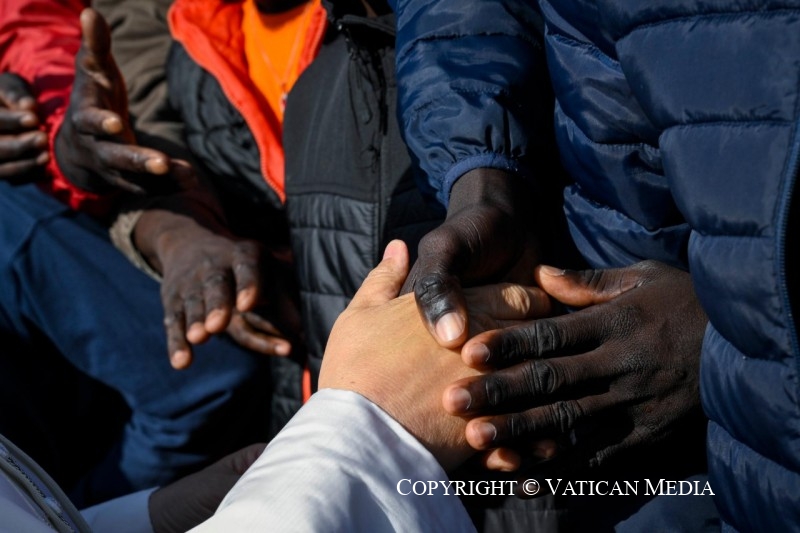
Vatican City (AsiaNews) – Pope Leo XIV's message for the tenth World Day of the Poor, on 15 November 2026, was released yesterday, providing an opportunity to reflect on the many faces of poverty and encourage acts of solidarity, centred on the theme, The Lord is the refuge of the poor.
In it, the pontiff suggests a "path" to follow: "Return to the Word of God to appreciate the importance of the poor in the life of the Church." The observance, Leo writes, “will serve as a significant step toward rediscovering the faces of so many brothers and sisters who seek refuge in God and long to feel at home in our communities.”
The words of the psalm (Ps 14:6) that inspired the theme indicate the “standard for Christian living," because they reveal God and recognise human poverty. Conversely, the people deprived of God in the "dramatic moment" of the tragic destruction of the Temple of Jerusalem also experienced the “unprecedented material and moral misery,” Leo notes.
The event (AD 70) serves as a reminder that the Word in question possesses a "relevance" that spans every generation, highlighting a "contradiction" that also inhabits the present, between those who live wisely and those who live "as if there were nothing greater than themselves.”
In his message, the pope speaks about “social injustice arising from arrogant corruption, which is as deplorable as it is discriminatory”; which comes with “The loss of a sense of the transcendent,” in which there is not “so much a theoretical denial of God’s existence,” but rather an evident “failure to take his goodness and mercy into account in the pursuit of personal and social justice.”
The poor, whose “numbers are growing”, are the first to suffer the consequences of this “loss”. And “The absence of God no longer places people side by side in mutual respect, but places one above the other in a relationship of domination and oppression.”
Thus, “a desecrating logic of abuse and exclusion is laid bare, one that marginalizes and humiliates. Not only individuals but entire populations find themselves in this condition.”
Some chilling and underhanded “tactics” are used to silence “the poor’s cry for justice”. For instance, “The digital world exacerbates prejudice against them and reinforces the veil of indifference surrounding their plight. The poor have no choice but to cry out to God.”
“In this complete surrender, a sense of one’s own dignity blossoms anew; they recognize sisters and brothers with whom to share their dreams, and hope quietly becomes reality. Taking refuge in God means finding true and lasting protection – the kind that the powerful cannot guarantee and prefer to deny.”
Leo XIV adds that “refuge” is not only a “promise”, but “a reality in the person of Jesus Christ”, who is “God’s gift to the poor”.
“The poor of our day are the forgotten and the marginalized: robbed not only of bread, but also of a voice and a face. May they encounter the Son of God, who draws near to everyone without neglecting anyone. May they encounter him, first and foremost, in those who call themselves Christians.”
For the pope, “God’s steadfastness” stands against “The obsession of those who accumulate wealth,” bearing “witness of real people, opens hearts and welcomes all into his love”.
“In Christ, therefore, we are called to become poor and to be a refuge for the poor”. At the same time, “The Christian community cannot remain indifferent to the many who today stand at the door but remain invisible to those who are shut within their own walls. The Church, by its very nature, is called to be poor”.
Thus, the faithful are urged to reflect on some questions that require “a serious examination of conscience, to assess how much more we are called to do on behalf of the poor and for their liberation”. On the way to the Tenth World Day of the Poor, they must “see that the poor themselves become a refuge for others.”
To this end, we must ask: “Are we a sign of a God who is a refuge for the poor? Are we aware of our own poverty, and do we prefer it to unjust wealth? Do we go where the poor are, experiencing their marginalization? Do we listen to their thoughts and share their hopes?”
Leo XIV also turned his attention to the 800th anniversary of the passing of Saint Francis of Assisi, which falls this year. Like the saint, who “was moved with compassion for the beggars,” we must “bear witness that it is possible, even today, to experience the same joy by putting ourselves in the shoes of the poor and listening to them rather than merely speaking about them.”
“I will never forget you (Is 49:15)” is instead the theme of the VI World Day of Grandparents and Elderly, which is celebrated on the fourth Sunday of July, that is, next 26 July.
This event “is an opportunity to rediscover that the Church is called to be a mother to all and that at any age it is always possible to recognize ourselves as sons and daughters of God,” as well as an invitation to young people “to revive the beautiful custom of visiting their grandparents, the elderly members of the family and even those who have no one to visit them. Bring them, through this message and your presence, the closeness and affection of the Pope.”
In the message, Leo also addresses senior citizens. “I would like to say to you: do not be afraid of fragility! It is precisely this weakness that holds within itself a new potential that also illuminates the other stages of life,” he said. Indeed, “This is how we can live out our old age as Christians: ‘fragile’ yet at the same time ‘called’.”
Finally, “I urge you, dear friends, to join me in praying earnestly that peace may soon come to the whole world.”

.png)










