Kabul (AsiaNews) - The arrest of dozens of women by the Taliban sparked a protest in the western city of Herat, followed by an armed intervention which, according to several accounts, resulted in casualties and injuries. This incident occurred at the same time as a new UN report highlighted an increase in clashes with the opposition and a deterioration in human rights conditions, whilst Pakistan resumed air raids last night against certain Afghan provinces.
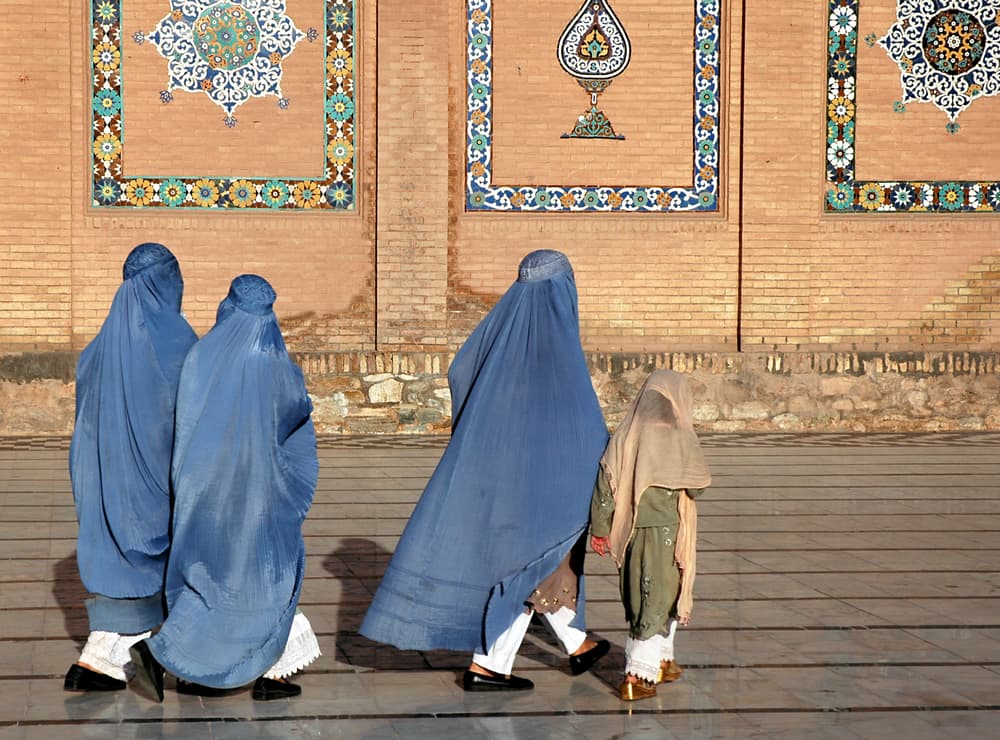
According to witnesses and participants in the demonstration, the protest erupted following a series of arrests of women deemed guilty of wearing the hijab in a manner not compliant with Taliban regulations. A nurse, for example, was taken away after her shift despite being accompanied by her husband. Demonstrators, both men and women, took to the streets after local authorities launched a campaign of checks. Local sources report that in Herat, wearing a veil that covers only the hair is often not enough. Several women have had to resort to using surgical masks – the kind used in hospitals and which everyone has become familiar with during the pandemic since 2020 – to conceal their faces.
Some healthcare workers told the BBC that at least two people died during the clashes. Other witnesses reported that the Taliban fired directly at the heads, chests and legs of the demonstrators. The Taliban in Herat denied there were any casualties, whilst confirming they had intervened to disperse the demonstration and ‘maintain public order’. Others, however, claim that security forces used batons, whips and firearms. In some videos circulating on social media, gunshots can be clearly heard, along with the screams of women begging the officers to stop hitting the demonstrators.
During the march, slogans such as “education, work, freedom” were also chanted – demands that Afghan women have been making since the Taliban returned to power in August 2021. Since then, protests have become increasingly rare due to the harsh crackdown by the new government in Kabul.
The requirement to wear the hijab was introduced across the country in May 2022, but in Herat its enforcement appears to have tightened further in recent weeks, during which the morality police have carried out checks in cars and rickshaws to ensure compliance with Taliban rules, which prohibit women from wearing make-up and showing their faces.
Richard Bennett, the UN Special Rapporteur on human rights in Afghanistan, has expressed concern over what he described as “an excessive use of force against apparently peaceful demonstrators”. According to the quarterly report presented by UN Secretary-General António Guterres to the Security Council, between February and April 2026, UNAMA, the UN mission in Afghanistan, recorded 3,687 security-related incidents, an increase of 57.7% compared to the same period the previous year.
Armed groups hostile to the Taliban remain active in several provinces. The National Resistance Front, the National Mobilisation Front and the Green Trend Movement have claimed responsibility for a total of 18 attacks, sixteen of which have been confirmed by the United Nations. Although they do not pose a concrete threat to the Taliban’s territorial control, these groups continue to operate by launching rockets, carrying out grenade attacks and assaulting checkpoints and security convoys.
The report also highlights the persistence of serious human rights violations. During the three-month period under review, five killings of former members of the Afghan security forces, twenty cases of arbitrary detention and eight incidents of torture or ill-treatment were recorded. The Taliban authorities have also carried out 228 public floggings, involving 29 women, 196 men and three minors accused of offences such as adultery, gambling, alcohol consumption or homosexual relations.
The situation for women remains particularly alarming. Around 3.8 million Afghan girls are currently excluded from the education system, including over 2.6 million adolescents. Every year, a further 250,000 girls are denied access to secondary education. Taliban restrictions also continue to limit women’s employment, freedom of movement, access to public spaces and even participation in religious activities.
Internal tensions are compounded by those with Pakistan. In the last few hours, Islamabad has confirmed that it has carried out air raids in the eastern provinces of Kunar, Khost and Paktika against alleged bases of Tehrik-i-Taliban Pakistan (TTP), the Pakistani Taliban, who aim to create an Islamic Emirate modelled on the Afghan one in Pakistan as well. Islamabad claims to have killed 26 militants, whilst Taliban spokesperson Zabihullah Mujahid reported on X the deaths of at least 13 civilians, including eleven children, one woman and one elderly person.
According to UN figures, between January and March, hostilities along the border resulted in a total of 764 civilian casualties, including both deaths and injuries. Several analysts believe that Islamabad is seeking to bring about a change of government in Kabul in an attempt to reduce violence in the provinces bordering the two countries.