








Mahrang Baloch, Balochistan's most prominent activist, sentenced to life in prison
Convicted for the death of a soldier during a protest in Gwadar in 2024, the leader of the Baloch Yakjehti Committee plans to appeal. Human rights groups lament the lack of transparency in the trial and fear new tensions in the province, where the local ethnic group has challenged Islamabad and foreign economic interests.
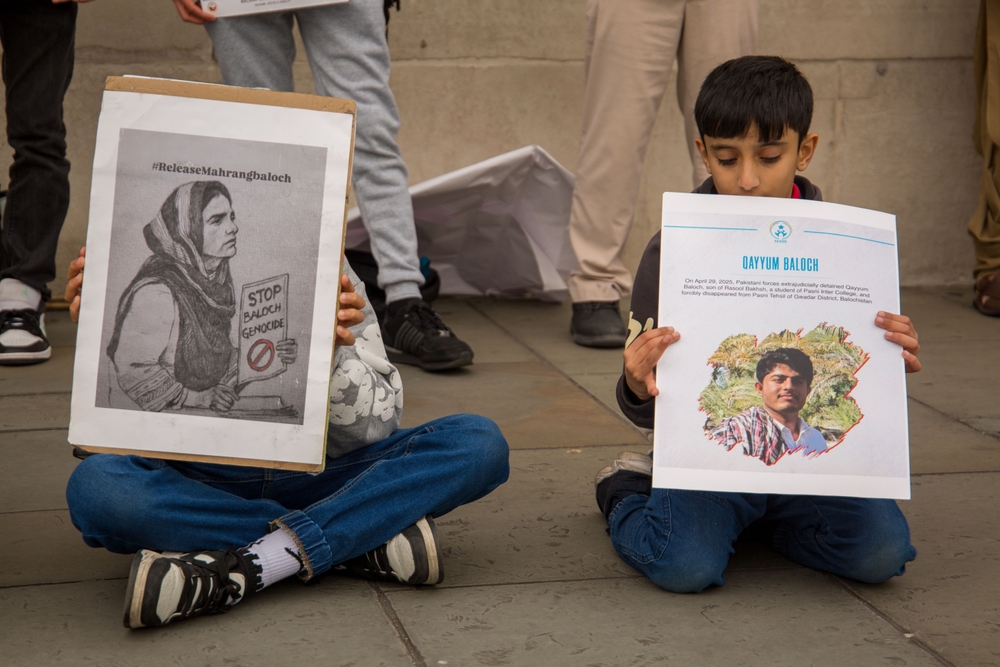
Quetta (AsiaNews) – Baloch activist Mahrang Baloch, one of the most prominent figures in Balochistan’s civil rights movement, has been sentenced to life in prison over the death of a member of the security forces during a protest in the city of Gwadar in July 2024.
The ruling, handed down yesterday by the Anti-Terrorism Court in Quetta, also involves activist Sibghatullah Shah. Both were found responsible, along with other protesters, for the killing of Shabir Ahmed during clashes that broke out after a protest organised by the Baloch Yakjehti Committee (BYC), a civil rights group that has long denounced abuses inflicted on the local population by the Pakistani military, particularly enforced disappearances and extrajudicial killings.
According to the prosecution, Mahrang Baloch gave a speech that incited protesters to attack a security forces vehicle. The court found that her words contributed to the events that led to the soldier's death.
In addition to life sentences, the two convicts will have to pay 200,000 rupees (about US$ 720) in compensation to the victim's family.
The decision comes at the end of a particularly controversial trial.
The hearings, initially scheduled to take place in Gwadar, were moved to Quetta for security reasons, according to local authorities, and were later conducted inside a high-security prison, with several witnesses connected via videoconference.
The defence contested the procedure from the start for a serious lack of transparency.
“Dr. Mahrang’s case was shifted from an open court to a jail trial, and from the jail it was shifted to a faceless trial,” said Nadia Baloch, the activist’s sister and a member of her legal team.
According to Nadia Baloch, no one knew the locations from where the judge, prosecutor, and witnesses participated, adding that her sister’s legal team had consistently demanded a fair and transparent trial, and will appeal the conviction.
Balochistan's Chief Minister, Sarfraz Bugti, described the ruling as a confirmation of the supremacy of law and reiterated that the government will continue to prosecute anyone involved in violent actions against the security forces.
A trained doctor, Mahrang Baloch became in recent years the most recognisable face of the campaign for the rights of ethnic Balochis, who live mostly in Pakistan's southwestern province, a region rich in natural resources but marked by severe poverty and decades of conflict between the central government and armed separatist groups.
For years, Islamabad has responded to calls for autonomy with increasing repression and militarisation, while pro-independence groups have carried out increasingly sophisticated attacks, often against law enforcement and foreign economic interests in the region.
Mahrang Baloch's notoriety is linked to the mobilisation against enforced disappearances, a practice also denounced by several international human rights organisations.
Numerous families accuse security forces of arbitrary arrests and secret detentions of Baloch activists, students, and supporters of nationalism.
Islamabad regularly denies these accusations, claiming that it is fighting terrorist groups responsible for attacks on civilians and infrastructure.
Over the years, Mahrang Baloch has received international recognition for her activism, appearing on the BBC's list of the 100 most influential women and on TIME100 Next, a list of emerging personalities from around the world.
The sentence sparked immediate reactions among activists and observers. Several civil society figures argue that her conviction risks further escalating tensions in the province.
For Gul Rehman Hamdard, a well-known human rights activist, the sentence constitutes punishment for people who struggle for political and cultural rights.
In his view, the demands of Pakistan's ethnic groups require greater democratic representation and political dialogue, rather than repressive measures.
Journalist Husnain Jameel also expressed concern, arguing that jailing political leaders and activists cannot address the root causes of discontent. In his view, ideas and movements advocating public rights should not be suppressed through imprisonment.

.png)
26/03/2025 17:50
02/02/2026 15:09
11/03/2025 17:08










