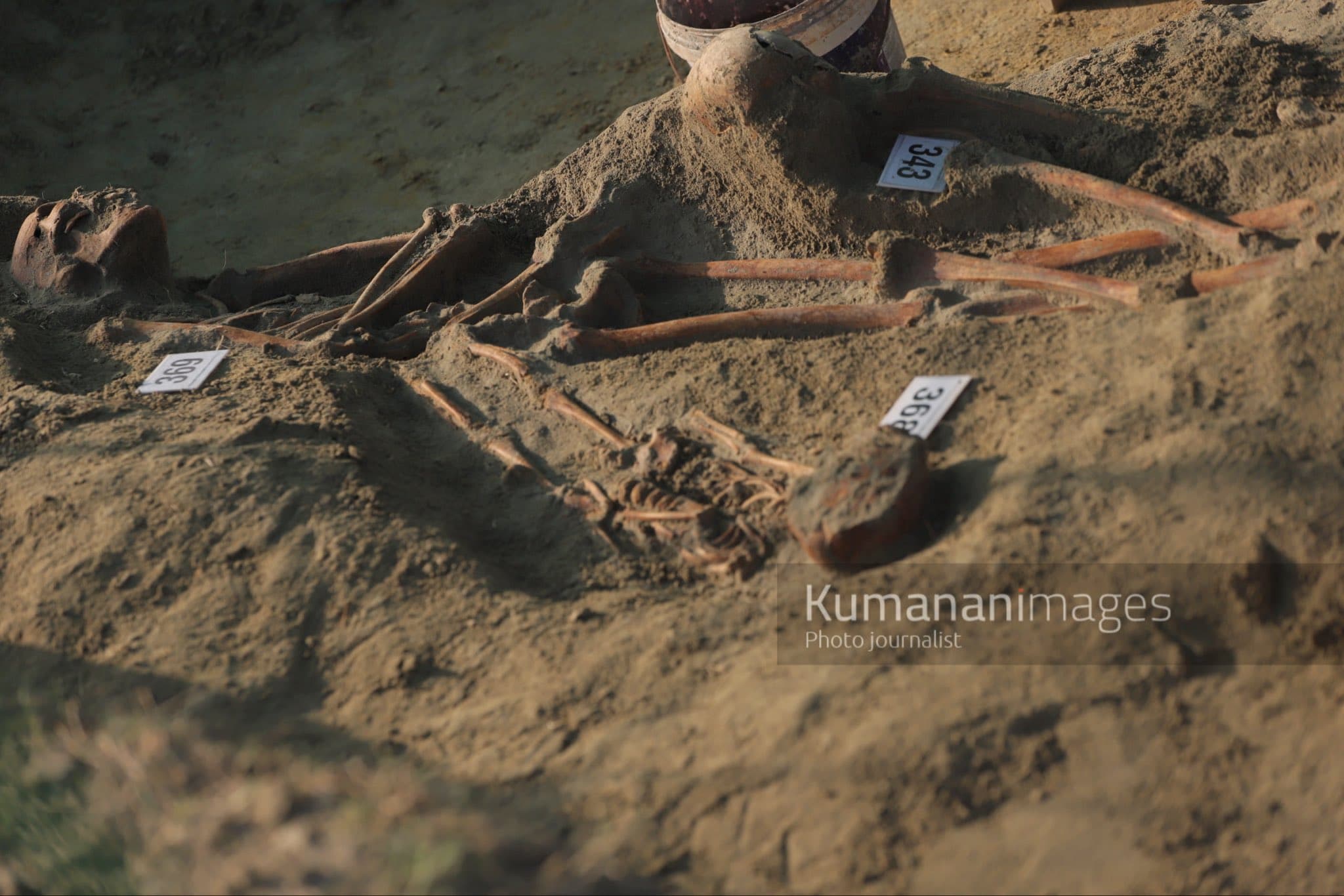
Colombo (AsiaNews) – The recently uncovered mass grave in Chemmani near Jaffna, northern Sri Lanka, is turning into the largest ever found in the country with 405 skeletal remains exhumed so far, exceeding all others hitherto discovered.
At least 377 have been disinterred in the third phase of excavations, already more than the 376 human remains found at the Sathosa mass grave, in Mannar, the largest until now.
Last weekend Sri Lanka's Justice Minister Harshana Nanayakkara visited the site, saying that all necessary steps will be taken to shed light on the situation and bring justice to the victims.
The comparison with Sathosa mass grave is important. After it was discovered during construction work in 2018, it has been the subject of a long-running controversy after six bone samples were sent to a lab in Florida for carbon dating, with findings showing that the remains dated back to the period between the 15th and 18th centuries.
The lead archaeologist, Professor Raj Somadeva, and the families of people who went missing during the brutal civil war that pitted the army against the Tamil Tigers, have slammed the findings, pointing out the presence of artefacts and metal bindings used to tie the victims’ legs, which suggest, the expert notes, that the remains belong to people murdered more recently, raising concerns over the chain of custody.
According to reports last Thursday from the Chemmani site, five skeletal remains were exhumed, including that of a child, while seven others have been identified. Among the items recovered as evidence were small beads, a bangle, nails and plastic fragments.
The previous day, investigators had recovered a metal fragment from the pelvic area of one of the remains, along with an object like a girl’s plastic bangle. A large metal object was also identified at the site with skeletal remains within it, leading excavation staff to careful clean it before proceeding further.
A court let a delegation led by the Minister of Justice, together with commissioners from the Office on Missing Persons, visit the site last Saturday to observe the ongoing excavation.
The Chemmani mass grave first attracted international attention in 1998 when a Sri Lankan army soldier, Somaratne Rajapakse, testified at the trial for the rape and murder of Tamil student Krishanthi Kumaraswamy, her mother, her brother, and a nephew, claiming that hundreds of ethnic Tamils had been buried at the site after they went missing or were killed during the military occupation of Jaffna in the mid-1990s.
Despite the scope of the findings, experts and activists continue to raise concerns about the lack of publicly accessible information and detailed forensic analyses, victim identification and investigations into what happened in the area.
Excavation and exhumation have remained the focus of operations, while the families of missing people and human rights activists want answers regarding the identities of the victims and the circumstances surrounding their deaths.
From 1983 to 2009, the island nation was the scene of a brutal civil war between the government and the Liberation Tigers of Tamil Eelam (LTTE), also known as the Tamil Tigers, an organisation that fought to set up an independent state in the predominantly Tamil northern and eastern provinces.
The war ended with the rebels’ defeat and a country still divided between an impoverished Tamil northeast coping with more than 200,000 refugees, and a better-off Sinhalese south.
Among Tamils, the violence endured by the population and more than a quarter-century of a brutal civil war between the army and Tamil Tiger rebels are a still vivid memory and an open wound among Tamils.