








Migrant workers: the hidden victims of Cyclone Ditwah
The flood hit the Free Trade Zone area hard, where textile production for global markets is concentrated. Workers, who often live in dormitories without even being registered, have lost everything. The associations that are taking care of them have appealed to the government in Colombo: “Abandoned by everyone, they need ad hoc interventions.”
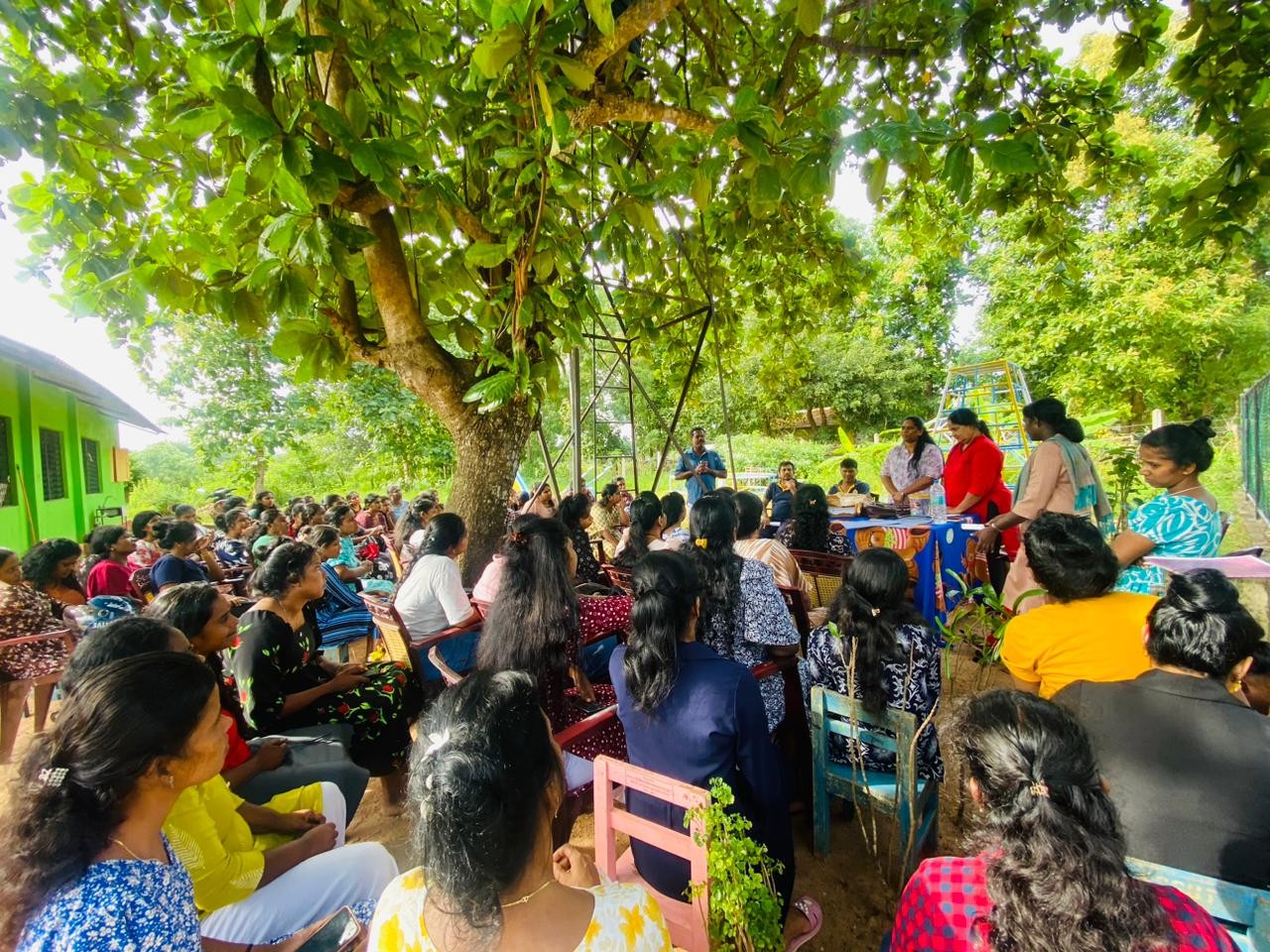
Colombo (AsiaNews) - In the great disaster that struck Sri Lanka with Cyclone Ditwah, a particularly difficult situation is that of textile workers living in the Free Trade Zone (FTZ).
Their temporary homes have been flooded, with sanitation and water supplies cut off and entire areas isolated by rising waters. Many have been evacuated to temporarily safer places, often suddenly and without certainty as to when they will be able to return home or resume their lives in safety.
According to preliminary data from the Ministry of Industry, more than 3,200 industries of all categories reported damage due to Cyclone Ditwah. The district of Gampaha has the highest number of affected businesses.
Some factories are partially submerged, while some suppliers have required workers to be present even under red alert conditions, putting people in grave danger.
Although aid has been provided to those affected in all 22 districts affected by Cyclone Ditwah, migrant workers from their home villages who live in rented houses or dormitories in the Free Trade Zone have not received the necessary attention.
Ashila Dandeniya, Executive Director of Stand Up Movement Lanka, Chamila Thushari, Executive Director of Da-bindu Collectives, and Chandra Devanarayana, Executive Director of the Revolutionary Existence for Human Development Organization, who work for the rights and welfare of migrant workers in the FTZ, confirmed to AsiaNews that heavy rains and flash floods have hit migrant workers in the textile sector hard.
The vast majority of those working throughout the FTZ come from abroad, they say. They have no relatives in the area. They all live in temporary rooms, dormitories, or rented accommodation, and the few essential items they kept in those small spaces, representing all their wealth, were swept away by the rains and sudden flooding.
"Our ‘Solitary Bridge’ and ‘Wellbeing Center’, as well as our Stand Up Movement Lanka offices, were turned into temporary shelters for migrant textile workers, to the extent of our capabilities. We also hosted sex workers who had relationships with our office. About 100 workers had their homes completely flooded with nowhere else to go. The villages had occupied common spaces such as temples, churches, and schools, so there was no place for these workers," said Ashila Dandeniya.
As the waters receded, they returned to their dormitories, but Ashila, Chamila, and Chandra said that meeting basic needs (bed, mattress, pillow, fan, mosquito net, wardrobe, small table, gas stove, and kitchen utensils...) such as food and clothing was a huge challenge for these migrant workers and the organizations that support them.
“We at Stand Up Movement Lanka took care of 400-500 workers during this disaster. But so far, we have not heard of any steps to compensate them for their losses. A rapid support mechanism should be provided to them. Indicatively, the cost of everything each worker has lost is around 250,000 rupees.”
According to Chandra Devanarayana, Executive Director of RED, based on assessments by their field workers, the flood severely affected 256 families and 1,100 individuals. As many as 397 private dormitories were damaged by the flood.
There is an urgent need for a thorough cleaning of flooded homes to prevent disease. Stagnant water has also led to a significant increase in mosquitoes, increasing the risk of waterborne diseases.
“With the support of our partner organizations, we have been able to procure and distribute disinfectant liquids and are assisting communities with the initial cleaning of dormitories. We are still in the process of assisting our workers,” added Chandra.
The Da-Bindu Collective is supporting 150 of these migrant workers in Katunayake, Biyagama, Northern Vavuniya, and Kilinochchi. Manager Chamila Thushari emphasizes how this disaster has highlighted the need for a social protection program for migrant workers in the North.
These workers were first affected by the war, then by the Covid pandemic, and finally by the unexpected storm and floods. A structured intervention is needed to help them cope with the destruction of their homes, loss of household items, exposure to disease, and psychological stress.
“Although 380,000 people have been affected in the district of Gampaha,” Thushari continues, “there is still no clear data on how many of them are workers in the free trade zones. They must be registered in the investment promotion zones because they represent a key group for attracting the large investments necessary for the country's survival.”

.png)
11/08/2017 20:05
09/06/2018 09:14
22/09/2016 08:53
29/05/2017 10:31
24/01/2007










