








Monsignor Bagaforo: ‘Lent and Ramadan coinciding is a blessing: created to live together’
The start of the holy season for Catholics and Muslims in 2026 falls at the same time on February 18. Filipino bishop calls for interreligious dialogue: “Walking together in faith.” An opportunity to “transform the heart and shape actions.” Looking at common “sacred tasks”: care for others, the environment, and peace.
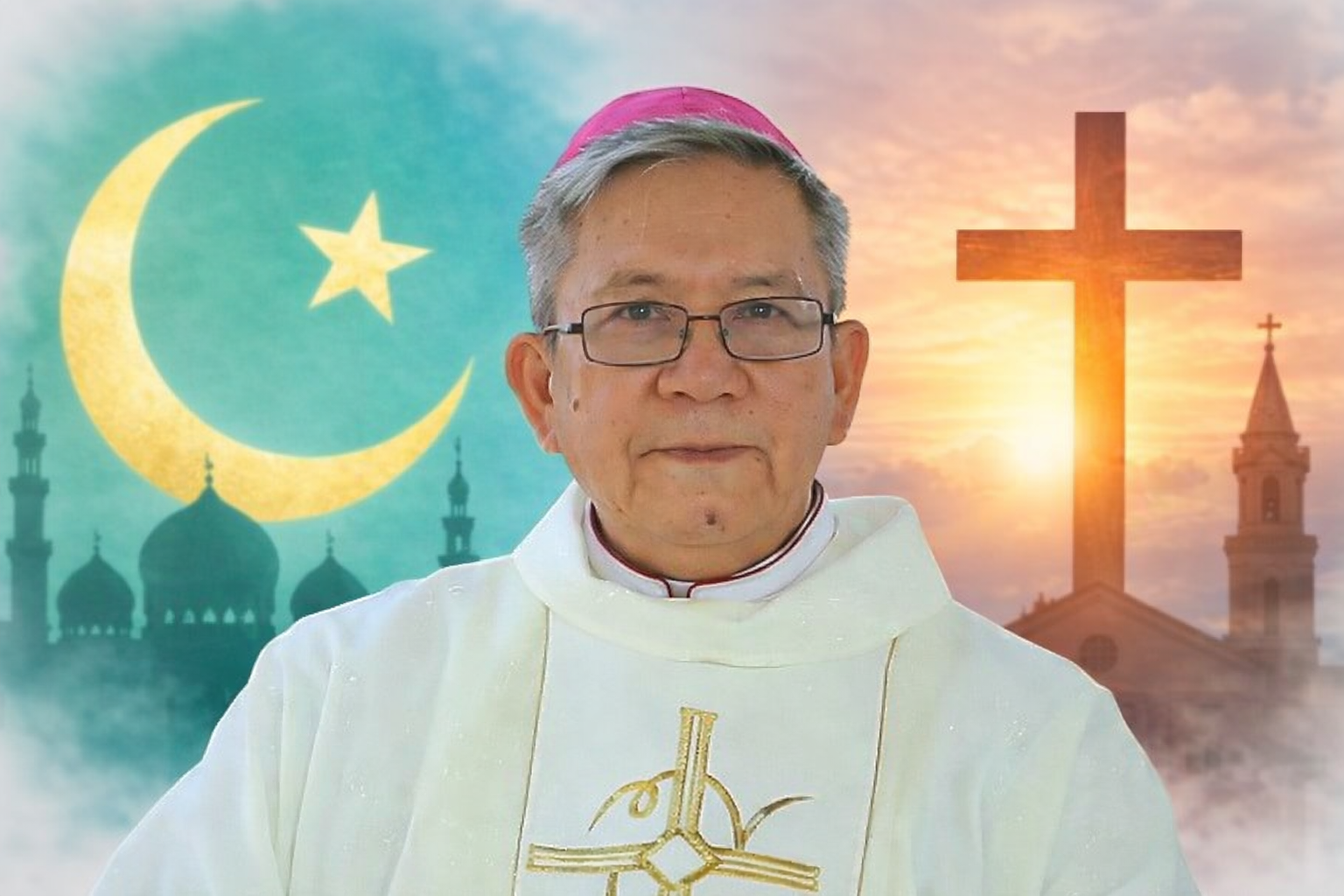
Manila (AsiaNews) - This year, the Catholic Church's Lent and Islam's holy month of Ramadan will most likely begin simultaneously on February 18, with the Muslim and Christian calendars coinciding.
Bishop Jose Colin Bagaforo, president of the Commission for Interreligious Dialogue of the Catholic Bishops' Conference of the Philippines (CBCP), sees this coincidence as an opportunity for solidarity and reflection within a diverse national religious landscape.
“This shared beginning is a grace. It invites us to slow down, return to God, and walk together in faith,” he said. According to the prelate, the shared date is a unique opportunity for a period of grace for interreligious dialogue; it represents a symbolic backdrop for ongoing peacebuilding efforts in Mindanao, as in all of the Philippines, highlighting the shared values of dedication to life and devotion to the merciful God.
Calling for unity, Bagaforo, bishop of the Diocese of Kidapawan, said it will be a peaceful time when Christians and Muslims can walk together in faith for the common good, solidarity, and harmony. “Ramadan and Lent remind us that faith must transform the heart and shape our actions,” said the Filipino pastor. “Fasting opens our eyes to suffering and increases our compassion.”
Emphasizing the importance of collaborative action, Bagaforo also encouraged both communities to go beyond ritual and work together on “sacred tasks,” such as caring for the most vulnerable, protecting the environment, and educating for peace.
February 18, Ash Wednesday, is the first day of a 40-day period of prayer, fasting, and repentance for Catholics, leading up to Easter Sunday on April 5. There are approximately 85 million Catholics in the Philippines spread across 87 dioceses. Lent prepares Catholics for the commemoration of the passion, death, and resurrection of Jesus Christ, with a focus on self-discipline, charity, prayer, and fasting.
On the other hand, Ramadan is expected to begin on February 18 or 19, pending the official sighting of the crescent moon. The country has seven million Muslims. Most of them are located in Mindanao, in the southern Philippines.
The city has been a region of conflict for many decades due to historical, socio-political, cultural, and religious divisions. Ramadan marks the first revelation of the Quran and involves abstaining from food, drink, and intimacy from dawn (Suhoor) until sunset (Iftar). The Ramadan season culminates with the celebration of Eid al-Fitr.
"During these sacred times, Muslims and Christians enter a time of prayer, fasting, repentance, and generosity. We turn our hearts to the Merciful One. We learn anew to see each other as brothers and sisters.
Our sacred texts invite us to peace: ‘Blessed are the peacemakers’ (Mt 5:9). And God ‘invites everyone to the House of Peace’ (Quran 10:25). In a world marked by violence and division, this moment calls us not only to pray for peace, but to live it and work for it," said the bishop.
The prelate added that Ramadan and Lent remind us that faith must transform the heart and shape our actions. “Fasting opens our eyes to suffering and increases our compassion,” he said.
“God's love is demonstrated in love for our neighbor, especially the poor and marginalized.” Attention to our neighbor is proposed by Jesus, as well as by the prophet Muhammad, “who taught that the best among us are those who do good to others,” the bishop emphasized.
In addition, both religious traditions teach that the earth is a sacred gift. Quoting Pope Francis in his encyclical Laudato Si', the bishops said that the cry of the earth and the cry of the poor are one and the same.
The Quran teaches that humanity has been entrusted with the role of khalifa, steward of God's creation. “When forests are destroyed, waters poisoned, and the earth abused, peace is broken. Caring for our common home is therefore an essential work of peace,” he added.
Speaking of human fraternity and friendship, Bagaforo continued, “We were created to live together, not against each other. No one should be excluded. No one should be left behind. This vision of brotherhood resonates deeply in both Ramadan and Lent. Peace grows where mutual respect is practiced, where dialogue replaces suspicion, and where solidarity becomes a way of life.“
Alay Kapwa, a Lenten offering whose name means ”offering to one's neighbor," embodies this spirit of brotherhood in the Philippines. “It is not simply an act of charity, but a way of seeing the other as kapwa, someone who shares our humanity and our future. Through Alay Kapwa, prayer becomes service and sacrifice becomes hope for communities affected by poverty, conflict, disasters, and ecological damage,” the bishop explained.
Furthermore, the bishop stated—drawing inspiration from Pope Francis' message for World Peace Day, entitled “Towards an unarmed and disarming peace”—that true peace is not built with weapons or fear, but through trust, justice, dialogue, and shared responsibility. Peace, therefore, must be patient, inclusive, and lived. He then invited Christian and Muslim communities, interreligious dialogue bodies, and civil society partners to pray together and work together.
“Let us care for the poor. Let us protect creation. Let us educate for peace. Let us respond together to the wounds of our world. These are sacred tasks. These are works of peace,” he said. “May this shared observance of Ramadan and Lent become a living prayer. A prayer expressed through fasting and generosity. A prayer lived through fraternity, compassion, and care for our common home.”

.png)










