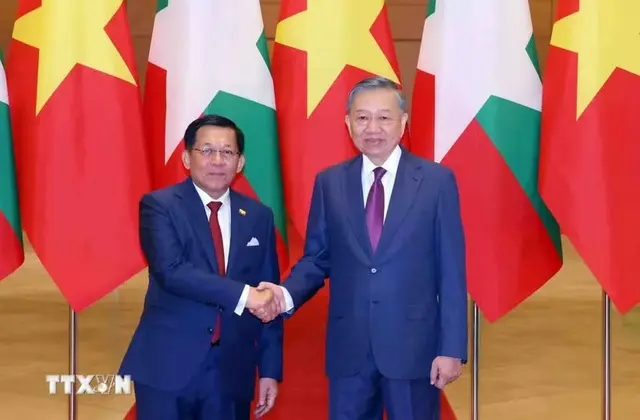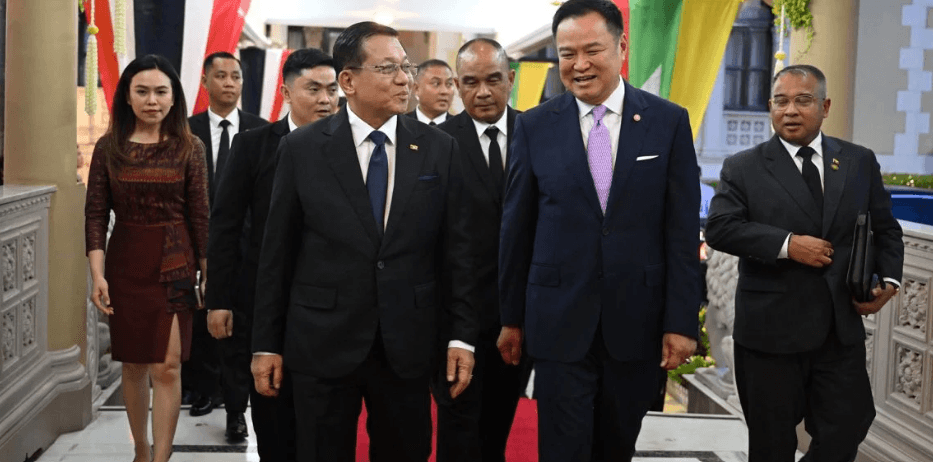
Yangon (AsiaNews) - Yesterday, as Myanmar celebrated its traditional New Year, the newly installed President Min Aung Hlaing granted a broad amnesty to over 4,500 prisoners – a pardon granted to coincide with the Thingyan festival, which human rights groups and analysts were quick to condemn as a political charade rather than a genuine act of clemency. Although the pardon included two high-profile political prisoners, the vast majority of political prisoners remain behind bars and the regime’s military forces continued to shell civilians across the country during the festive period.
Two high-profile releases amid mass incarceration
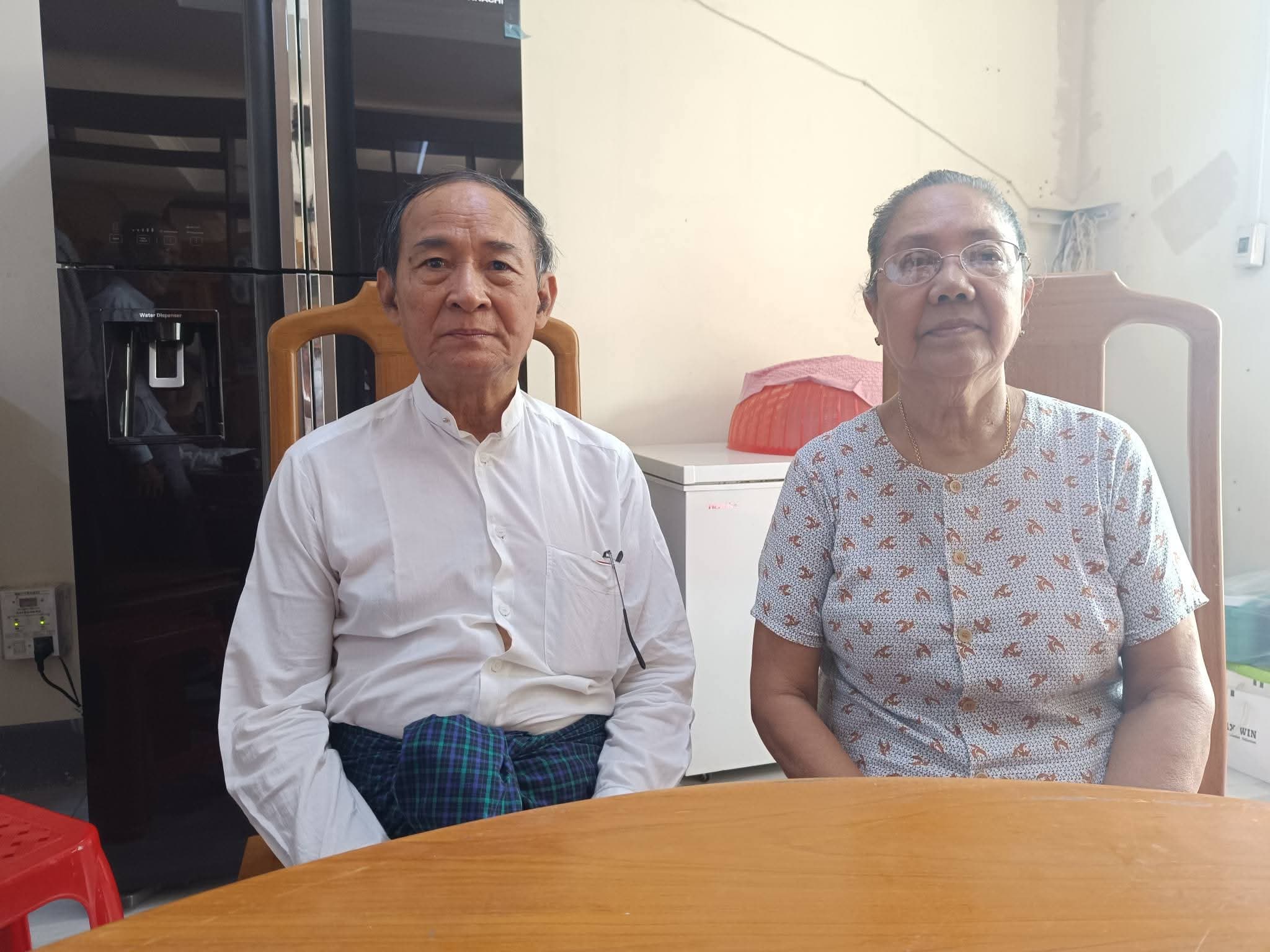
The most prominent name among those released is that of former President Win Myint, a staunch supporter of the still-detained Aung San Suu Kyi. Arrested on the very morning of the military coup on 1 February 2021, Win Myint spent more than five years in prison under the junta, a decision widely condemned by the international community as being motivated purely by political reasons. After being held in Taungoo prison, he was reunited with his family in Naypyitaw yesterday.
Award-winning documentary filmmaker Shin Daewe has also been released; her case had drawn international condemnation as emblematic of the military junta’s brutal repression of press freedom. She was arrested in 2023 and, in January 2024, was sentenced to life imprisonment under anti-terrorism laws: a charge based on the fact that she had ordered a video drone online for use in her work as a documentary filmmaker. Reporters Without Borders described her sentence as the harshest imposed on a journalist since the coup. The sentence was subsequently commuted to 15 years prior to her release yesterday from Insein Prison in Yangon.
Speaking to the press outside the prison gates, Shin Daewe shared the bittersweet nature of her freedom.
“Although I have been lucky, my unfortunate friends remain there in tears. Even though I am returning to my family, I return with tears in my eyes.” Her words captured the fundamental contradiction of the amnesty: individual releases were celebrated against the backdrop of mass detention that continues unabated.
SanSuu Kyi excluded: insignificant sentence reduction
Notably absent from the amnesty is the 80-year-old former State Counsellor Aung San Suu Kyi, Nobel Peace Prize laureate, who remains the quintessential symbol of democratic resistance in Myanmar. State media announced that her sentence – stemming from several convictions on charges widely regarded as politically fabricated – has been reduced only nominally, leaving her with over 22 years still to serve. She is reportedly to be transferred from prison to house arrest, a move analysts view as a token concession rather than a significant step towards freedom or a political solution. The amnesty comes just a week after Min Aung Hlaing was sworn in as president following an election which, according to critics, was neither free nor fair – seen as an operation aimed at maintaining the military junta’s iron grip on power.
A calculated move, according to human rights organisations
State media announced that pardons had been granted to 4,335 Burmese citizens and 179 foreign detainees. However, human rights organisations and independent analysts were quick to put these figures into context. The Assistance Association for Political Prisoners (AAPP) has pointed out that the amnesty has affected only a tiny fraction of the approximately 14,000 or more political prisoners still languishing in the junta’s prisons. A think tank, the Institute for Strategy and Policy Myanmar, has previously documented that less than 14% of those released in successive waves of post-coup amnesties were political prisoners, and that many of those pardoned were already nearing the end of their sentences.
The timing of the amnesty has attracted particular attention. Min Aung Hlaing was sworn in as president just a week ago, following an election process orchestrated by the military that took place from late 2025 through to January 2026. Aung San Suu Kyi’s National League for Democracy was dissolved and barred from participating; criticism of the elections was criminalised; and no voting took place in areas controlled by the resistance. Analysts widely describe the amnesty as a calculated effort to project a façade of civilian normality and secure renewed international engagement, ahead of what the junta hopes will be a diplomatic rehabilitation.
Bombs fall as families flee
Whilst the regime’s state media broadcast images of Thingyan water festival celebrations in Naypyitaw and Yangon, a diametrically opposite reality was unfolding across vast swathes of the country. In Yinmabin Township, Sagaing Region, the army deployed helicopters to drop bombs on villages during the festive period.
At least one civilian was killed – a 14-year-old girl – and two members of her family were injured. According to local sources cited by Myanmar Now, more than 10,000 residents were displaced as military columns advanced from the north and south, forcing entire communities to abandon their homes and take refuge in the surrounding forests and farmland.
The assault was part of a coordinated air and ground offensive in Yinmabin, where fighting has intensified since February 2026, when a local resistance commander reportedly defected to the army. Since then, the junta has reinforced its presence in the area with hundreds of additional soldiers, stepping up both ground operations and air raids, presumably in an attempt to cut off the resistance’s supply and communication lines across central Myanmar.
Among the places hit were monasteries and schools, traditional places of refuge during the Buddhist New Year. According to reports by MoeMaKa News, in Shwebo Township, Sagaing Region, air raids on the eve of Thingyan struck a monastery in the village of Seik Hkun, killing two novices and wounding eight others. Residents reported that there were no armed resistance groups present in the targeted villages.
Karen State, Bago, Mandalay: no respite from violence
Violence during the festivities extended far beyond Sagaing. On 15 April, in the midst of the Thingyan water festival, the regime’s air raids struck the village of Kae Bar in Lu Thaw Township, Papun District, in Karen State. The attack killed four villagers, injured more than a dozen, and reduced the entire village to ashes, according to local sources and resistance groups.
In Nattalin Township, Bago Region, junta forces reportedly razed an entire village to the ground on Sunday 13 April, just days after air raids had killed at least two people in neighbouring villages. Reports of similar destruction have emerged from the Mandalay region, adding to a series of scorched-earth tactics that human rights organisations have repeatedly documented across the country.
A New Year without peace
Against the backdrop of the regime’s offensives, resistance forces also took advantage of the Thingyan period to gain military ground. According to resistance sources, over the festive weekend the Karen National Union (KNU) and allied groups captured the regime’s Lay Kay base in Mon State. In Chin State, on 14 April, fighters captured a Burmese army outpost near the town of Falam, further highlighting the scope of the armed movement across multiple theatres of conflict.
For ordinary citizens of Myanmar, this Thingyan offered neither celebrations nor respite. Families who once gathered at pagodas and monasteries to celebrate the Buddhist New Year were instead forced to flee aerial bombardments, taking refuge in the bush as the sounds of aircraft and artillery replaced the traditional water-splashing festivities. For the tens of thousands of displaced people across Sagaing, Karen State, Bago and Mandalay, the amnesty announced in Naypyitaw meant very little.
Whilst Min Aung Hlaing consolidates his grip on power through a carefully crafted civilian façade, the gulf between the junta’s public relations narrative and the reality experienced by the people of Myanmar has never been so stark. Win Myint is free, but the civil war, now in its sixth year, continues unabated.