








Nepal files a protest with India over its border interference, while China looks on and remains silent
Nepal has sent diplomatic notes to India and China protesting the reopening of the Lipulekh corridor for the Kailash Mansarovar pilgrimage. It claims sovereignty over the area, whose borders date back to colonial times. The Nepali government claims it was not consulted and accuses India of unilateral actions, while China, although remaining on the sidelines, has so far effectively backed India's position.
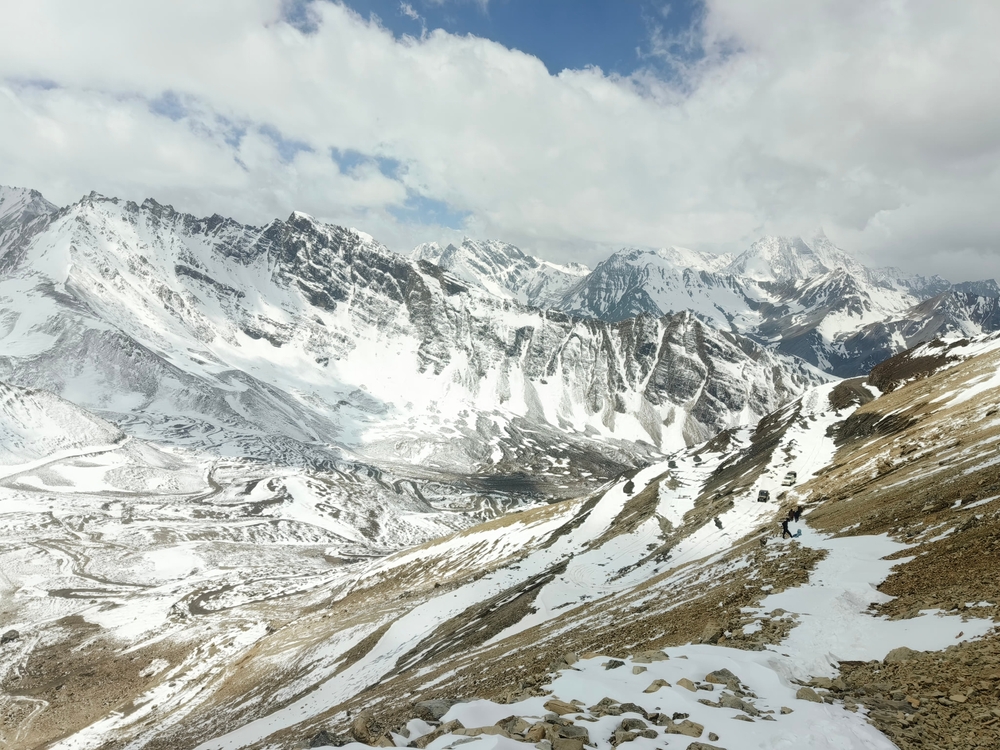
Kathmandu (AsiaNews) – Nepal has sent diplomatic notes to India and China protesting the decision to reopen a pilgrimage route through the Lipulekh Pass, which it claims as an integral part of its territory.
Nepal’s Foreign Ministry made the decision public yesterday, reiterating its “clear and firm" position on the issue, which sparked controversy in the past.
The dispute restarted after India announced that the Kailash Mansarovar pilgrimage will be held between June and August in coordination with China, involving about a thousand pilgrims divided into groups of 50 who will travel along two routes: the Nathu La Pass in the Indian state of Sikkim and the Lipulekh Pass in Uttarakhand.
In its statement, the Nepali government emphasised that it was not consulted. According to ministry spokesperson Lok Bahadur Poudel Chhetri, the 1816 Treaty of Sugauli – signed after the war with the British East India Company – established that the areas of Limpiyadhura, Lipulekh, and Kalapani, which lie east of the Mahakali River, belong to Nepal.
Kathmandu has asked New Delhi to refrain from any activity in the disputed area, including road construction and pilgrimages, specifying that it has also informed China that Lipulekh falls within Nepali territory.
The ministry reiterated its commitment to resolving the dispute through diplomatic channels, citing the maps and documents establishing the border.
In its response, the Indian Ministry of External Affairs noted that India’s position on Lipulekh is “consistent and clear," explaining that the pass has been used for pilgrimage since 1954 and that, "This is not a new development."
Nepal's territorial claims, according to India, are "neither justified nor based on historical facts and evidence," while any unilateral border changes are considered "untenable.” At the same time, India remains open to "constructive interaction" on all bilateral issues.
At the heart of the dispute is the interpretation of the Sugauli Treaty, under which Nepal lost much of its territory but maintained its independence as a kingdom.
The agreement established the Kali River (Mahakali) as Nepal's western border. Kathmandu maintains that the river's source is in Limpiyadhura, thus including Lipulekh and Kalapani within its territory. New Delhi, however, places its source further east, excluding these areas.
After the 1962 Sino-Indian War, India established a military presence in Kalapani and consolidated administrative control of the area, ignoring Nepal's claims.
The issue resurfaced in 2020, when India inaugurated an 80-kilometre road to the Lipulekh Pass with the Nepali government adopting a new official map, unanimously approved by Parliament, which includes the disputed territories within the country’s borders.
China’s influence also complicates matters for Nepal. In 2015, India and China agreed to open the pass for bilateral trade and pilgrimages without involving Nepal, which had called the move a violation of its sovereignty.
A similar agreement was reiterated in August 2025 during a visit by Chinese Foreign Minister Wang Yi to India. In effect, China recognises India's control over the area, while Nepal feels beleaguered by the interference of its two neighbours.
Kathmandu has defended its position for years, but has never achieved any changes on the ground: it has no military presence or infrastructure of its own in the disputed area, but claims the territory only with the support of official maps and a cross-party domestic political consensus.
The issue could have political repercussions. The planned visit to Kathmandu by Indian External Affairs Secretary Vikram Misri, initially scheduled for 11 May, now appears uncertain, while a trip to India by Nepali Foreign Minister Shishir Khanal for a meeting of BRICS foreign ministers remains a distinct possibility.

.png)
22/10/2024 19:04










