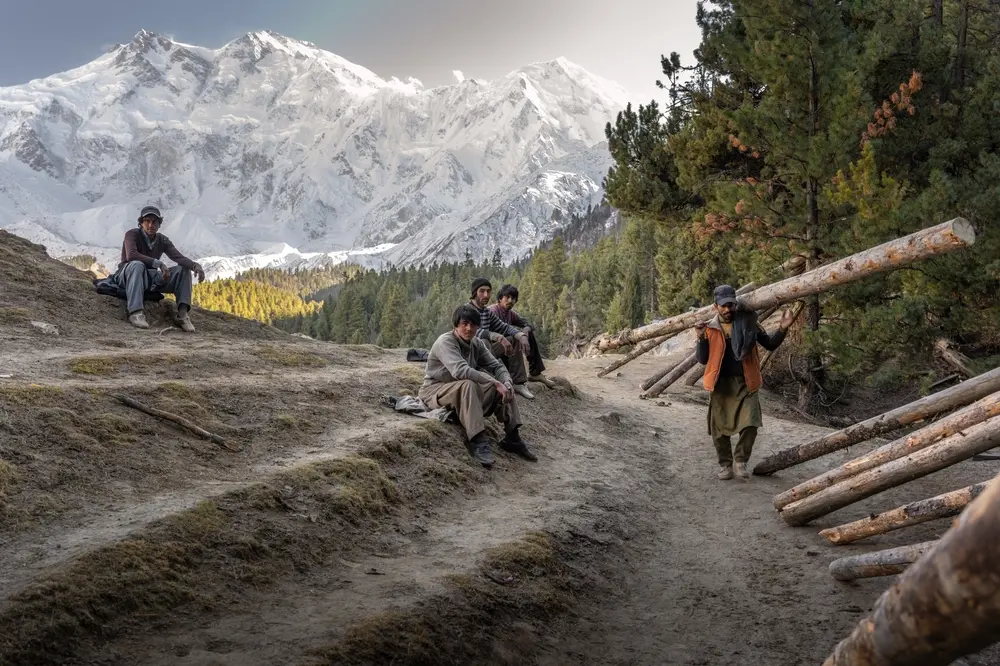
Islamabad (AsiaNews) - Pakistan is facing increasingly serious environmental risks, as climate experts, activists and politicians warn that accelerating deforestation is making the country more vulnerable to heatwaves, floods, droughts and worsening air pollution. The growing loss of forests and urban green spaces is linked to rising temperatures, ecological imbalance and increasing threats to public health and water security.
Environmental concerns were raised recently during an awareness-raising meeting organised by the Catholic Commission for Justice and Peace, at which environmental and human rights activist Kashif Anthony called for urgent action to halt uncontrolled deforestation, warning that it is no longer a distant environmental issue but an immediate threat to human survival: trees play a vital role in reducing heat, improving air quality and protecting communities from climate-related disasters.
In recent years, Pakistan has experienced increasingly frequent and severe weather events – prolonged heatwaves, erratic rainfall, floods and droughts – whilst experts attribute these changes to global warming, combined with local environmental degradation, due in particular to deforestation and uncontrolled urban expansion.
Major cities such as Karachi, Lahore and Islamabad have seen a steady rise in summer temperatures and a deterioration in air quality. Analysts argue that tree felling has intensified the urban heat island effect, making cities significantly hotter and more vulnerable during the peak summer months. Experts emphasise that forests act as natural climate regulators by absorbing carbon dioxide, maintaining rainfall patterns, preventing soil erosion and supporting biodiversity.
Anthony stressed that climate change is not just an environmental issue, but also a human rights issue. Indeed, vulnerable populations, especially low-income communities, are disproportionately affected by rising temperatures and environmental degradation. “With rising temperatures and the increasing frequency of extreme weather events, Pakistan’s fight against climate change may depend not only on planting new trees, but also on banning the felling of existing ones,” he said. “Every year, extreme heat puts a strain on our healthcare systems and puts lives at risk.”
In South Waziristan, environmental groups have sounded the alarm over large-scale deforestation, reporting a rapid loss of mature forests. Activists warn that continued deforestation in the region could lead to irreversible damage to biodiversity, wildlife habitats and the fragile ecosystems that have developed over decades. Furthermore, planting campaigns alone cannot compensate for the loss of mature forests. They emphasise that older trees offer far greater ecological benefits than newly planted saplings, including greater carbon absorption, better soil stabilisation and more effective temperature regulation.
“Planting trees is important, but saving mature forests is even more crucial,” noted one participant during the meeting. In response to growing concerns, provincial governments have introduced new policies aimed at strengthening forest protection and raising environmental awareness.
The Sindh Department of School Education and Literacy has declared 2026 the “Year of Teaching for Trees”, integrating environmental education into school curricula to promote climate responsibility among students. Meanwhile, the Sindh High Court has ruled that no tree may be felled without the approval of a committee chaired by the magistrate of the relevant district, thereby adding a judicial safeguard.
Under the Sindh Ordinance of 2022 on tree planting, tree maintenance and public parks, the illegal felling of trees in public spaces is punishable by fines of up to 25,000 rupees (approximately 76 euros). The provincial government has also implemented a ‘10-for-1 policy’, which requires the planting of ten new trees for every tree felled.
In Punjab, the Horticulture Authority has introduced protective measures for ‘historic trees’ – defined as trees over 30 years old or with a trunk of significant diameter – restricting their removal unless they pose a safety risk or are seriously diseased. Even in such cases, official approval from a technical committee is required. The Punjab authorities have also warned that the unauthorised removal of historic trees can result in imprisonment for up to one year and fines of up to 500,000 rupees (approximately €1,500). Builders and government departments are also required to follow strict guidelines for the relocation of trees and the planting of replacement trees.
Across Pakistan, climate-related health impacts are on the rise. According to some reports, the 2024 heatwave in Sindh led to thousands of hospital admissions for heat-related illnesses, as well as the death of livestock. Rising temperatures and drought conditions have also contributed to worsening food insecurity in several districts.
The Federal Minister for Climate Change, Musaddiq Malik, acknowledged that environmental damage had occurred in some cases during tree felling operations. He stated that the government is working to improve oversight and ensure that valuable trees are not inadvertently destroyed during development projects.
As Pakistan continues to face increasingly severe climate pressures, experts and campaigners warn that protecting existing forests is now just as important as reforestation campaigns. They stress that, without urgent action to halt deforestation, the country’s environmental, economic and public health challenges will continue to intensify, putting future generations at increasing risk.