





:-Kuala-Lumpurs-double-standards-on-human-rights-65400.html&is_video=&description=Palestinians+and+Rohingya+%28and+Uyghurs%29%3A+Kuala+Lumpur%E2%80%99s+double+standards+on+human+rights)


Palestinians and Rohingya (and Uyghurs): Kuala Lumpur’s double standards on human rights
Malaysian activists criticise what they describe as the country’s “selective” approach to humanitarian issues. Support for Muslims in the Middle East is counterbalanced by silence regarding violations committed in Myanmar and by China. The call to maintain “moral consistency” in the fight for causes and freedoms.
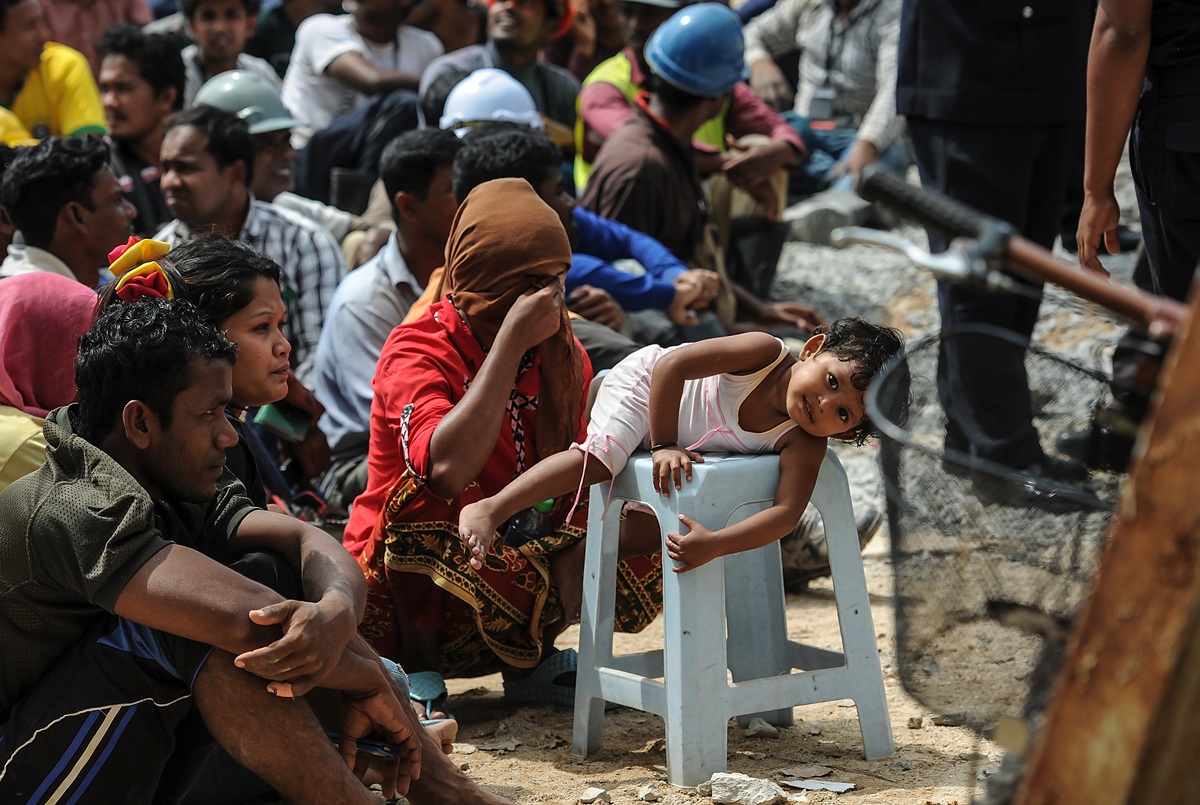
Kuala Lumpur (AsiaNews) - Malaysia’s strong support for Palestine has long been a pillar of its international identity, but human rights organisations argue that Kuala Lumpur’s “selective” approach to humanitarian issues risks undermining its moral credibility. An article published today by Free Malaysia Today, citing the activist NGOs Suaram and Pusat Komas, has highlighted growing concern over the gap between international rhetoric and the treatment of refugees and asylum seekers on its own territory.
The criticism follows comments by Amnesty International, which highlighted Malaysia’s strong stance on Palestine – partly in the name of so-called “Muslim solidarity” – whilst remaining completely silent on the deportations of the Rohingya in Myanmar and the Uighurs in China. At the heart of the debate lies a difficult question: why do some forms of suffering trigger national solidarity whilst other humanitarian crises receive muted responses or are politically ignored?
Suaram’s executive director, Azura Nasron, argued that public empathy in Malaysia is often shaped by identity politics, Islamisation and geopolitical considerations. “Solidarity with Palestine,” she explained to Fmt, “is very strong because it fits into the narrative of the Ummah and the history of oppression against Muslims, reinforced by the state and religious institutions.” The activist added that supporting Palestine also carries fewer political risks than other humanitarian issues.
“Solidarity with Palestine brings great benefits at low cost, whereas issues such as those of the Rohingya, the Uighurs and migrant workers,” Nasron explains, “lay bare internal contradictions regarding immigration, border control and labour.” “These issues,” he warns, “prompt the state to avoid positions that might provoke internal criticism.” Certainly, supporting Palestine brings significant domestic political advantages at a relatively modest cost. The Rohingya crisis, by contrast, confronts Malaysia with more uncomfortable realities concerning migration, detention, labour exploitation and border control.
An important distinction
Furthermore, the Palestinians are geographically distant, which allows solidarity to function largely on a symbolic and diplomatic level. Rohingya refugees, on the other hand, are physically present within the country’s borders. Their presence on the territory has increasingly been framed in public discourse through the language of security threats, economic burdens and social tensions.
The result is therefore a hierarchy of compassion. Reportedly, more than 2,000 refugees from the Muslim minority originally from Rakhine State in western Myanmar are still detained in immigration centres, some of them for years. The director of Pusat Komas, Jerald Joseph, described the prolonged detention as deeply worrying and inconsistent with the international image touted by Kuala Lumpur as a defender of oppressed communities.
“Such prolonged detention represents a worrying way of treating refugees and asylum seekers seeking temporary protection in Malaysia,” said Jerald. He added that it effectively amounts to “indefinite detention under the authority of the Ministry of Home Affairs and the Department of Immigration”. Human rights organisations argue that refugees continue to be treated not so much as vulnerable people fleeing persecution, but rather as an administrative or political burden, and this is not a new phenomenon.
Malaysia welcomed Bosnian Muslim refugees during the Balkan wars of the 1990s, a move celebrated nationally as an act of Islamic solidarity. However, other humanitarian crises lacking the same religious or political resonance – such as the famine in Ethiopia – have never elicited an equivalent public mobilisation. Similarly, criticism of China’s treatment of the Uighurs has remained cautious, reflecting the sensitivity of economic and diplomatic ties with Beijing.
Such selectivity undermines the country’s claim to be a principled leader on human rights, which cannot be invoked only when it is politically convenient, only to be ignored when they become diplomatically costly or unpopular at home. The concern of Suaram and Pusat Komas is not that Malaysia should scale back its defence of Palestine, but that it should maintain ‘moral consistency’ in the fight for humanitarian causes. A country that condemns displacement, detention and injustice abroad must also address the way in which refugees and asylum seekers are treated within its own borders.
Jerald stated that Malaysia should adopt a rights-based approach if it wishes to restore its international credibility. He also rejected the argument that establishing a formal framework for refugees would attract more asylum seekers. “Seeking asylum,” he emphasised, “is already a difficult and dangerous journey in itself,” adding that an appropriate regulatory framework would instead demonstrate the country’s commitment to managing the refugee issue in accordance with fundamental principles.
After all, its history shows how the nation has been able to adopt a more humane approach to sensitive issues and human rights matters. During the Vietnamese refugee crisis in the 1970s, it played a significant regional role in welcoming people fleeing war and instability, despite having far fewer resources than it does today. That legacy stands in stark contrast to the current immigration centres, prolonged detentions and the absence of a formal legal framework on refugees. If Kuala Lumpur wishes to maintain its credibility as a voice for justice on the international stage, human rights organisations argue that it must “move beyond selective solidarity and adopt a more consistent domestic human rights policy”. Otherwise, its moral authority risks appearing “less a matter of principle and more a matter of politics”.

.png)
03/09/2018 19:20
28/06/2017 09:19
17/01/2018 09:43










