








People's Party again indicted for lèse-majesté following last week’s Thai election
Thailand’s National Anti-Corruption Commission (NAAC) has charged 44 members of the reformist party that came second in Sunday's elections with “ethical violations”. In fact, in 2021, they had proposed amendments to Article 112, which over time had become a tool for suppressing critical voices. The mandates of some parliamentarians are in the balance, and they are expected to resign before the verdict. The United Nations is calling for changes to the controversial legislation.
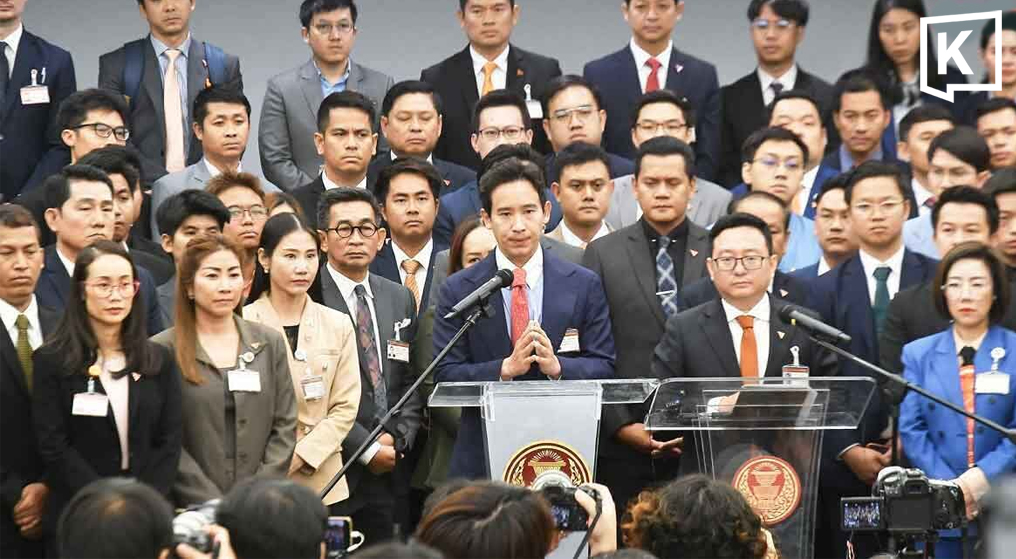
Bangkok (AsiaNews) – In the aftermath of last Sunday's vote, which saw the People's Party come in second in terms of seats even though it was expected to win, the National Anti-Corruption Commission (NAAC) has charged 44 of its members under Article 112 of the Criminal Code, known as the lèse-majesté law.
The "crime", defined as "serious ethical violations", dates back to 2021 and refers to a request to amend Article 112. Proposed and accepted as a tool to protect the dignity and role of the monarchy, the latter has become, for many, a tool of repression against those opposed to the constant control of the Armed Forces in support of the country's elites.
Of the 44 arrested, at least 10 are still in office and risk early termination of their mandate, with serious repercussions for the latest reincarnation of the progressive party, which embodies the concerns of young people and the urban middle class.
Its predecessor, the Move Forward Party, despite its landslide victory in the 2023 elections, was excluded from government over accusations like those now levelled against representatives of the People's Party, forced to dissolve after the Constitutional Court ruled in 2024 that any attempt to amend Article 112 constitutes an abuse of power.
In this case, if the Supreme Court decides, after an unspecified period, to accept the case, the People's Party parliamentarians would have to resign immediately, without waiting for a ruling.
The new political and legal controversy, which has put political reformers in the crosshairs, highlights, in addition to the arbitrariness of the accusations and the intolerance of opinions that do not conform to officially imposed ideals, the growing role of formally independent bodies overseeing the activities of parliamentarians during their mandate, without any consideration for the choices of voters.
Dozens of former parliamentarians are under investigation or already formally charged for attempting to soften Article 112.
In addition to reformist politicians or those who do not align themselves with conservative and nationalist ideals, particularly affected are individuals and groups who spread offensive messages on social media, regardless of whether they post or share them.
The cases include politicians and academics who are critical of the monarchy and the military, elements hostile to the control of a few over resources and rights, as well as individuals with limited capacity to understand and decide.
Each charge can carry a custodial sentence of three to 15 years, and the rare cases of shortened or suspended sentences are due to clemency by the sovereign.
For its part, the United Nations has called for the law to be amended to align with international legal standards, starting with consideration for freedom of expression.

.png)
13/03/2024 14:46
04/08/2023 15:19
15/05/2023 15:39
07/02/2026 11:33










