








Pilot zones and red lines: a pact of discord between Lebanon and Israel
Washington's framework agreement is Beirut's only hope of regaining territorial integrity and sovereignty, while neutralising Hezbollah, and securing the return of displaced populations. However, the country is split over the agreement and could strengthen Shia militias. For the first time, areas have been designated where the Lebanese and Israeli armies will have a direct line of communication.
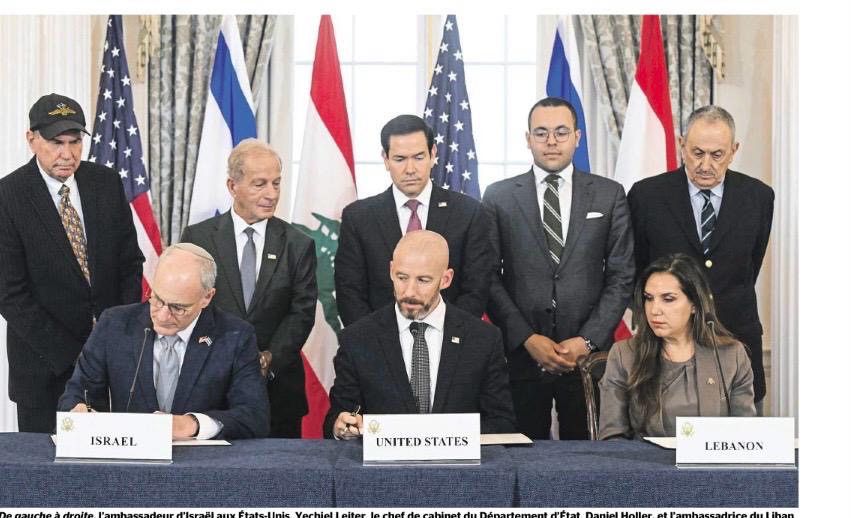
Beirut (AsiaNews) – It is all too easy to get lost in the intricacies of the framework agreement reached in Washington by the Lebanese and Israeli delegations under the auspices of the United States (23-26 June 2026), if one loses sight of the fact that it seeks to achieve two objectives, the second of which is paradoxical: first, the complete withdrawal of the Israeli army from Lebanon, and second, the military neutralisation of Hezbollah, a goal shared by both Lebanon and Israel.
While mainly Lebanese in composition, Hezbollah is armed, financed, and led by Iran, and is indeed an obstacle to be eliminated – preferably through peaceful means – if the Lebanese state is to regain its full sovereignty over its territory.
Certainly, the country is split over the framework agreement, and warnings against a slide toward civil war have multiplied in the Lebanese and international press, but for Lebanon, this is the only way to regain its territorial integrity, return villages destroyed by Israel to their inhabitants, and neutralise the pro-Iranian party.
To ward off the threat of civil war, many Lebanese, like lawmaker Marc Daou, view a warning against "discord" issued by Speaker of Parliament Nabih Berri as applying equally to the authorities and the pro-Iranian militia. That remains to be seen.
In any case, on the ground, wild Hezbollah demonstrations on the evening of the agreement's signing were suppressed by the army, which showed extreme firmness and warned against any attempt to “destabilise” the country by closing roads.
Hailed and criticised
In general, the Washington agreement was warmly welcomed by sovereigntists, but denounced by the Shia alliance.
The head of the Lebanese Forces (LF), Samir Geagea, saw it as "the most important political initiative of the Lebanese state in half a century."
At the forefront of the opposition, the speaker of Parliament and head of the Shia Amal movement, Nabih Berri, offered only two terse sentences: "I have examined the content of the framework agreement, I have read it, and I have seen discord within it."
The movement then published an official statement on Saturday announcing its rejection of the document, calling it "unbalanced" because it favours "the enemy" at the expense of "the national interest." The Shia movement immediately reiterated its "rejection of any direct negotiations with the enemy," Israel.
As for Hezbollah Secretary General Naim Qassem, he issued a statement in which he said: "This agreement is null and void, and the provisions of the Iranian-American memorandum of understanding must be applied," referring to the text signed remotely in Switzerland on 17 June by Washington and Tehran to end the war in the Middle East, including in Lebanon.
Pilot zones
In concrete terms, the 14-point text places the dismantling of Hezbollah's armed forces at the heart of its strategy. It stipulates that Beirut holds "exclusive sovereign authority to make war and peace," and rejects the right of "any state or non-state actor" to act militarily without its approval. The Lebanese government commits to “restoring and exercising full sovereignty over all its territory," which implies the “complete and verified disarmament of all non-state armed groups [...] anywhere in Lebanon.”
The agreement puts the concept of “pilot zones” into practice for the first time. According to the Israeli public broadcaster Kan, the Israeli army is preparing to begin its withdrawal from two "pilot zones" in the Nabatiyeh district as early as Monday morning, in coordination with the Lebanese army via a new direct communication channel between the two countries.
Israeli authorities are demanding that the Lebanese army immediately take up positions in the evacuated areas to prevent any redeployment of Hezbollah fighters and any mortar fire. The Israeli army also plans to gradually reduce its presence in southern Lebanon, while making the continuation of the withdrawal contingent on the results of this first phase.
A senior Israeli security official stated, however, that the Israeli army would retain "complete freedom of action" against any threat deemed imminent. Based on this view, this arrangement represents the main hope for the residents of southern Lebanon to return to their homes and rebuild supported by international partners, at the initiative of the United States.
Breaking free from Iran’s hold
By concluding the agreement, Lebanon was essentially trying to create a parallel process to the one Iran was seeking to establish through its negotiations in Switzerland on 17 June, where it managed to impose a ceasefire in Lebanon.
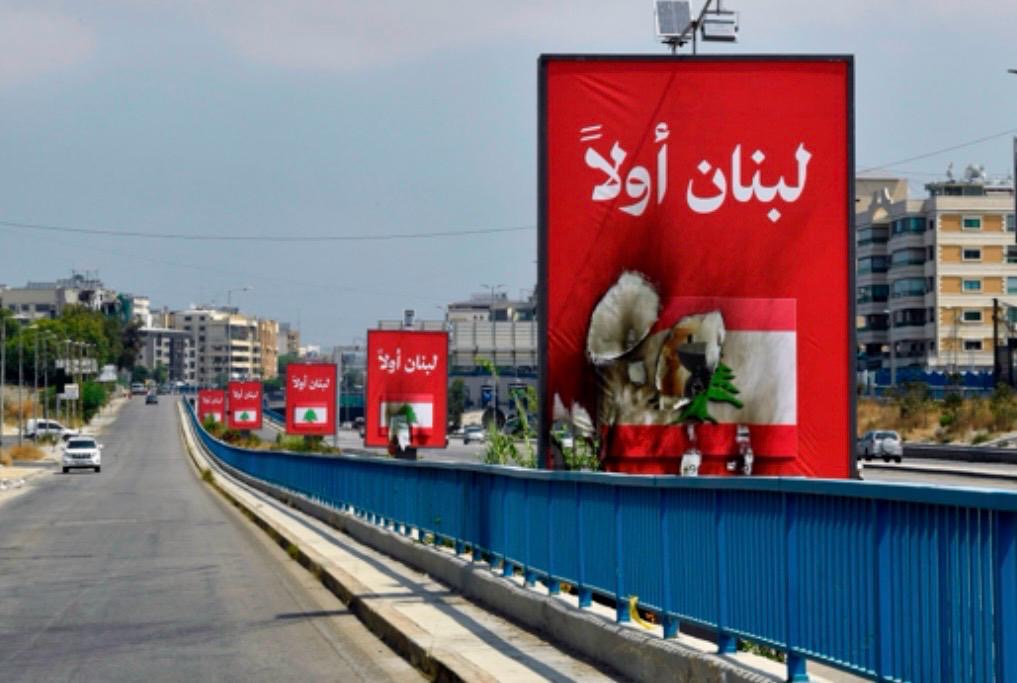
Even though the Lebanese state officially welcomed this initiative, it generated a certain unease inside Lebanon. This coincided with the appearance of billboards erected by Hezbollah on the airport road thanking Iran, fuelling the frustration of a significant portion of the public.
For those who back Lebanese sovereignty, these signals raise fears of a resurgence of Hezbollah’s influence on Lebanese political life, and fuel concerns about the potential impact of the memorandum of understanding concluded in Switzerland on the Lebanese-Israeli negotiations, deemed by a large part of public opinion as one of the last levers capable of ending Iranian influence and the use of Lebanon as a bargaining chip in regional power struggles.
Preventing a strengthening of Hezbollah
The agreement also addresses another major source of concern. During the Geneva talks, fears arose regarding the potential release of Iranian funds that could indirectly replenish Hezbollah's coffers.
The agreement reached in Washington stipulates instead that all Iranian funding intended for "non-state actors" will be prohibited and placed under close monitoring by the Lebanese government with the assistance of the United States.
The mechanism also stipulates that these actors cannot benefit from any international funding intended for reconstruction, nor can they serve as intermediaries to divert these resources.
Moreover, under this approach, Iranian funds that could be released as part of a partial lifting of sanctions could not be used to support activities deemed destabilising in the region to the detriment of Lebanon, the Levant, or the Gulf states.
A hard-won agreement
Observers believe that the hard-won agreement will be difficult to implement, given Lebanon’s internal divisions. According to Axios, the deal was only reached after intense negotiations between Washington and Tel Aviv, although the 14 points, for Israel, are the start of a peace agreement in exchange for respecting Lebanon's territorial integrity.
From the Lebanese perspective, some of the agreement's conditions, considered humiliating, such as granting Israel the power to assess the Lebanese army's performance, would never have been accepted if the tripartite monitoring committee it establishes did not give the Americans the power to arbitrate and make the final decision.
Moreover, for the sovereigntist camp, it is all too easy for Hezbollah to forget that it bears some responsibility for what happened, after it took the initiative of opening hostilities against Israel (2 March) to avenge the death of Iran’s Supreme Leader. This camp believes that, to some extent, there is a shared responsibility, albeit unequal, for Lebanon's catastrophic situation.
Therefore, while Hezbollah may see the deal as a kind of capitulation, it cannot shirk its responsibility in this military adventure that led to the displacement of nearly a million Lebanese from their villages, as well as 4,247 deaths, according to the latest figures from the Lebanese Ministry of Public Health's Emergency Operations Centre, plus 12,195 people wounded, not to mention the destruction of tens of thousands of homes.
As Michael Young of the Middle East Carnegie Center, quoted by Le Figaro, so aptly puts it: The framework agreement "is quite bad for Lebanon," given that the state "holds no cards”. But the analyst adds: “Let’s dispel the illusion that (the Party of God) put up decisive resistance against the Israelis, when in fact the latter have razed most of the Shia villages south of the Litani River and are now destroying villages north of it. With such resistance, there won’t be much left of Lebanon.”
Alarmed by the destruction, which is affecting certain archaeological sites designated by UNESCO as World Heritage sites, such as the ruins of Tyre, observers have concluded that “the destruction is no longer a consequence of the war; it has become its primary objective.”
American red lines
Ultimately, analysts believe, all these developments are part of a strategy to maintain American red lines: preventing Iran from acquiring nuclear weapons, containing the destabilising activities of its proxies in the region, refusing any form of control over the Strait of Hormuz, preserving Lebanon's sovereignty, and promoting a gradual end to the state of war between Lebanon and Israel.
At this stage, it is impossible to know how the proxy conflict, which continues to play out on the ground, will be resolved. For Lebanon, the unfolding sequence of events promises to be complex, and the path is particularly fraught with obstacles to achieving the threefold objective of a complete Israeli withdrawal, the return of forcibly displaced populations, and the disarmament of Hezbollah.

.png)










