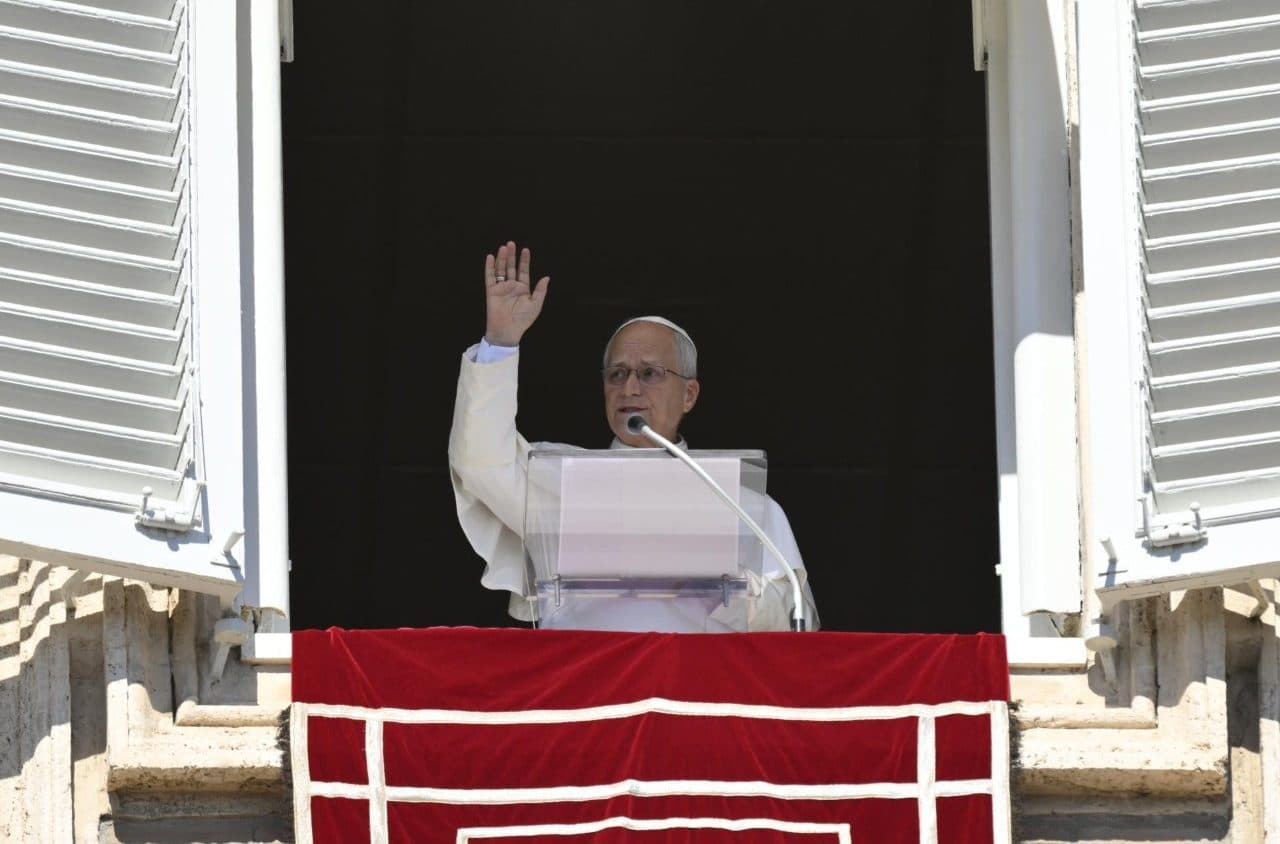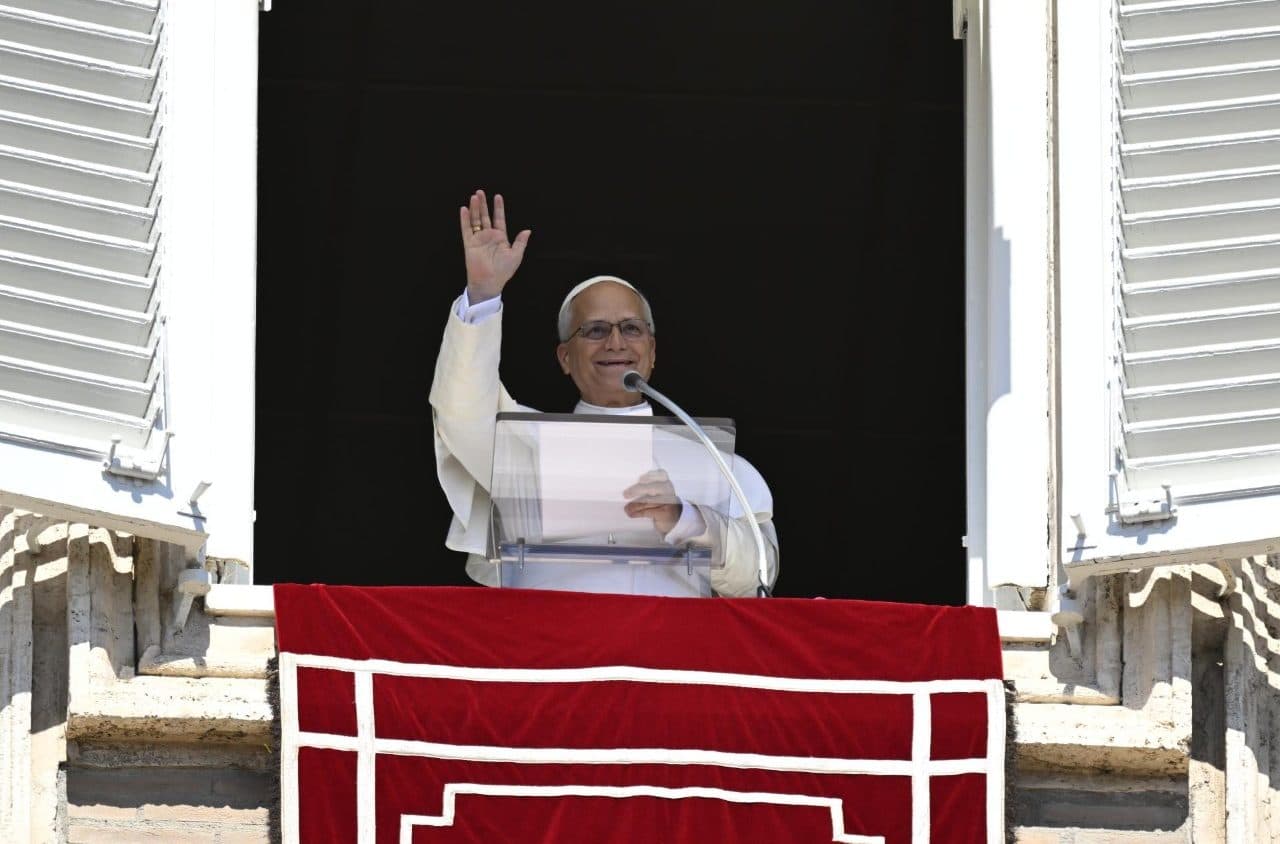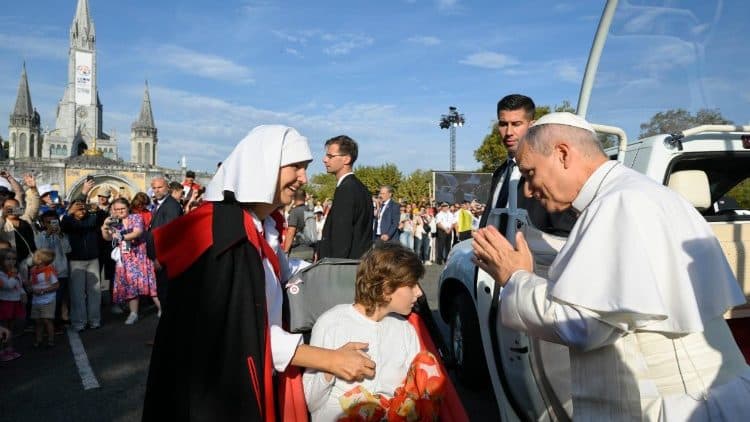
Vatican City (AsiaNews) - A sunny day welcomed the faithful gathered this morning in St Peter's Square for the Angelus. Among them were the boys and girls of Catholic Action in Rome who animated the annual Caravan of Peace. ‘Never be violent, either with words or gestures. Never! Evil can only be overcome with good,’ Pope Leo XIV told them from the window of the Apostolic Palace. The young people brought great enthusiasm, with songs and dances, after a procession that bore witness to peace in the streets of the city.
Pope Prevost addressed words of gratitude to them. ‘Help us adults to look at the world from another perspective: that of collaboration between different people and peoples. Thank you!’ he exclaimed. ‘Be peacemakers, at home, at school, in sports, everywhere.’ This was followed by a call for non-violence and complete disarmament. And, addressing all the faithful: ‘Together with these young people, let us pray for peace in Ukraine, in the Middle East, and in every region where, unfortunately, people are fighting for interests that are not those of the people. Peace is built on respect for peoples.’
After the Angelus, Leo XIV said he was following ‘with sorrow’ what was happening in Ukraine, ‘hit by continuous attacks that leave entire populations exposed to the cold of winter.’ ‘I am close to and pray for those who suffer. The continuation of hostilities with increasingly serious consequences for civilians widens the divide between peoples and distances a just and lasting peace. I invite everyone to intensify their efforts to end this war,’ he said. Meanwhile, Kiev and Moscow, together with the United States, are holding initial talks in the United Arab Emirates, which give cause for hope.
The pontiff also recalled the 73rd World Day of Leprosy Sufferers, which occurs today. ‘I express my closeness to all those affected by this disease. I encourage the Italian association Amici di Raoul Follereau and all those who care for leprosy sufferers, committing themselves to protecting their dignity,’ he said. And, on the Week of Prayer for Christian Unity, which ends today, he recalled the traditional afternoon vespers in the Basilica of St Paul Outside the Walls, ‘together with representatives of other Christian denominations’.
Regarding today, the Sunday of the Word of God, Pope Leo XIV recalled that it was established seven years ago by his predecessor Francis, who passed away last year on 21 April 2025. The aim is ‘to promote throughout the Church knowledge of Sacred Scripture and attention to the Word of God. In the liturgy and in the life of the communities, I thank and encourage all those who commit themselves with faith and love to this priority goal,’ said Prevost.
In his commentary on the Gospel of the day (Mt 4:12-23) that preceded the Marian prayer, the Pope highlighted that Jesus “began his preaching” after the arrest of John the Baptist: a moment “that does not seem the best”. Despite this, He ‘began to bring the light of the good news,’ first calling Simon Peter and Andrew, and then James and John. ‘The Gospel asks us to take the risk of trust,’ even in our ‘personal and ecclesial’ lives. ‘God is at work at all times, and every moment is good for the Lord, even if we do not feel ready,’ said Leo XIV.
The Pope also spoke about the geographical location of Jesus, who leaves Nazareth and moves to Capernaum in Galilee. He remains in ‘a land of passage and encounters; we could say a multicultural territory crossed by people of different origins and religious affiliations,’ he explained. Thus, Jesus ‘goes beyond the boundaries of his own land to proclaim the God who is close to everyone, who excludes no one, who did not come only for those who are pure but, rather, mixes in human situations and relationships.’
In the same way, inspired by the example of the Messiah, ‘we Christians, too, must overcome the temptation to close ourselves off,’ said the pontiff. ‘The Gospel must be proclaimed and lived in every circumstance and in every environment, so that it may be a leaven of fraternity and peace among people, cultures, religions and peoples.’