

Jakarta (AsiaNews) - The consequences of the war launched by Israel and the United States against Iran are also being felt in Indonesia, where pressure is mounting on the government to withdraw its membership of the Board of Peace wanted by US President Donald Trump, an international body which Jakarta joined only at the end of January.
Indonesia's participation in the Board of Peace was initially presented by President Prabowo Subianto as a diplomatic move to support peace and promote Palestinian independence. However, the attack on Iran has fueled widespread criticism, and many believe that participation in the body contradicts Indonesia's foreign policy principles.
Calls for an immediate withdrawal from the Board of Peace have come from various sectors of society, including the Indonesian Ulema Council (MUI), parliamentarians, public figures, and numerous civil society organizations.
In an official statement, the MUI condemned the military operation against Iran as contrary to the humanitarian values and principles enshrined in the preamble to the 1945 Indonesian Constitution and urged the government to immediately leave the Council.
“A council that was supposed to be a platform for peace has instead exacerbated conflicts. For this reason, we call on the Indonesian government to immediately revoke its membership in the Board of Peace,” the statement read.
The MUI's criticism was echoed by more than 60 public figures and some 70 civil society organizations, who signed a petition on March 1 arguing that the joint US-Israeli attack on Iran was a violation of international law and a serious threat to global peace.
According to the petition's promoters, the Board of Peace has now turned into a “Board of War that legitimizes military aggression,” the signatories said.
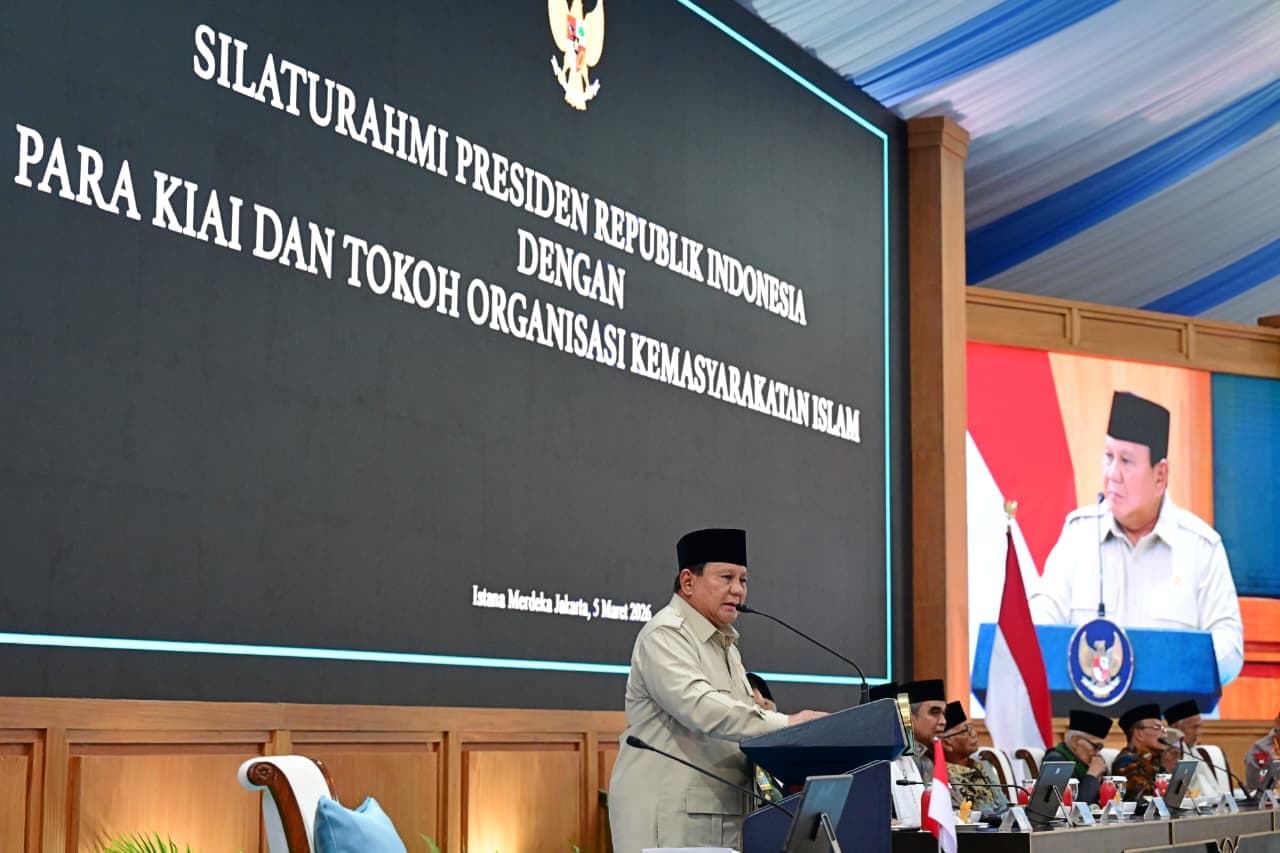
Foreign Minister Sugiono did not provide a direct response to the requests for withdrawal. When questioned by journalists after a meeting at the presidential palace in Jakarta between President Prabowo and several prominent public figures, he stated that the government's priority at the moment is the international situation related to the attacks against Iran.
“All discussions on the Board of Peace are temporarily suspended. Attention is focused on the situation in Iran,” Sugiono said.
The minister added that Jakarta continues to maintain contact with partner countries, particularly those in the Gulf, which are also members of the international body and indirectly involved in regional tensions. “We are continuing consultations and coordination with our partners in the Gulf. They too are facing a similar situation, some have even been hit by the attacks,” he explained.
The rector of the Islamic University of Indonesia (UII), Fathul Wahid, also criticized the government's cautious response to the attacks against Iran, arguing that this position weakens the application of Indonesia's foreign policy doctrine. “It is regrettable that the government of the Republic of Indonesia has not shown sufficient firmness in responding to the military attacks by Israel and the United States against the Islamic Republic of Iran,” he said.
Various segments of civil society are also putting pressure on Prabowo over the trade agreements on tariffs signed with Trump on February 19. The agreement reduced tariffs to 19% and guaranteed duty-free access to the US market for more than 1,800 Indonesian products, including palm oil, coffee, cocoa, and rubber. In return, Jakarta agreed to eliminate most tariff and non-tariff barriers for American companies and to commit to trade agreements and investments in the US worth around $33 billion, including the purchase of Boeing aircraft for the national airline, Garuda Indonesia.
However, the agreement has drawn strong criticism from economists, academics, and civil society organizations, who consider it overly favorable to Washington. Some have called it a “blank check” granted to the United States, arguing that certain clauses could limit Indonesia's freedom to maintain economic relations with other partners, particularly China, especially in the strategic sector of minerals such as nickel and cobalt. About 80 organizations and dozens of academics have signed a petition against the trade agreement.













