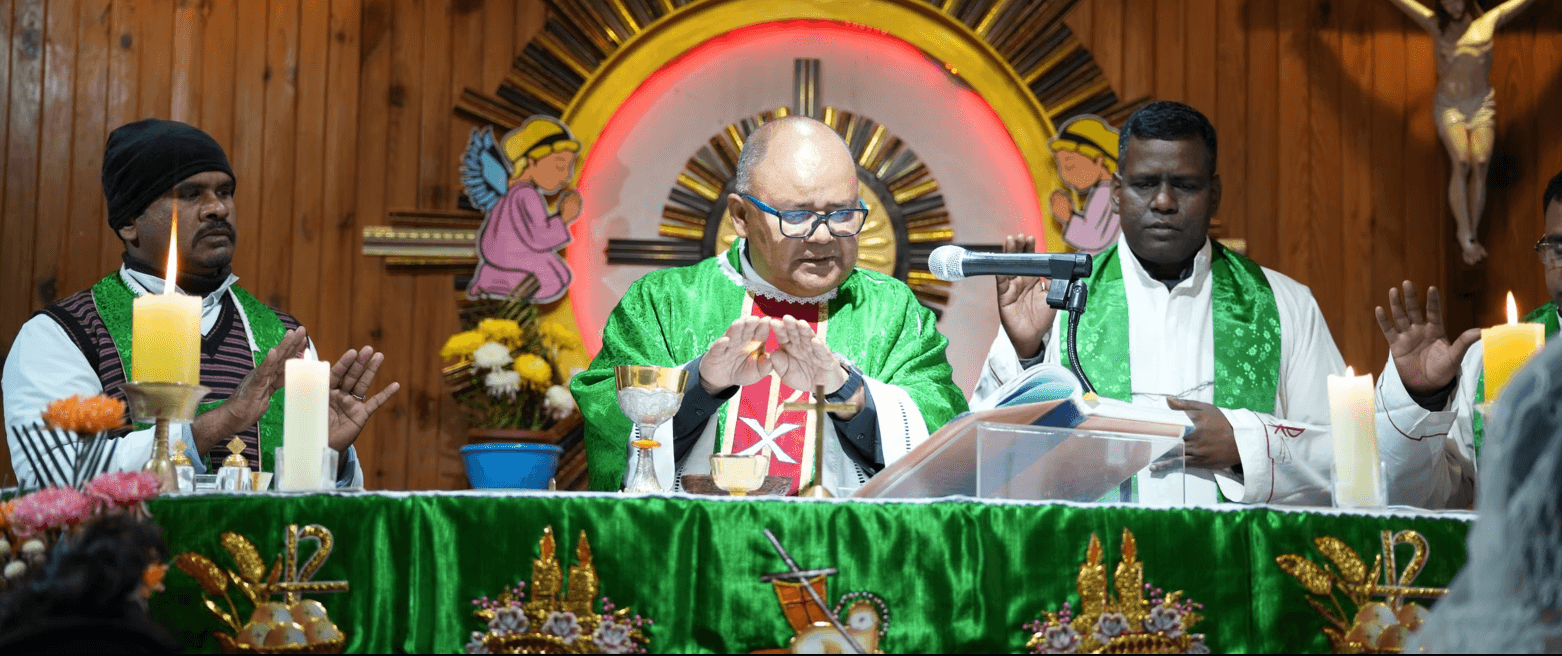
Kathmandu (AsiaNews) - After the March 5 parliamentary elections in Nepal, the new government's priority must be to address economic challenges, ensure political stability, and create job opportunities through more effective and transparent governance. This is the appeal launched by Fr. Silas Krishna Bogati, apostolic administrator of the Apostolic Vicariate of Nepal.
According to preliminary results, the Rastriya Swatantra Party led by Balendra ‘Balen’ Shah, a former rapper who became mayor of Kathmandu, is clearly in the lead and heading for victory against the traditional parties, which have achieved disappointing results.
The elections were the first since student protests against corruption led to the fall of the coalition government led by former Prime Minister K.P. Sharma Oli. The protests, supported by Generation Z youth, resulted in approximately 77 deaths and profoundly shook the country's political scene.
“Many young people have aspirations for change, and some have given their lives for it,” said Bogati, the first Catholic priest from Nepal. “That is why good governance should be the priority of any new executive.”
According to the priest, the elections were peaceful, with only a few minor incidents and no significant episodes of intimidation. International observers in the country also confirmed that the electoral process was conducted properly.
Nepal voted to renew the 275 members of the House of Representatives, the lower house of Parliament. Of these, 165 are directly elected in single-member constituencies, while 110 are assigned through a proportional system based on party lists.
Voter turnout stood at around 60%, according to the interim chairman of the Election Commission, Ram Prasad Bhandari. This is slightly lower than in the 2022 elections, when 61% of eligible voters cast their ballots.
“I saw many young people at the polls, but also people of all ages,” Bogati explained. “Young people feel that this election belongs to them too and hope to bring about change through their vote.”
According to the priest, most of the population expects the next government to revive the economy and ensure lasting political stability, while improving public services. “The government will have to work to create better economic and employment opportunities for all, strengthening education, health care, and infrastructure, and supporting women, young people, and the poorest,” he stressed. At the same time, he added, it will be necessary to combat corruption, nepotism, and political patronage.
During the election campaign, the issue of possible constitutional reform also emerged. Some voters, especially among young people, raised the issue of a constitution that is more accountable to citizens.
“If a party supported by Gen Z wins a majority, a proposal for a new constitution could emerge,” Bogati explained. However, the cleric expressed concern about the possible consequences for religious minorities. “If the new government decides to eliminate the principle of secularism, Christians could face problems.” .
Currently, the Constitution formally guarantees religious freedom, but according to the priest, its application often remains weak. “As a religious minority, Christians look to the future with some concern,” he said. “We hope that the situation will improve, but there remains a fear that the political and institutional system does not fully favor minorities.”
According to the 2021 census, Nepal has a population of about 30 million, mostly Hindus and Buddhists. There are officially just over 500,000 Christians, but church leaders believe there may be as many as three million. About 10% of the population also lives abroad for work.
“There is speculation that Balen's party could do well, but we will only find out when the votes are counted,” Bogati commented.
In total, more than 3,400 candidates from 65 parties participated in the elections. In addition to the Rastriya Swatantra Party, the main contenders also include the two historically dominant parties in Nepalese politics: the Nepali Congress and the Communist Party of Nepal (Unified Marxist-Leninist) led by former Prime Minister Oli.
Bogati also stressed the importance of female participation. “Women represent a very significant part of the electorate. At the polling station where I voted, I saw many women participating in the vote,” he said, noting that some female candidates, including 15 from Gen Z, presented significant political programs.
The elections were organized by an interim government led by former Supreme Court Chief Justice Sushila Karki, the first woman to hold the position, and were held with the deployment of thousands of soldiers and police officers to ensure the security of polling stations across the country.
According to Father Bogati, Nepal's future will depend on the new government's ability to respond to the population's expectations for change. “The real question,” he concludes, “is what vision the new government will have for the country's future.”