








Punjab puts the restoration of Lahore’s historic names on hold due to sectarian tensions
The provincial government has postponed the decision to restore names from the colonial era following criticism on social media and from conservative circles. For some, it is merely an effort to preserve history; for others, it raises sensitive issues regarding national identity and the significance of Pakistan’s post-1947 narrative. Behind the controversy lies a broader clash over governance.
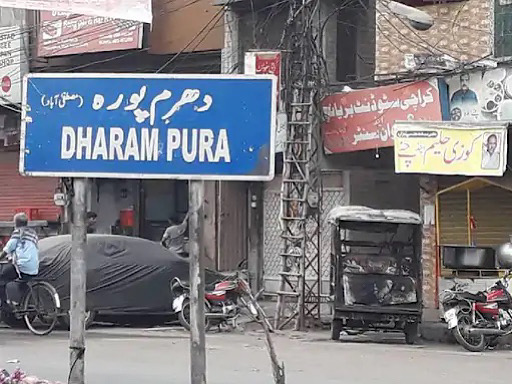
Lahore (AsiaNews) - The Punjab government has reportedly postponed the decision to restore the original historical names of streets, roads and localities in Lahore, following criticism from conservative circles and social media users, who have attributed a religious connotation to the proposal.
The initiative was discussed during a meeting of the Lahore Heritage Areas Revival (LHAR) held in March under the joint leadership of Nawaz Sharif and his daughter Maryam Nawaz. It is reported that during the meeting, the restoration of several pre-partition names was approved, as part of a wider effort to preserve the historical and cultural identity of the metropolis near the border with India.
However, shortly after the announcement, religious groups, vloggers and online commentators criticised the proposal, describing it as an attempt to revive a Hindu or colonial-era identity. Negative reactions spread rapidly on social media, forcing the provincial administration onto the defensive. Responding to questions from Dawn, Lahore’s Deputy Commissioner, retired Captain Muhammad Ali Ijaz, denied that a final decision had already been taken “in this regard”. He insisted that the matter was still under discussion, despite the earlier approval and the official statement issued by the Prime Minister’s office.
Since then, the controversy has sparked a wider public debate regarding the preservation of cultural heritage, identity politics and the growing influence of social media on political decision-making in Pakistan. Supporters of the restoration argue that it aims to preserve the authentic historical character of Lahore, rather than promote a specific religion. Historians, urban planners and heritage activists counter that the city should not be viewed solely as a post-1947 city, but as a centuries-old cultural hub shaped by Muslim, Sikh, Hindu, Mughal, Punjabi and colonial influences.
Names such as Krishan Nagar, Dharampura, Laxmi Chowk and Jain Mandir Road are historical markers that reflect the city’s cultural memory. Erasing or replacing them, they argue, would ultimately weaken Lahore’s connection to its past.
Many heritage advocates also point out that several old names continue to survive informally in everyday language. Despite the official renaming that has taken place over the decades, residents commonly continue to refer to many places and streets by their historical names. For this reason, some Lahore residents view the proposed restoration as largely symbolic, as the original names have never completely disappeared from the collective memory.
Recently, the Lhar invited historians, architects, scholars, urban planners and prominent figures from the city to discuss the proposal and provide recommendations regarding the restoration of old names throughout Lahore. According to participants, the meeting concluded with a broad consensus that the city’s historical identity represents a valuable cultural heritage that deserves to be preserved for future generations. “Most of the participants,” reported someone present at the meeting, “expressed support for the restoration of the historical names of streets and alleys.”
Over the years, many streets and neighbourhoods in Lahore have been renamed, often replacing place names from the British era or associated with Hinduism with those of Islamic, Pakistani or national figures. Queen’s Road became Fatima Jinnah Road, Lawrence Road was renamed Bagh-i-Jinnah Road and Davies Road became Sir Aga Khan Road. Similarly, Krishan Nagar became Islampura, Dharampura was renamed Mustafabad and Laxmi Chowk was renamed Maulana Zafar Ali Khan Chowk.
Critics of the restoration plan, however, argue that reinstating such names could create unnecessary cultural tensions or weaken the Islamic identity of post-partition Pakistan. Some conservative voices on social media have described the proposal as an attempt to undermine the ideological values associated with the country’s creation. The government’s apparent U-turn following online criticism has itself become the target of attacks.
Social activist Gull Marria explains to AsiaNews that the episode has shown how even street names in Pakistan can become issues laden with political and emotional connotations. “If the aim,” he stresses, “is to restore history, then it must be properly explained to the people instead of backtracking under pressure. Leaders should allay confusion, not flee from it.”
Another activist, Haris Jameel, questioned whether a political initiative of this magnitude should be so heavily influenced by online outrage. “It is hard to believe that such an important government decision,” he said, “has been postponed simply because of negative reactions from random vloggers.” “Governments,” he added, “should lead, not panic at every reaction on social media from so-called extremist elements.”
Political observers argue that the controversy reflects a broader shift in governance, in which social media narratives increasingly influence official decision-making, especially on issues related to religion or national identity. Furthermore, the debate highlights Pakistan’s ongoing struggle over how to reconcile its pre-Partition heritage with its modern ideological identity. For some, the restoration of historical names is simply an effort to preserve Lahore’s cultural history. For others, it raises sensitive questions about national identity and the meaning of Pakistan’s post-1947 narrative. For now, Punjab officials insist that the proposal remains under discussion and no formal timeline has been announced for the implementation of any changes.

.png)
12/02/2016 15:14










