Relations between Moscow and Yerevan following Pashinyan’s victory
The electorate’s pro-European choice in the 7 June vote was accompanied by the election of the largest number of pro-Russian MPs since 2018. Putin nevertheless aims to influence the prime minister’s policies, with whom he maintains open channels of communication. And the polls themselves suggest that Armenians do not want the partnership with Brussels to be at Moscow’s expense.
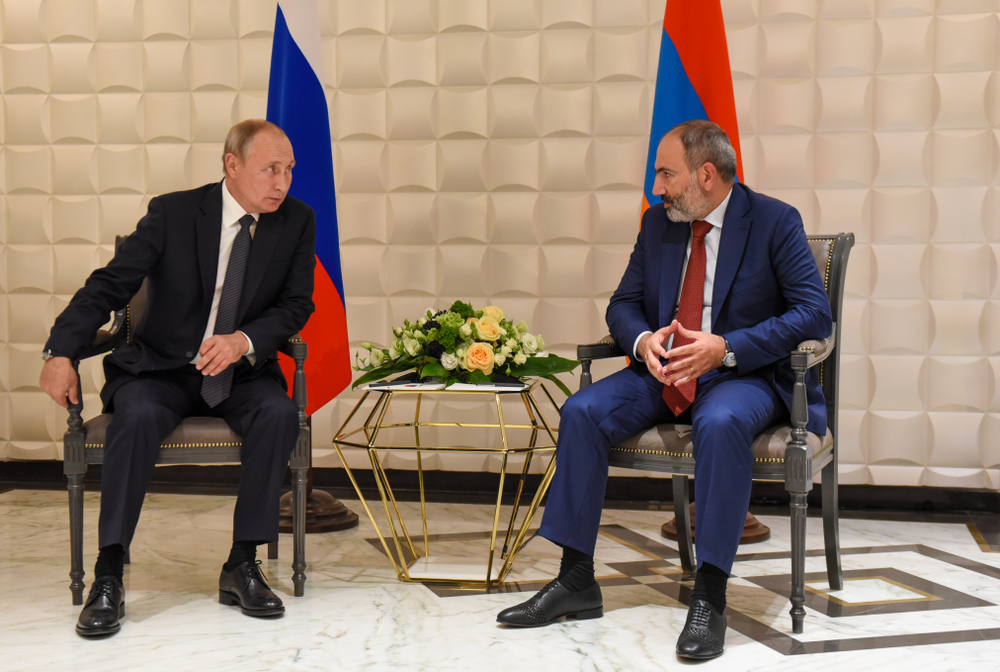
Yerevan (AsiaNews) – Despite intense pressure from Russia, Nikol Pashinyan won the parliamentary elections on 7 June in Armenia: the country has made a clear choice in favour of the West, not Russia. However, according to independent journalist Aleksandr Atasuntsev of the Carnegie Centre, the scale of Russia’s setback should not be overstated: pro-Russian parties still achieved their best result since 2018, and following his victory, the Armenian prime minister congratulated Putin on Russia Day and announced that he would visit him soon.
The pressure exerted by Russia on Armenia ahead of the elections had at least two objectives: firstly, by banning various types of Armenian imports, Moscow sought to frighten Armenian voters with the negative consequences of losing the Russian market. It is no coincidence that the import restrictions mainly targeted Armenian agricultural products: the aim was to affect voters in the provinces engaged in agricultural production, amongst whom Pashinyan enjoys greater popularity than among city dwellers. In the capital, the Prime Minister’s party secured just over 40 per cent of the vote, whilst in the regions it approached 60 per cent.
Russia’s second objective was to exert direct influence over Pashinyan, a longer-term aim that included threats to suspend the gas agreement should Armenia continue with European integration, as well as a joint statement by the countries of the Eurasian Economic Union (Eaes) calling for a referendum in Armenia on whether to join the European Union. By framing this latter demand in collective terms, Moscow sought to present itself as being more concerned with the economy than with politics, and to emphasise that it was not just Moscow asking Yerevan to make a decision, but the entire EAEU, where key decisions are formally taken by consensus. Furthermore, the Kremlin wanted the debate on the referendum to serve as a means of exposing Pashinyan’s pro-European integration rhetoric as a devious scheme, in which voters are deceived with vague promises of benefits, whilst the risks and costs are kept hidden.
Even in Moldova, which is much closer to Europe, the EU’s margin of victory in a similar referendum a year and a half ago was very narrow, so the Kremlin had every reason to hope that the vote in Armenia would fail completely. Nevertheless, and despite the threatening clamour with which Moscow has imposed bans and demands on Armenia, the actual restrictions have so far not resulted in significant losses for Yerevan. They have been felt in certain sectors, such as flowers, fruit and vegetables, where almost all exports are destined for the Russian market, but overall, all the banned goods account for only a couple of percentage points of Armenian exports, and even these few percentage points are limited to individual producers of cognac or, for example, apricots, whose season has not yet begun.
Moscow, of course, could continue to ramp up the pressure after the elections, and has many tools at its disposal to do so, but “it is unclear what benefits it would gain from this”, explains Atasuntsev, particularly as Armenia, despite the asymmetry in relations, has plenty of means to respond to any escalation. The mounting pressure will push Yerevan not only towards the European Union, but also towards Turkey, which is increasingly competing with Russia for influence in the South Caucasus.
Following the elections, it makes little sense for Russia to continue maintaining the restrictions already imposed on Armenia, which in the long term will cause more harm than good; indeed, after just a couple of weeks, their effect has already been negative for Moscow. The EU has announced financial aid for Yerevan, as well as the temporary suspension of customs duties on Armenian fruit and vegetables.
Furthermore, following the elections, the Kremlin has gained further leverage over Yerevan: following the parliamentary vote, the pro-Russian opposition has been significantly strengthened and, for the first time since coming to power in 2018, Pashinyan’s party will not hold a qualified majority.
The Russian leadership does not yet count Pashinyan amongst its most hated politicians, such as Mikhail Saakashvili, Volodymyr Zelenskyy or Maia Sandu. In 2025 alone, the Armenian prime minister met Putin in person twice, and again in 2026, during a working visit to the Kremlin. This does not mean that tensions in relations between Armenia and Moscow will disappear: the country’s ‘drift’ towards the West now seems irreversible, and according to a May poll by the International Republican Institute, 75 per cent of Armenians are in favour of European integration. However, at least for now, the majority also believe that Yerevan should not develop relations with Brussels at the expense of its partnership with Russia, which makes reducing tensions an attractive goal for both sides.

.png)