








Religious scandals and the “protection” that Beijing’s rules cannot provide
Following the scandal involving the abbot of the Shaolin Temple, a new storm has erupted with Hu Chenglin, president of the Shaanxi Taoist Association – the cradle of this ancient religious tradition deeply rooted in China – being publicly accused. All this despite the emphasis on ‘moral rigour’ in the government’s directives to religions. But when faith is reduced to a ritualised political exercise, the exchange of interests becomes an even stronger temptation.
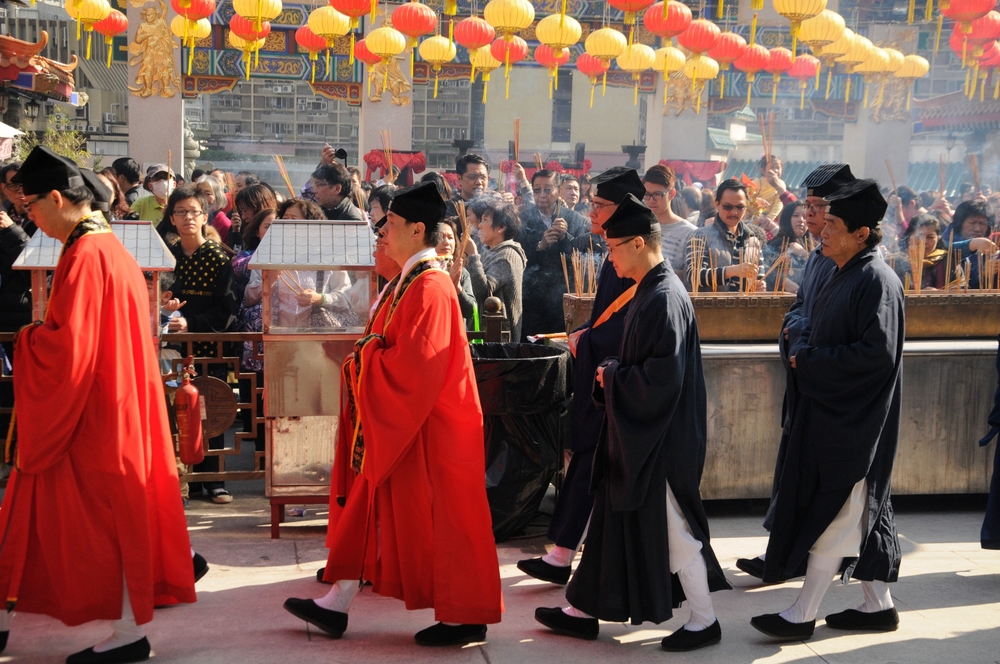
Milan (AsiaNews) - In recent weeks, reports that “Taoism too has produced its own ‘Shi Yongxin’” have once again raised public doubts about the integrity of the religious world in China. Shi Yongxin is the abbot of the Shaolin Temple and a former vice-president of the Chinese Buddhist Association, who suddenly fell from grace last year following allegations of corruption. At the centre of the new controversy is now Hu Chenglin, former vice-president of the Chinese Taoist Association, president of the Shaanxi Taoist Association and also a member of the Chinese People’s Political Consultative Conference.
He has now been publicly accused of having long concealed the fact that he was married and of having maintained inappropriate relationships with several women, in breach of the rules of his religious order and the regulations governing his staff. The allegations also include embezzlement of public funds and disorderly accounting: he is said to have used public funds from the Taoist association and temple property for personal use, even going so far as to charter a luxury cruise ship in Hong Kong for leisure. Even more seriously, he is accused of exploiting his social position for ‘power-based advantages’ in internal Taoist appointments and temple building permits, securing benefits for himself and favouring others, as well as illegally issuing ‘Taoist certificates’ to women with whom he had special relationships, enabling them to obtain false religious posts. Reportedly, all his appointments have already been dealt with in accordance with the relevant regulations.
Xi’an holds a prominent place in the history of Chinese Taoism, being home to numerous “ancestral Taoist temples”. Chongyang Gong, located in Huyi District (formerly Hu County), is the place where Wang Chongyang, founder of Quanzhenism, practised Taoism, died and was buried, and is the first of the “three great Quanzhen ancestral temples”. The Louguantai platform in the suburban county of Zhouzhi is traditionally regarded as the place where Laozi expounded his doctrines and is recognised as the ‘cradle of Taoism’. Mount Zhongnan, to the south of the city, is also one of the very few places in the world with a concentration of hermits: even today, thousands of practitioners live in seclusion there. In Xi’an, Taoism is not merely history, but also a way of life that continues to this day. Precisely because of this profound context, the revelations regarding the Hu Chenglin case during the May Day holidays appeared particularly shocking and quickly sparked a media storm.
As an indigenous Chinese religion, Taoism is often considered to be naturally endowed with ‘Sinicised’ characteristics. However, in the process of the ‘Sinicisation of religion’, Taoism too must continue to learn and transform itself: from the political perspective of the ‘five recognitions’ to the cultural dimension of ‘culturalisation’, the work undertaken is no less than that of other religious groups. However, from ‘wellness master’ Li Yi of the Baiyun Temple on Jinyunshan in Chongqing (accused in 2018 of falsifying his CV and suspected sexual assault) to Lu Wenrong of the Yuchan Temple in Hainan (whose son was abducted abroad in 2019 with a demand for a huge ransom) and now Hu Chenglin – all three of whom are former or current vice-presidents of the Chinese Taoist Association – behaviour is emerging that is far removed from the image of ascetic purity, simplicity, spiritual elegance and world salvation that Taoists are supposed to embody. And this contrast between the political study campaigns and the reality on the ground inevitably gives rise to much reflection and raises doubts about the real effectiveness of such measures.
In reality, the Chinese Buddhist world is by no means a land of purity either. In addition to the phenomenon of fake living lamas and fake masters, which has already been severely cracked down on, in 2018 Xuecheng, then a standing member of the Chinese People’s Political Consultative Conference, president of the Chinese Buddhist Association and abbot of Longquan Temple in Beijing, was forced to resign following allegations of sexual harassment and mind control of several female disciples. This scandal immediately brought Longquan Temple, known for bringing together highly educated and technologically advanced monks, crashing down from its pedestal. Shi Yongxin, abbot of the Shaolin Temple, deputy to the National People’s Congress, vice-president of the Chinese Buddhist Association and honorary professor at various universities, despite having been at the centre of controversy for years, was only fully exposed last year: accused of having long violated the precepts, of having appropriated assets and of having had relationships with numerous women, he not only breached the moral boundaries of public opinion but may even have committed criminal offences.
Public opinion often harbours expectations of ‘moral purity’ towards religious figures. However, in a market economy, religious holy sites often serve tourist, cultural and commercial functions. Faced with the temptations of the property market, admission fees and related industries, religious groups, as the de facto custodians of the religious economy, have seized the development opportunities of the times but also face enormous challenges: some religious leaders even seem more like corporate CEOs.
According to Chinese policy arguments on ‘maintaining the orientation of the Sinicisation of religion’, one of the main tasks of religious leadership should be to correct the trend towards commercialisation, returning religion to its spiritual essence and preventing it from becoming subordinate to local tourism or the property market under the motto ‘religion sets the stage, the economy then takes centre stage’. Since Xi Jinping explicitly proposed the principle of the “Sinicisation of religions” in 2015, this guideline has been incorporated into the five-year plans of all denominations. In 2021, the National Conference on Religions also clearly defined “strict governance of religion” as an important measure of Sinicisation, requiring communities to strengthen self-management and strictly enforce rules and precepts.

.png)
25/04/2016 15:17
03/04/2018 15:27










