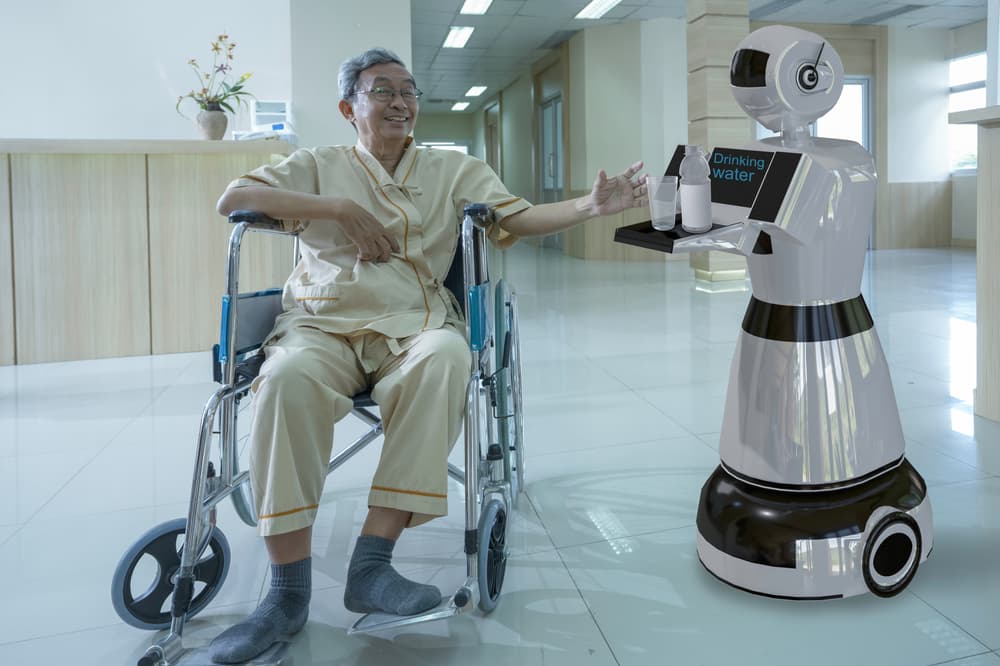
Seoul (AsiaNews) – South Korea is trying to battle social isolation by expanding care services for seniors and people living alone by increasingly turning to new technologies to address the challenges of an aging population.
The Seoul Welfare Foundation announced the introduction of artificial intelligence (AI) and robotic systems in six nursing homes in the capital, in an effort to support a sector increasingly affected by staff shortages and the rise in dependent elderly people.
The project, called "2026 Care Service Digital Transformation Support”, provides about seven million won (almost US$ 4,300) in funding for each facility, as well as specialised technical assistance.
The initiative seeks to modernise a sector characterised by physically demanding work, stressful shifts, and high staff turnover.
The technology will be applied primarily to the most demanding and risky activities, such as patient lifting, fall prevention, and bedsore monitoring.
Some nursing homes will introduce motorised beds capable of automatically moving bedridden patients, to reduce the physical strain on caregivers who are tasked with moving them multiple times a day.
The Yongsan Senior Nursing Home will use non-contact radar sensors to monitor the movements of the elderly and identify behaviours that could precede a fall, to prevent accidents before they occur.
Other facilities, such as the Seoul Senior Town and the Yeomin Welfare Cooperative, will test electric lifts and wearable robotic exoskeletons to assist staff with patient transfers.
The Songpa Senior Nursing Home will also test bowel sensors that can alert staff only when necessary, eliminating constant manual checks that consume much of their daily work time.
According to the foundation, the project represents an increasingly urgent need in South Korea, which has now entered the "super-aged society" phase, a term used when over 20 per cent of the population is over 65.
The automation of some monitoring tasks and mechanical assistance for more demanding tasks should help a workforce struggling to keep pace with the increased demand for care.
In recent years, South Korea has adopted policies against social isolation, expanding psychological support services, home monitoring, and assistance for seniors living alone, a rapidly growing trend.
The use of AI and robotics in caregiving also shows how South Korea is trying to use technology to offset the consequences of one of the world's most serious demographic crises, characterised by a very low birth rate, rapid aging, and a shortage of available care workers.