








Russia's indigenous peoples and the Council of Europe
Among the 15 delegates of Russian democratic forces abroad with whom the Parliamentary Assembly of the Council of Europe has begun working are representatives of peoples such as the Udege, Buryats, Izorians and Komi. They say: ‘For many Europeans, it is shocking to learn that not everyone in Russia speaks Russian as their native language.’
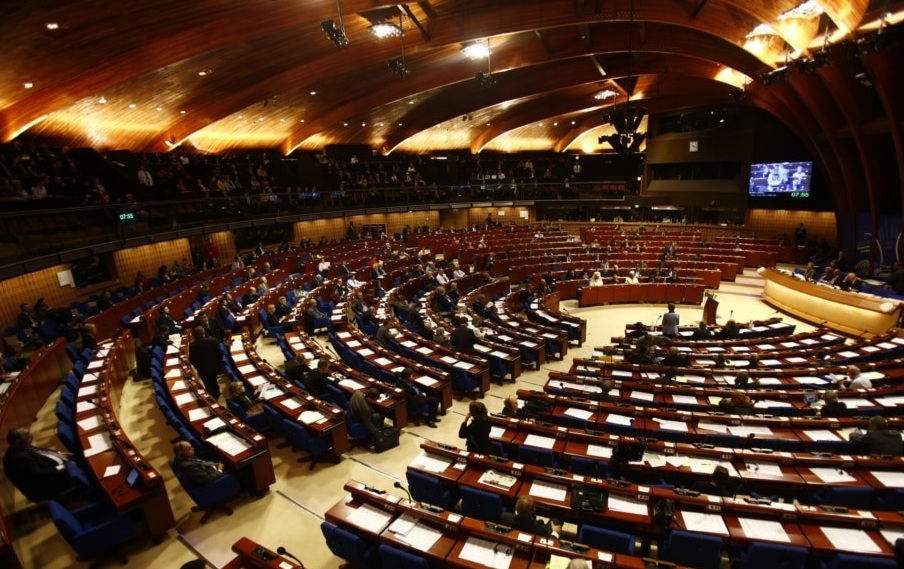
Strasbourg (AsiaNews) - The Parliamentary Assembly of the Council of Europe (PACE) has begun working with 15 delegates from Russian democratic forces abroad, including some of the most prominent ‘foreign agents’ and opposition politicians to Vladimir Putin's regime, such as Mikhail Khodorkovsky, Vladimir Kara-Murza, Dmitry Gudkov, Garry Kasparov, Oleg Orlov, Lyubov Sobol, Nadezhda Tolokonnikova and others, chosen from a group of 200 candidates who had made themselves available.
Among those selected are five representatives of Russia's indigenous and minority peoples, who also represent the needs of the Federation's many other ethnic groups.
The most influential of these is Pavel Suljandziga, an activist from the Udege, a branch of the Tungusic family of the Russian Far East. A doctor of economics, he has been living in the US since 2017, where he was granted political asylum after leaving his country following numerous pressures from the police.
He has defended the rights of his Udege brothers, who now number only about 1,500, in many initiatives, including the creation of the Batani fund for the defence of the rights of indigenous peoples, which has been declared an “undesirable organisation” in Russia.
He states that he “wants to draw attention to the repression taking place in Russia”, recalling that activists in this sector are continuously arrested and sentenced to between 20 and 25 years in prison camps.
Another well-known representative is Vasily (Batlaj) Matenov from Buryatia, who in 2017 founded the independent communications agency Aziaty Rossii, “Asians of Russia”, which considers its mission to be “a meeting point for all native activists and movements”, with an open dialogue for anyone who wants to contribute to building the future of the peoples of Russia and who “is not indifferent to them” .
Ruslan Kutaev, president of the Assembly of the Peoples of the Caucasus, comes from Chechnya and believes it is essential to establish an international tribunal against Putin's regime, ‘without waiting for Ukraine to do so, for the crimes he has committed within Russia’.
The other two members of the delegation, representing minority peoples, are Ekaterina Kuznetsova from Narva in Estonia and Lana Pylaeva from the northern republic of Komi. The former represents the “Free Ingria” movement, an informal group of “regionalists” that began its activities in 1998, even before Putin came to power, demanding autonomy in the region around and north of St Petersburg.
Ingria is the abbreviated term for Ingermanlandia, a historic north-western region of Russia inhabited by the Finno-Ugric ethnic group of the Izorians or Ižori, who are also related to the Estonians. Ekaterina states that “the most important thing is to find true mutual understanding among all Russian democratic representatives at ASPE; we are at the beginning of a long journey”.
The delegates were chosen for their public activity and their clear and explicit condemnation of the invasion of Ukraine, as was done very effectively by Lana Pylaeva, editor-in-chief of the Komi Daily newspaper and activist for the rights of the Komi, an important population in north-central Russia, whose conversion to Christianity took place in the early 15th century by one of the greatest missionary monks, Saint Stephen of Perm, as a sign of the religious rebirth of all of Russia after two centuries of “Tatar yoke”.
Lana notes that “for many Europeans, it is shocking to learn that not everyone in Russia speaks Russian as their native language”, which justifies the distinction between russkye (ethnic Russians) and rossijskye (Russians of other origins and languages). Knowing the history, culture and lifestyle of these peoples is also important for understanding “who is on the other side of the cable when it comes to gas pipelines and oil transport, how these peoples live and how the Russian state behaves towards them”.
Among Russians abroad, and also at home, a great debate has opened up about the composition of this delegation, and no “gender or ethnic quota” can truly satisfy everyone's aspirations. This is one of the reasons why Russians have never been able to unite in expressing their dissent towards dictatorship, from that of the tsars to that of the Soviets to Putin's new totalitarianism, and the current experience in Strasbourg could open a new phase of common building of the Russia of the future.

.png)
07/02/2019 17:28










