








Russian icons against alcoholism
The icon of the Mother of God Neupivaemaja Čaša, the “Inexhaustible Chalice” which presents Christ as the “drink of salvation”, is increasingly invoked by Russian Orthodox Christians to seek deliverance from alcohol and drug addiction. Alongside 80 “saints of sobriety” chosen from among the “new martyrs” of the last century.
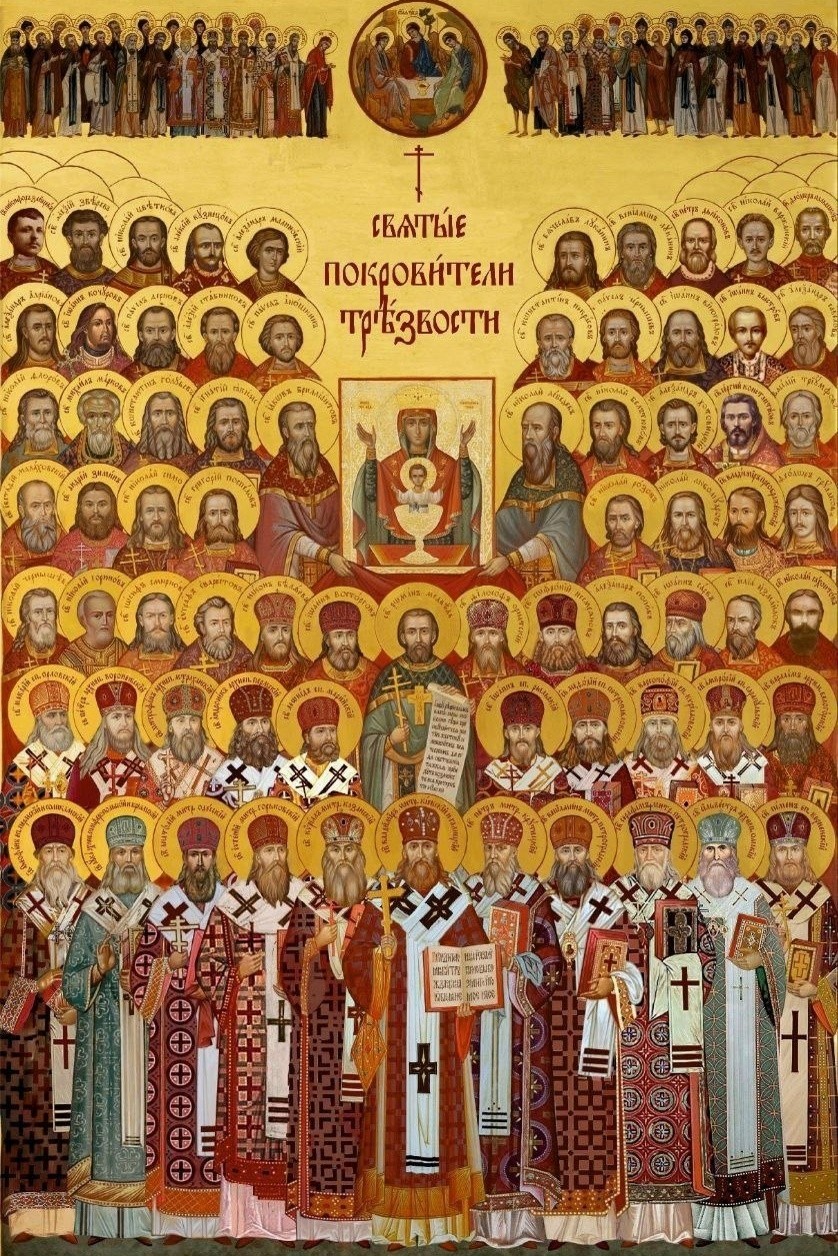
Moscow (AsiaNews) - Russian Orthodox faithful are increasingly turning to the image of the Mother of God Neupivaemaja Čaša, the “Inexhaustible Chalice” which Christ offers as the “drink of salvation”, with prayers for deliverance from alcohol and drug addiction. This is associated with a Marian theme recently added to liturgical iconography, featuring the “Patron Saints of Sobriety”, 80 images of saints forming a crown around the “Madonna of the Chalice”, whose feast day is celebrated by the Russian Church on 18 May.
Valery Doronkin, director of the Moscow Patriarchate’s alcohol rehabilitation service, spoke about this in an interview with Ria Novosti, stating that the icon of the Inexhaustible Chalice is one of the most widespread in Russia; it is displayed in all churches and hung in the prayer corner of homes, since “drunkenness is a major affliction of ours, especially in recent times”. The icon is used in families and shown to those most vulnerable to this harmful habit, even if only as a small image to carry with them.
The 80 saints of sobriety, explains Doronkin, belong to the category of ‘new martyrs’ of the last century, when alcohol addiction was also widespread, and all of them helped people to overcome it. Among them stands out Metropolitan Vladimir (Bogoyavlensky), who led a major temperance movement in the early 1900s, before the Bolshevik Revolution, when many associations were committed to tackling this social problem, involving millions of citizens of the Tsarist Empire. Many other bishops and priests took part in this endeavour, proposing to everyone that they “take a vow of sobriety” as a lifelong religious commitment, analogous to the vows of chastity, poverty and obedience. Most of them subsequently suffered persecution at the hands of the atheist Bolshevik regime, thus joining the ranks of the new martyrs.
A similar appeal came from the auxiliary bishop of the Patriarchal Archdiocese of Moscow, Siluan (Bjurov), titular bishop of Pavlovo-Posadskij on the outskirts of the capital, where several large cemeteries are located. The faithful are reminded that “bringing alcohol and cigarettes to the cemetery is a clear distortion of Orthodox tradition, and is instead linked to pre-Christian pagan traditions, when sacrifices were offered to pagan gods”, as Bishop Siluan explains.
Visits to cemeteries are characteristic of the period following Easter, which the Orthodox celebrated on 12 April, and during the ‘Bright Week’ of the Easter octave, all the cemeteries were filled with the faithful who went to bring the news of the Resurrection to their departed loved ones. In practice, these customs manifest as feasts held beside the graves, where benches and small tables are often set up, featuring heavy drinking to ‘break the fast’ and the transgression of smoking—otherwise strictly forbidden by the precepts of the Russian Church—thus transforming the sombre expanses of the cemetery into uncontrolled, festive orgies.
Many sugared almonds, sweets and small kuličy cakes, as well as the coloured eggs that had been blessed on Easter night, are then left on the graves as a sign of Easter joy, along with wreaths of flowers and other gifts of various kinds; piles of empty bottles are also often left scattered around the sides of the gravestones.

.png)
07/02/2019 17:28










