








Settlers occupy a stone quarry in the Christian West Bank town of Taybeh
The extremists set up a tent and raised an Israeli flag. The attacks aimed at seizing land carry religious, political, legal, and symbolic implications. For the local parish priest, Father Bashar, despite difficult circumstances, the Christian community wants to celebrate Easter "with deep faith”. The patriarchs and heads of the Churches of Jerusalem issued a message of peace.
Milan (AsiaNews) – This year, Holy Week and Easter come “under very difficult circumstances,” reflecting what “we live every day, including military procedures, gates and checkpoints, and constant fear due to ongoing attacks by settlers,” said Father Bashar Fawadleh, parish priest in Taybeh (West Bank), speaking to AsiaNews.
Taybeh is a village of about 1,500 inhabitants with three churches, 30 km north of Jerusalem and east of Ramallah, known as the last Palestinian town entirely inhabited by Christians. More than 600 residents are Latin Catholics, while the remainder are Greek Orthodox and Melkite Greek Catholics.
“Despite all of this, we insist on living Holy Week with deep faith and on making our celebrations spiritually rich despite the pain,” the clergyman explained. “These days remind us that the path to the Resurrection passes through suffering, that light comes out of darkness, and that hope is born in the most difficult moments,” he added.
In recent months, the area has been the scene of repeated attacks by Jewish settlers, with homes raided and set on fire, a trend that prompted the Latin Patriarch of Jerusalem, Cardinal Pierbattista Pizzaballa, and the Greek Orthodox Primate, Theophilus III, to make a visit of solidarity to the village.
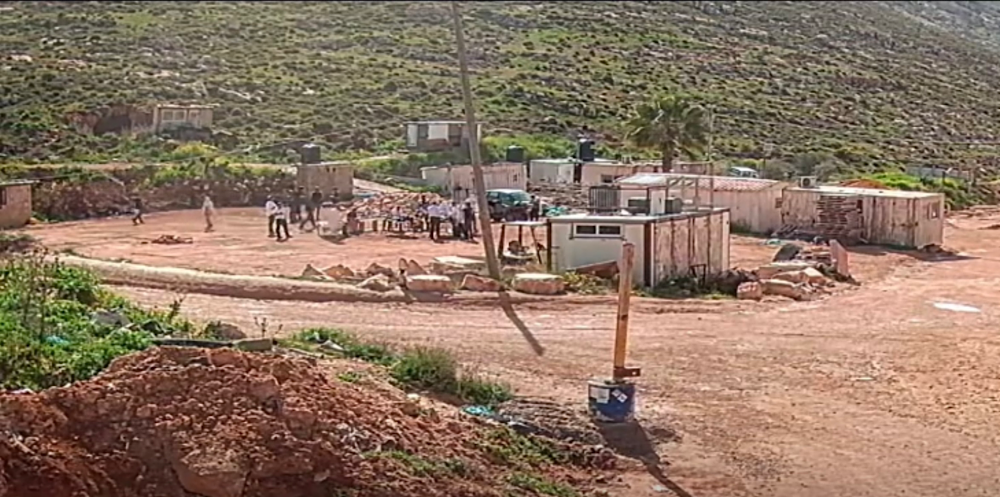
More violent attacks have occurred recently. On the morning of 19 March, more than 30 Jewish settlers entered a stone quarry and a concrete factory located west of the town, performing Talmudic rituals and prayers.
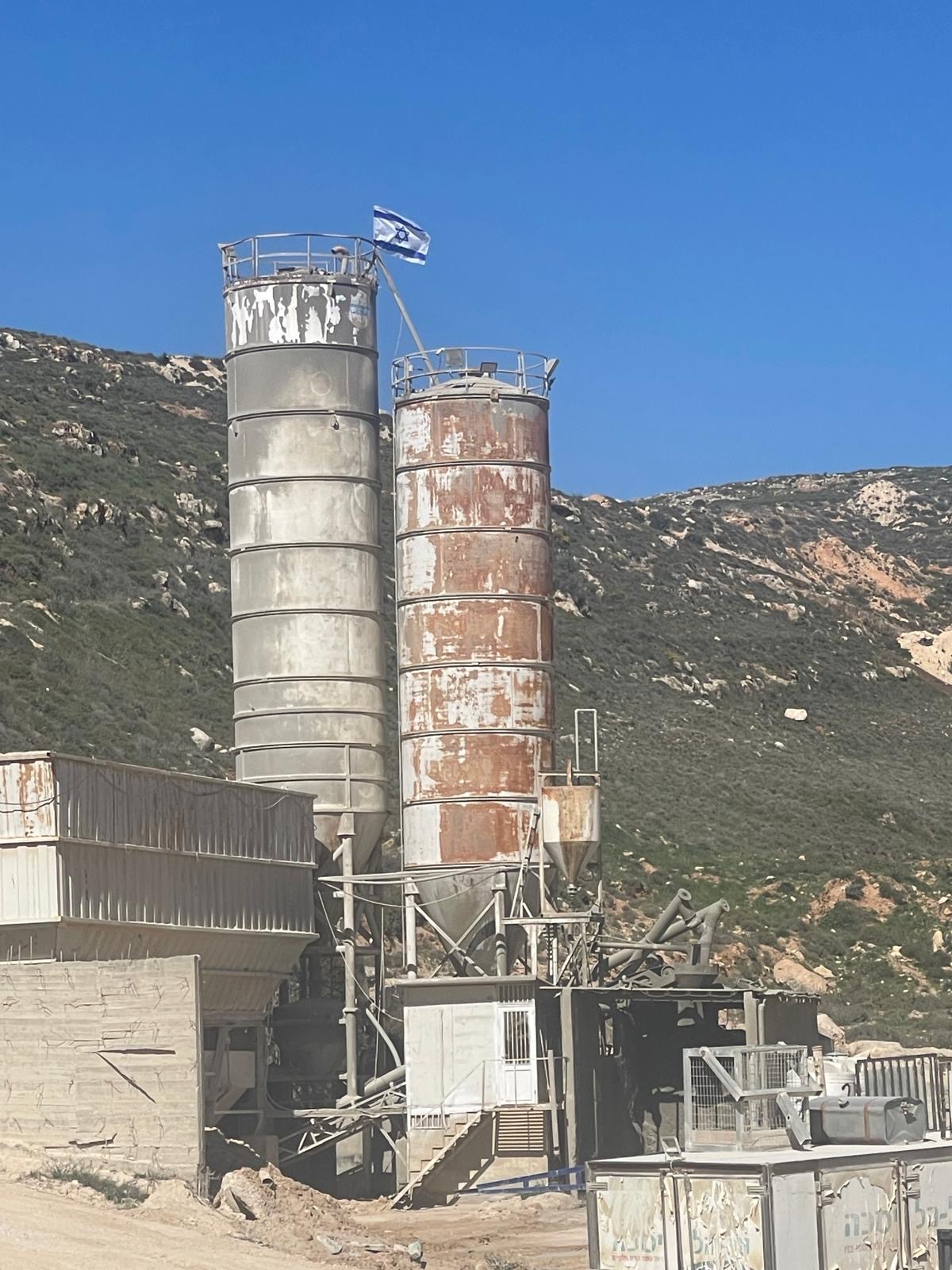
In the days that followed, the attackers set up a tent in front of the quarry and raised an Israeli flag, stating that they would not leave because the land belonged to them, thus preventing the workers from entering and carrying out their work.
The occupation continued this week despite appeals from the village's Christian leaders, who called on the authorities to intervene to clear the area, expel the settlers, and protect the residents who live under daily threats of attack.
The settlers' activities constitute a serious escalation and a clear violation of property rights, as well as raising concerns about the attempt to impose a different, illegal ownership to the land. What is more, the decision by Jewish extremists to raise an Israeli flag over one of the factory’s storage tanks is an attempt to assert control over the site.
Looking at the implications of these events, Christian leaders identify four critical elements: first, the religious dimension and the use of symbols, with prayers used as a tool to confer religious legitimacy on a presence on the land through a discourse informed by “Torah rights”. This is a way to psychologically and politically prepare the ground for subsequent actions.
The second critical element is political and linked to the raising of the Israeli flag as an explicit affirmation of sovereignty; the third concerns the legal sphere, because these actions reflect a strategy of “facts on the ground”, progressing from a symbolic presence to a material set up (tents, temporary structures) and legalisation. The fourth is symbolic, because targeting Taybeh threatens one of the few remaining Christian communities in the Holy Land, heightening concerns about the erosion of Christianity’s historical presence.
“We do not celebrate because circumstances are easy, but because we believe that the Resurrection is our hope, and that our faith gives us the strength to continue,” Father Bashar said. “Therefore, we will live this Holy Week in prayer, love, and solidarity with one another, hoping that this feast will bring peace and new resurrection to our hearts, to our town, and to our land.”
The community of Taybeh observes the Eastern calendar, noted the parish priest, starting on Palm Sunday which falls on 5 April.
“The parish groups play an essential role in preparing for this week and in making the celebrations meaningful and well organised. Each group contributes in its own way to serving the Church and the community,” he said.
“The choir prepares hymns and liturgical celebrations to help the faithful enter into a spirit of prayer and reflection. The youth group helps in arranging the church, organizing the processions, and participating in prayers and readings. Families and parish groups also contribute by decorating the church and preparing everything needed for the celebrations.”
Thus, “preparing for Holy Week becomes a collective effort in which the whole parish participates, and each person feels that they have a role and a place in this spiritual journey.”
Today, the Council of Patriarchs and Heads of Churches of Jerusalem also issued its Easter message, underscoring how "the desolation of the tomb was not the end of history," even if “Hope itself appears to have abandoned us.”
These words resonate prophetically at a time in history characterised by “a new and devastating regional war" that “has once again plunged the Holy Land and the wider Middle East into turmoil.”
“In keeping with this profound truth, we bid the faithful and all those of goodwill to work and pray ceaselessly for the relief of the countless multitudes throughout the Middle East and beyond who are suffering severely from the ravages of this war.”
Finally, the patriarchs and Christian leaders end with an “appeal to them (people of goodwill) to advocate and intercede for an immediate end to the bloodshed and for justice and peace to finally prevail throughout our war-torn region, beginning in Jerusalem and extending to Gaza, Lebanon, and all the Holy Land; to the Gulf States and Tehran; and to the ends of the earth.”

.png)
11/12/2025 14:17
26/06/2025 16:04










