Singapore (AsiaNews) — Singapore authorities have ordered social media platforms to block access to 14 online posts accused of inciting hostility against the country’s Indian community, describing them as a deliberate attempt to undermine racial harmony in the multicultural city-state. The Ministry of Home Affairs (MHA) said police acted under the Online Criminal Harms Act after investigations found that the posts, circulated on YouTube, Facebook and X, appeared designed to foster resentment and ill-will toward Indians living in Singapore.
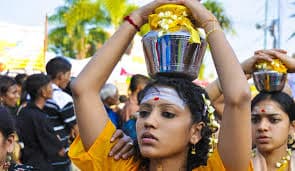
The content alleged that Singapore was being “overrun” by Indians and used selective images and videos of crowded streets in Little India and Indian religious gatherings to portray the republic as increasingly dominated by a single ethnic group.
Authorities said preliminary investigations suggested the content likely originated from a China-based platform before being shared across multiple social media channels.
“These are malicious efforts to sow discord by inciting ill-will against the Indian community in Singapore,” the ministry said in a statement.
Under the order, social media companies are required to take reasonable steps to prevent Singapore users from accessing the identified content.
The ministry said the posts were likely to constitute criminal offences under Singapore law by promoting feelings of enmity, hatred or ill-will between racial groups and by committing acts prejudicial to the maintenance of racial harmony.
“Singapore firmly opposes nativism and xenophobia, and any attempt to pit one community against another must be strongly rejected,” the statement said.
An Integral Part of the Singapore Story
The issue touches a particularly sensitive nerve in Singapore, where racial harmony has long been regarded as a cornerstone of national stability.
Singapore’s population of about 6 million comprises a Chinese majority alongside significant Malay and Indian communities. According to official figures, ethnic Chinese account for about 75 per cent of citizens and permanent residents, Malays around 15 per cent, and Indians approximately 7.5 percent.
Although numerically smaller than the Chinese and Malay communities, Indians have played an outsized role in Singapore’s development since the colonial period. Migrants from the Indian subcontinent arrived as traders, civil servants, policemen, labourers, teachers and professionals under British rule, helping shape the island’s commercial and administrative foundations.
Today, Singapore’s Indian community is highly diverse, comprising descendants of early migrants as well as more recent arrivals from India. They are represented across virtually every sector of society, including business, academia, medicine, law, technology and public administration.
The community has also produced some of Singapore’s most prominent national leaders. President Tharman Shanmugaratnam, widely regarded as one of the country's most respected statesmen, served for years as deputy prime minister, finance minister and senior economic policymaker before his election to the presidency in 2023.
Other prominent figures have included former Deputy Prime Minister S. Jayakumar, former Foreign Minister S. Rajaratnam — one of Singapore's founding fathers and the architect of its multiracial vision — and current ministers and senior office holders of Indian descent who continue to serve in Cabinet, Parliament, the judiciary, diplomatic corps and civil service.
Their contributions underscore a defining feature of Singapore's political culture: leadership positions are not allocated solely according to ethnic numbers but are drawn from the country's various communities within a framework that emphasises meritocracy and multiracial representation.
Migration and public debate
In recent decades, Singapore has also seen increased migration from India, particularly among professionals employed in finance, information technology, engineering, healthcare and higher education.
The influx has occasionally generated public debate over employment opportunities, housing pressures and population growth, especially during periods of economic uncertainty. Some critics have questioned immigration policies, while the government has maintained that foreign talent remains necessary to support economic competitiveness and address labour shortages.
Authorities have consistently distinguished between legitimate policy discussions and rhetoric that targets entire ethnic or national groups.Analysts note that anti-immigrant narratives circulating online often exploit economic anxieties and demographic concerns, portraying minority communities as threats rather than contributors to national development.
Guarding against online incitement
The latest action reflects Singapore’s increasingly assertive approach toward online content deemed capable of disrupting social cohesion.
Authorities have repeatedly warned that social media can amplify racial and religious tensions, particularly when misleading or manipulated content is circulated to exploit existing anxieties.
The government argues that strong intervention is necessary in a society where memories of racial unrest during the 1950s and 1960s continue to shape policymaking. Singapore's leaders frequently cite those experiences as evidence that racial harmony cannot be taken for granted.
For the city-state, officials say, maintaining trust among its diverse communities remains essential to national security, social stability and economic success.
The ministry said investigations into the origin and dissemination of the posts remain ongoing.