








Sunn hemp a possible answer to Sri Lanka’s fertiliser crisis
Studies by the University of Peradeniya show that atmospheric nitrogen can be fixed into the soil and rapidly improve it thanks to sunn hemp (Crotalaria juncea), reducing the need for chemical fertilisers, which are in short supply following the Strait of Hormuz blockade. Experts are urging the various stakeholders, including farmers, to leverage its potential to boost the country's food security.
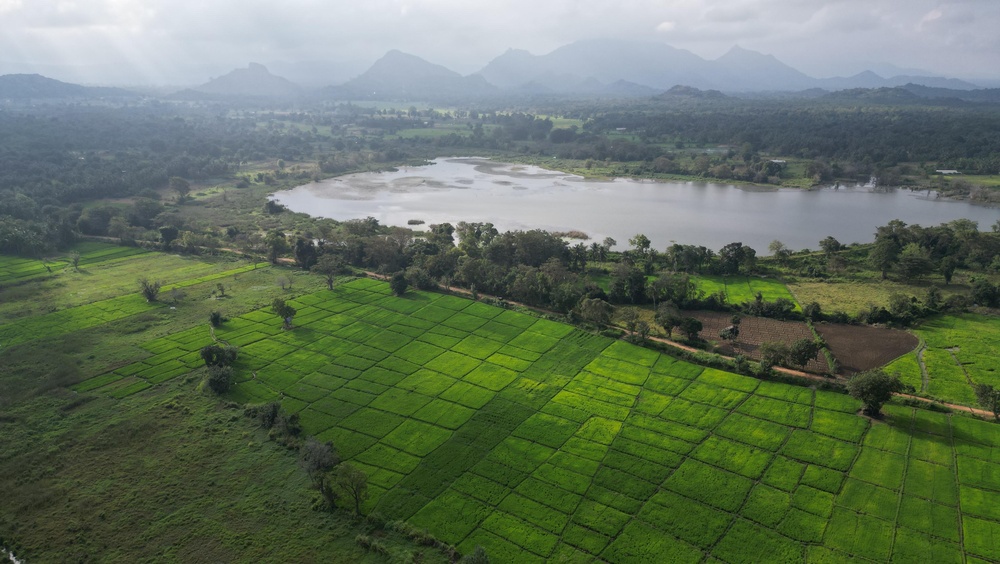
Colombo (AsiaNews) – A traditional plant could be the solution to Sri Lanka's fertiliser crisis, caused by the closure of the Strait of Hormuz, reducing costs for farmers while simultaneously improving soil quality.
A legume, sunn hemp (Crotalaria juncea), has been the subject of recent studies by the Faculty of Agriculture at the University of Peradeniya, with particular attention to the Dry Zone, one of the country's main climatic regions, characterised by low annual rainfall and long periods of drought.
Studies show that sunn hemp can fix atmospheric nitrogen into its biomass, which is then incorporated into the soil as a natural fertiliser, significantly reducing the need for chemical fertilisers.
Department of Agriculture officials recommend adding about 10 tonnes of organic matter per hectare, especially to annual crops, to improve soil fertility.
Traditionally, farmers use compost or cow manure, but in many cases they also use the so-called green manure, which comes from fresh plant material.
“An important category of organic inputs consists of fresh plant material, especially green leaves,” said scientists Udara Samarasinghe and Sachintha Alwis speaking to AsiaNews. In fact, Sri Lankan farmers have been using green manure for generations, especially Gliricidia Tithonia, known for adding nutrients and biomass to the soil.
Still, “Despite their benefits, Gliricidia plants are perennial, requiring dedicated space and several months to produce enough biomass.” What is more, “They must be cut and transported before they can be incorporated into the soil. This limits their use, especially for annual crops."
Alternative, short-cycle crop that can be easily grown directly in the fields must be used. “Sunn hemp is an annual legume crop with multiple benefits, grown in various parts of the world."
Brazil is the main producer, where it is used primarily as fodder and green manure, while in India (the world's second-largest producer) it is also used to produce fibre.
In the United States and Australia, it is used for environmental purposes, such as erosion control, weed suppression, and soil improvement, thanks to its ability to grow even in poor soils and under difficult conditions, with minimal water requirements.
“The 50 per cent flowering stage is the best time to incorporate it into the soil. In Dry Zone conditions, this occurs about 50 days after planting. Sunn hemp provides about 500 kg of nitrogen and 250 kg of phosphorus per hectare and significantly contributes to weed reduction," the researchers explain.
“As the biomass decomposes rapidly, farmers can start a new crop within a fortnight. The enriched soil favours beneficial microorganisms and gradually releases nutrients, acting as a slow releasing fertiliser."
“Although sunn hemp is not yet a major commercial or export crop for Sri Lanka, it has great potential as a farmer-friendly solution that improves soil health,” this according to scholars Nipunika Attanayaka and Shirantha Gamlath.
Still, this comes with challenges such as seeds’ availability and cost, which currently stands at around 530 rupees per kilo. An investment of about 53,000 rupees (US$ 165) would be required to grow it per hectare.
Overall, “reducing fertiliser use can result in savings that exceed this cost several times, with even greater long-term environmental benefits.”
Ultimately, “Instead of admiring its yellow blooms, it ought to be incorporated into the soil while it's still green so that it can nurture the land.” In fact, “scientific research has already shown benefits. Farmers and other stakeholders ought to use this knowledge to improve soils, boost food production, and achieve sustainable yields for the country.”
Photo: Ksenia Ice/Shutterstock

.png)
04/05/2017 11:50
10/05/2024 16:08










