








The Archbishop of Merauke slams 'Pesta Babi' as a political propaganda film
Archbishop Petrus Canisius Mandagi weighs in on the criticisms of the Catholic Church contained in the documentary denouncing national strategic projects launched by the Indonesian government in South Papua. “The accusations against me and the archdiocese are entirely baseless,” the prelate says. For years, the Church has struggled “to uphold the dignity of Papuans” with “schools, healthcare, agricultural programmes, livestock farms, credit unions” in some of the remotest areas.
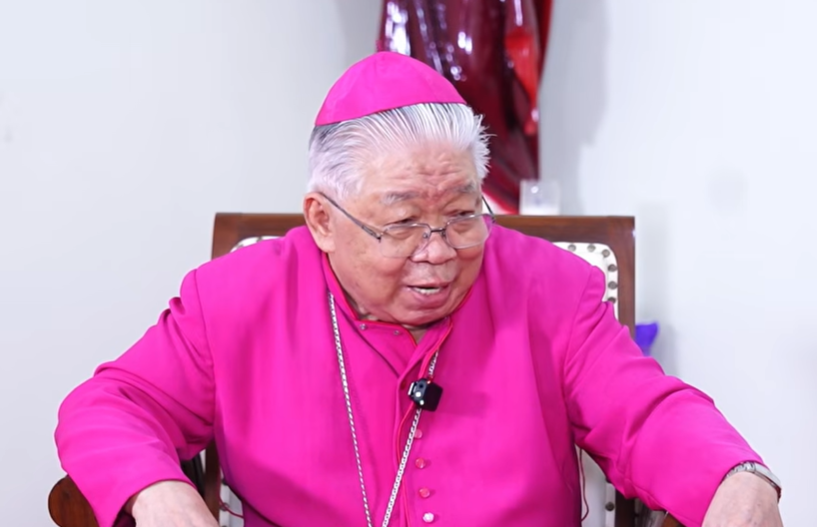
Jakarta (AsiaNews) – Archbishop Petrus Canisius Mandagi of Merauke, in the Indonesian province of South Papua, has forcefully rejected the accusations levelled at the local Catholic Church following the release of the controversial documentary film Pesta Babi (Pig Festival), which denounces the social and environmental effects of major national strategic projects launched by the Indonesian government in the province.
The documentary, directed by Indonesian filmmakers Dandhy Dwi Laksono and Cypri Paju Dale, focuses primarily on agricultural and industrial projects related to food plantations and bioethanol production, which have been accused of causing deforestation, loss of ancestral lands, and profound social transformations for the indigenous Papuan populations.
The title refers to a cultural tradition of the Muyu people, a symbol of harmony between community and nature, now threatened by environmental destruction.
The film has sparked widespread debate in Indonesia and abroad, generating strong criticism of the government and even towards the Archdiocese of Merauke, accused by some activists of tacitly supporting the so-called National Strategic Projects (PSN).
In an interview with AsiaNews, Archbishop Mandagi called these accusations "completely false" and denounced what he considers a distorted narrative.
“The accusations against me and the archdiocese are entirely baseless. It feels as though I am being trapped by narratives suggesting that I am benefiting from the PSN projects,” said the prelate, who explained that he had chosen to remain silent for a long time not because he supported the contested projects, but to avoid further divisions among the faithful.
“If I continue to respond to every false accusation, my words will be twisted further. I do not want the faithful in Merauke Archdiocese to become divided over the PSN issue,” he said, citing the evangelical example of Jesus before his accusers.
Archbishop Mandagi reiterated that the Church's mission in South Papua does not revolve around the government's economic projects, but rather the defence of human dignity and brotherhood.
“We believe that humanity is not saved by PSN, but by love and fraternity. Amor vincit omnia: love conquers all,” he said.
The prelate also criticised the documentary for what he believes to be a one-sided depiction of the Papuan situation. According to him, the filmmakers failed to seek the perspective of the local Church, which has been present in the area alongside the indigenous populations for decades.
"They never came to ask the bishop or the priests serving in the field. They only listened to parties who shared the same objectives as the filmmakers,” he lamented. In fact, he vehemently denies that the Church sold land or received money from companies accused of destroying Papua's forests.
“The accusation that the Church has been bribed is deeply painful. We have spent years living here, struggling to uphold the dignity of Papuans,” he said.
The archbishop noted the work the Church does in the region's remotest areas: schools, healthcare, agricultural programmes, livestock farms, credit unions, as well as economic support for indigenous communities. He stressed that many priests live in isolated villages along rivers, sharing the daily hardships of the population.
According to him, both the controversy over the PSN and the film Pesta Babi now risk becoming tools of political propaganda.
“I choose silence because I do not want to be dragged into political currents. The Church only fights for humanity,” he stressed.
While critical of the documentary, the archbishop did not call for censorship. On the contrary, he urged people to view it critically. “Watch the film, but do not lose your critical thinking,” he insisted.
Father Patris Allegro, who also waded into the controversy, defended the archbishop's position, arguing that the public debate about Papua cannot be reduced to ideological slogans or divisions between "pro-government" and "anti-government” views.
According to the priest, the risk is that every discussion will be turned into a propaganda war, overlooking the complexity of the reality experienced by local populations.
Last but not least, for Archbishop Mandagi, not all silence equates to complicity, and not all outcry represents courage. “The Church is present through schools, clinics, parish ministries, economic assistance, credit unions, family pastoral care, catechesis, liturgy, prayer, and years of quiet service,” he said.

.png)
08/08/2022 18:30
03/06/2021 13:39










