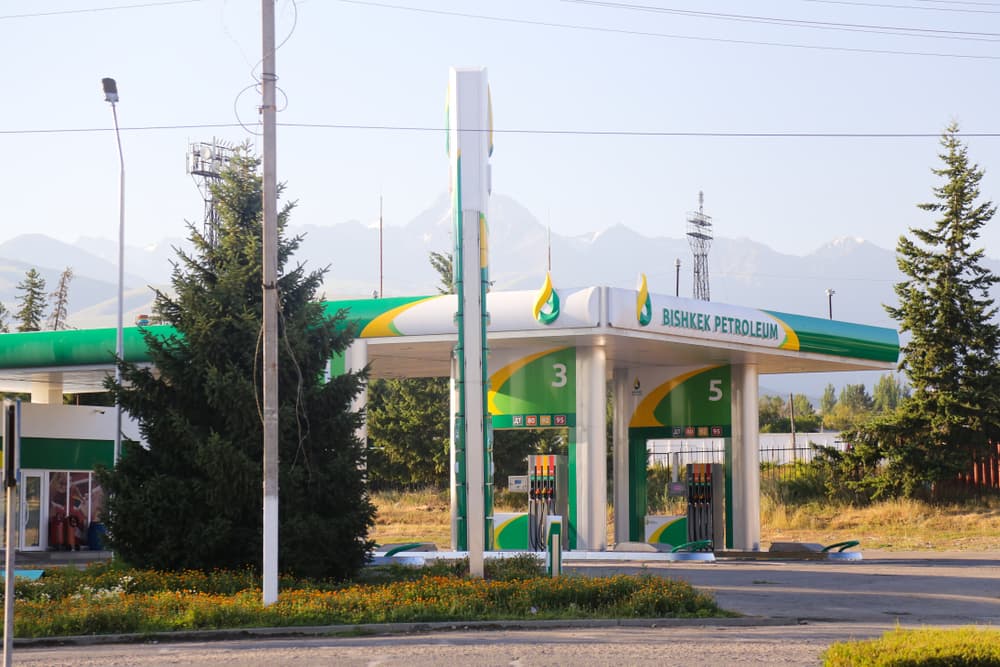
Dushanbe (AsiaNews) – Ukrainian drone attacks on Russian oil facilities are putting increasing pressure on Russia’s fuel supply system; Moscow has tightened export restrictions, causing repercussions in neighbouring countries that depend on Russian fuel supplies, refineries and transit infrastructure. The consequences are already evident across Central Asia: rising fuel prices, a shortage of aviation fuel and growing uncertainty over energy security.
Disruptions to Russia’s energy system are beginning to destabilise Central Asian markets, causing hardship for motorists in Kyrgyzstan. Azat, a taxi driver interviewed by Radio Azattyk, said that rising fuel costs are significantly reducing his daily earnings: “Honestly, the situation is getting really difficult; we’re barely managing to make ends meet. The price of LPG has risen to 45 som (around 73 US cents) per litre. A journey used to cost around 1,200 som; now it costs 1,700. The city is constantly gridlocked with traffic. Sometimes we can’t even cover our expenses and end up in debt.”
Kyrgyzstan’s Deputy Prime Minister, Danijar Amangeldiev, told journalists that the rise in fuel prices was inevitable, due to global geopolitical instability: “There is the option of raising prices gradually, by one som every two weeks, rather than drastically, and if global prices fall, the Anti-Monopoly Agency will work with fuel importers to try to bring them down.”
Tajikistan is perhaps the most vulnerable country: according to the Anti-Monopoly Service, 84 per cent of the petroleum products imported into the country come from Russia, and consumers are already feeling the effects, with sharp rises in petrol and diesel prices. Abdudžabbor, a taxi driver from Khudžand, said that “diesel used to cost 9 somoni and 60 diram (around $1.50) per litre, and is now selling for 13 somoni and 50 diram”. The Tajik authorities have repeatedly attributed the rise in fuel prices to “external factors”, without directly naming Russia. Domestic policy has also contributed to the pressure: the Tajik government has introduced a new environmental tax of 30 euros per tonne of imported petrol and diesel, further increasing costs in a market already under strain.
The disruptions have also affected Uzbekistan, where fuel shortages have already begun to impact flight schedules. Uzbekistan Airways recently announced the cancellation of several flights to Russia, demonstrating how problems with the Russian fuel supply system are spreading across the region. The Uzbek economist Otabek Bakirov has directly linked the pressure to the growing dependence on Russian energy imports, as he wrote in a post on Telegram: “In Uzbekistan, which has become dependent on imports from Russia and where prices are rising rapidly, there is an urgent need to focus on securing alternative and stable sources of petrol and other fuels (propane and diesel) via neighbouring and sister countries, and to take concrete action on this issue.”
Unlike Kyrgyzstan, Tajikistan and Uzbekistan, Kazakhstan has so far avoided a serious energy crisis: its refineries and fuel reserves are enabling petrol stations to continue operating normally, despite shortages in Russia. Nevertheless, Kazakhstan has also restricted the export of petroleum products to protect its domestic market, creating an unusual situation: Russia, traditionally the main supplier of fuel to Central Asia, may now itself require assistance from Kazakhstan.
Whilst Moscow struggles to cope with its own fuel shortage and simultaneously seeks supplies from Kazakhstan, Astana’s dependence on Russian infrastructure could become an increasingly serious vulnerability. Kazakhstan may be forced to turn increasingly to its other major neighbour, China, thereby replacing one dependence with another.