








The Way of the Cross of Lebanese Christians 'nailed' to the cross of war
Christians are taking part in Holy Week rites torn between traditional fervour and the burden of an explosive and unpredictable regional context, feeling occupied from within by Hezbollah and bearing the already considerable human cost of the war with Israel. Churches are packed for Good Friday in areas spared from the bombardment. Divisions among Christian leaders weigh heavily.
Beirut (AsiaNews) – Holy Week in Lebanon this year is experienced both with traditional fervour and under the weight of an explosive and unpredictable regional context.
“Lebanon is fighting to survive; I believe that’s how it’s experiencing Holy Week this year,” said Robert F., an Armenian psychotherapist, who offered his thoughts on Wednesday during a small prayer meeting for peace organised by a community of worshippers in Lebanon.
“Lebanon is facing a mortal threat,” he added. “Hezbollah has sacrificed Lebanon for Iran. That’s precisely what Jean-Yves Le Drian told us. Indeed, despite its resilience, Lebanon is neither indestructible nor eternal. Today, it faces one of the greatest trials of its short history (83 years since Independence Day in 1943).” “It is being invaded from within and without, and it is threatened with implosion.”
The man, an octogenarian who has lived through all the years of war in Lebanon since 1975, expressed without restraint what many Lebanese, Christian or Muslim, think and fear.
“Invaded from within”, this is indeed how Christian, Sunni, and Druze communities view the adventurism of the Shia-based Hezbollah, which has dragged Lebanon into a war that President Joseph Aoun and Prime Minister Nawaf Salam, assisted by Emmanuel Macron’s France, Abdel Fattah el-Sisi’s Egypt, and Qatar, did everything to avoid, without success.
“It is the presence in Lebanon of a branch of the Revolutionary Guards, the ideological army of the Iranian regime, dubbed in Lebanon the ‘Islamic Resistance’, that is causing Lebanon’s misfortune today,” writes columnist Michel Touma.
According to Lebanese authorities, this resistance is being organised and led by Iranians who entered the country without authorisation.
Since 2 March, following a provocation by Hezbollah, i.e. rockets fired at Israel, Iran has launched a military offensive against Israel, something neither the genocidal crushing of the Palestinians in Gaza nor the assassination of Hezbollah's secretary-general in September 2024 had managed to achieve.
In this "holy war”, the existence of a country called Lebanon, its territorial integrity, its communities, its villages, and the lives of hundreds of thousands of Lebanese driven from their homes are insignificant compared to the need to avenge the affront and the desire to wipe Israel off the map of the Middle East.
A considerable human cost
The human cost of this first month of war remains considerable. So far, the Lebanese Health Ministry reported 1,318 deaths, including 125 children and 88 women, as well as 3,935 wounded, including 423 children and 473 women. The toll also includes several medical professionals, as well as journalists. These “collateral” deaths are the greatest burden for the Lebanese to bear. Beloved figures are disappearing.
The casualty figures for the belligerents, however, remain unreliable due to the blackout surrounding them.
"It's an asymmetric war. The balance of power is heavily in Israel's favour. Hezbollah's strategy is to ensure, partly through anti-tank missiles, that the human cost of the war on Lebanese territory is as high as possible for Israel. This is one of the most effective deterrent weapons against Israel." “It is probably costly in terms of lives, but it is the only one that could prove profitable,” military experts believe.
More than 400 Hezbollah members have reportedly been killed, according to internal sources cited by L’Orient-Le Jour, while Israel puts forward a significantly higher figure, suggesting up to 700 fighters eliminated.
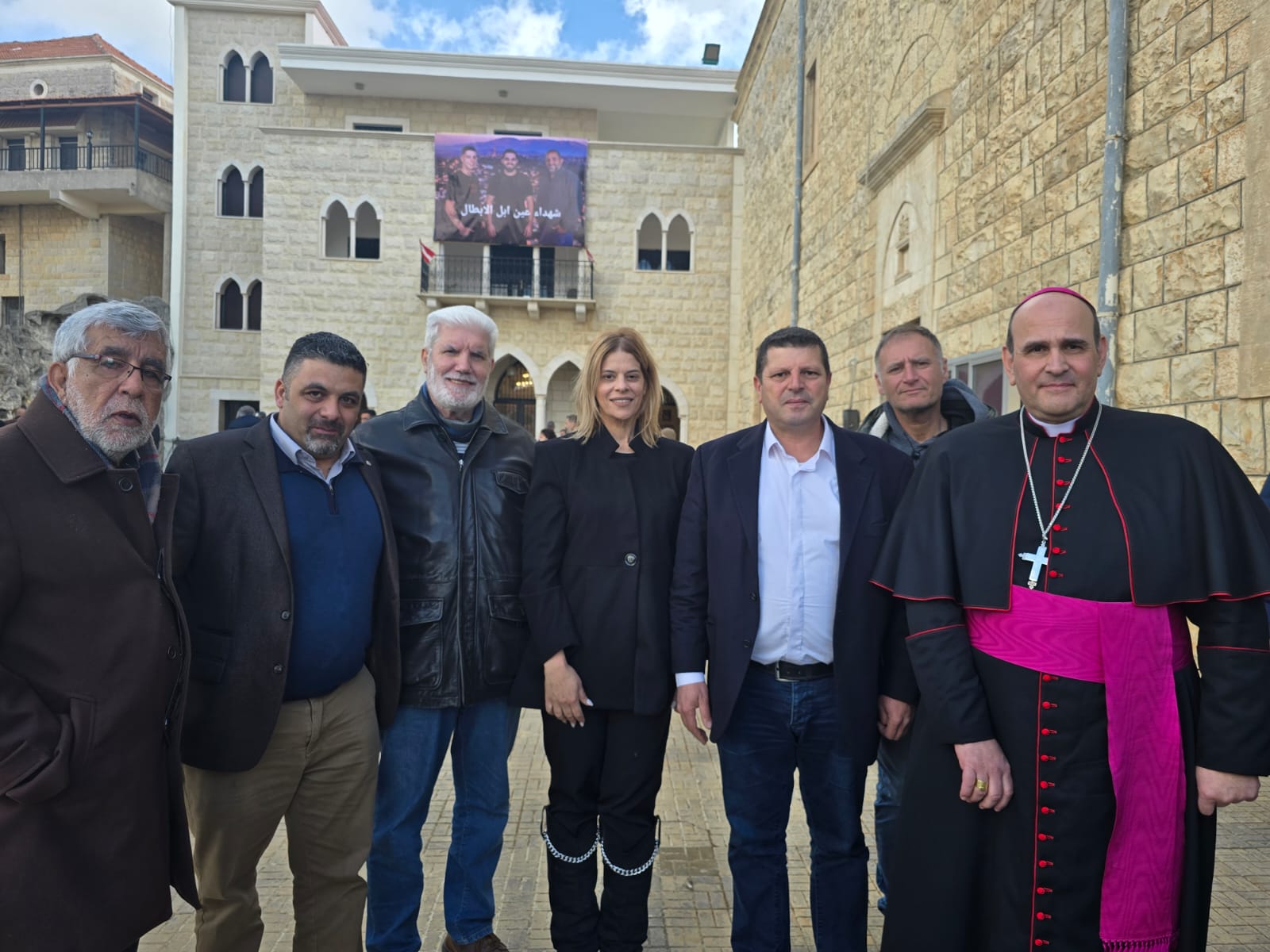
Moreover, the losses are not limited to the direct belligerents, and the Israeli army appears ruthless. The United Nations Interim Force in Lebanon (UNIFIL) has paid an unprecedented price, with three Indonesian peacekeepers killed on 30 and 31 March and several wounded in incidents related to the bombardments. Lebanese soldiers are also among the victims, as well as five men from the Christian border villages of Rmeich and Ain Ebel, killed without explanation or apology.
Churches are full
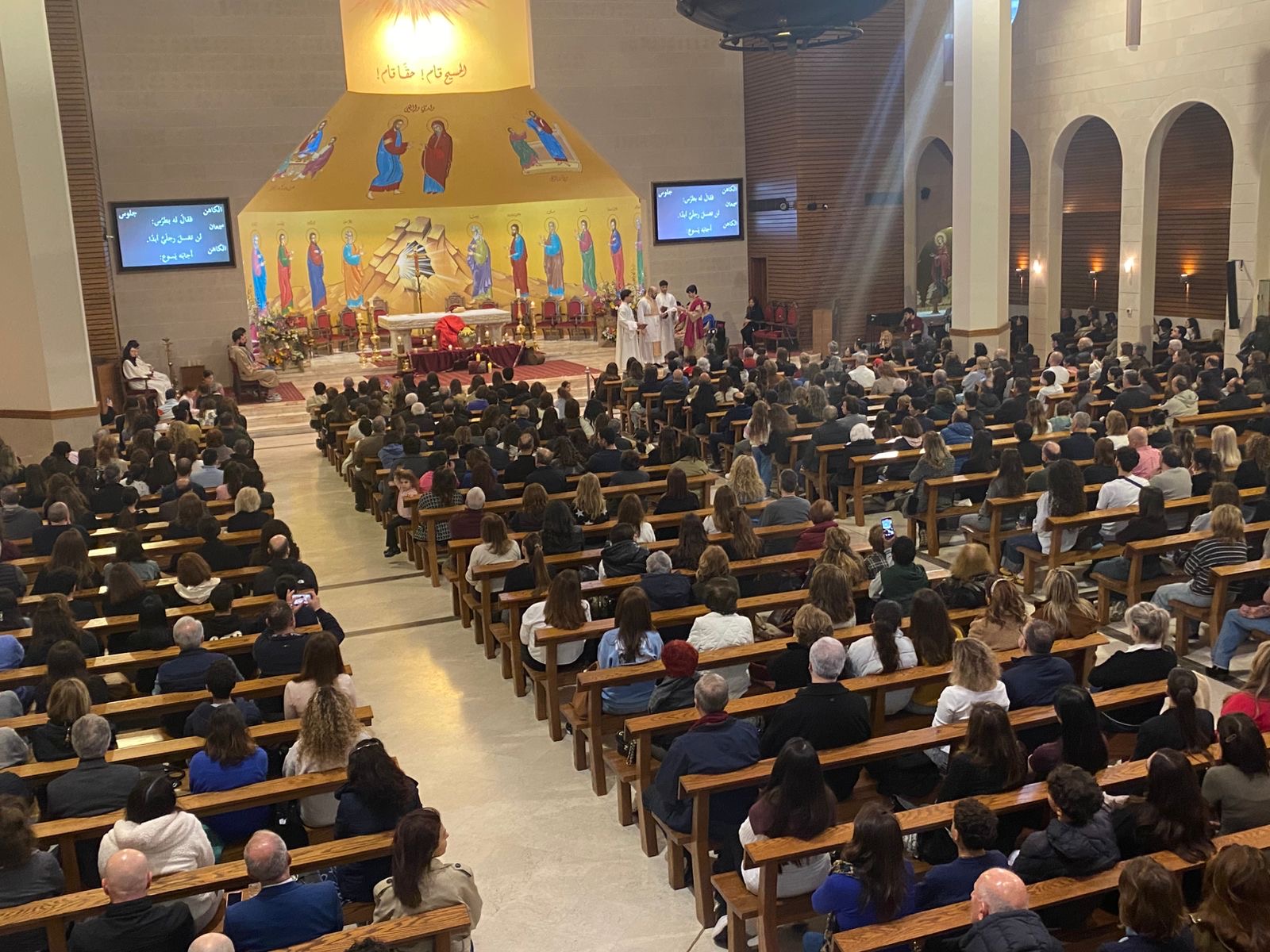
Despite the crisis, churches are full in the part of the country spared from bombardments. But the heart is elsewhere. Certainly, it is undoubtedly a key moment of the year.
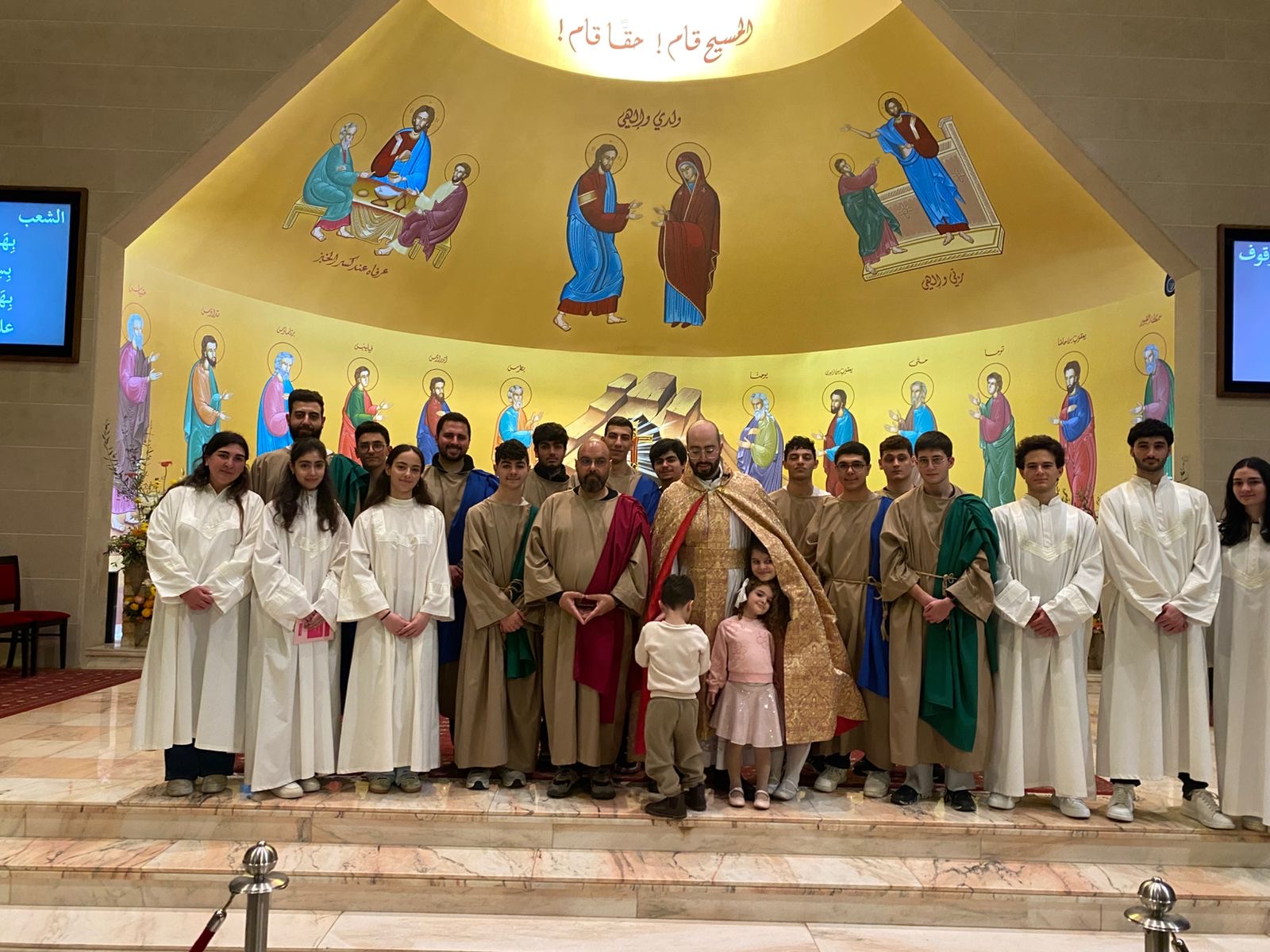
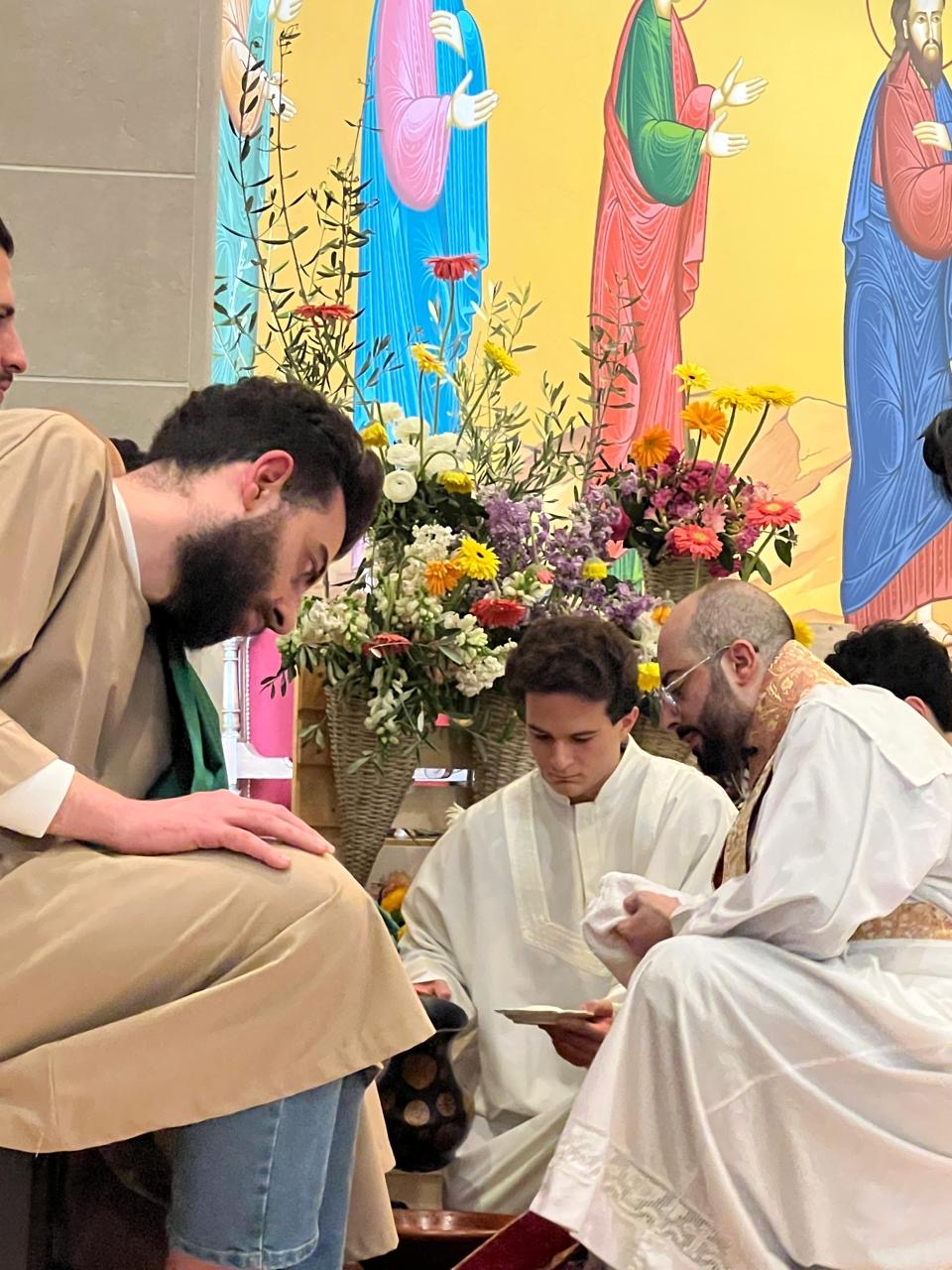
Beyond the liturgy, there is a vibrant cultural aspect. The foot-washing ceremonies, the making of holy oil, special television programmes, the royal Byzantine hymns of the Greek Catholic Church contrast so sharply with those of the Syro-Maronite tradition, homemade ma‘amoul (dessert) and egg colouring, visits to the seven churches, and so on.
However, the gloomy weather and heavy rains prevented the Palm Sunday processions from taking place outdoors. “We had to make do with holding them inside the church, and under the covered part of the outside forecourt,” said Father Rony, who celebrated Palm Sunday in the Church of the Resurrection, the cathedral of Bishop Antoine Bou Najem, in Mtayleb.
What the war started, price inflation finished. “We redecorated last year’s candles,” said Nisrine, a mother of two boys, whom we met at Saint George Church in Jbeil. “And this year, no new clothes.” Arlette A., owner of a children’s clothing store in Jbeil (Byblos), who accompanied the woman and her children, confirmed this.
Behind Israeli lines
Behind the lines of Israeli forces, which are attempting to advance on several fronts in the southern region, the Maronite villagers cling to their land and homes. In the Maronite churches, donations collected on Holy Wednesday are intended for them.
Fearing involuntary encirclement by the fighting between Israel and Hezbollah, the army withdrew from a number of Christian villages, notably the small town of Rmeich, while maintaining small volunteer units there.
The cry of these villages, who feel abandoned, echoes throughout the country. Thanks to the tireless efforts of the Holy See, and at the request of the Maronite Patriarch, a humanitarian corridor was authorised for the border villages this Sunday. An effective and affable intermediary, the Apostolic Nuncio, Archbishop Paolo Borgia, has become very popular in the border villages.
For his part, Interior Minister Ahmad Hajjar stated on Wednesday that members of the Internal Security Forces (ISF) are still present in the border villages. This widespread precariousness underscores the tragic dimension of Holy Week.
“Lebanon is experiencing its Gethsemane, its Passion.” “It is nailed to the cross, and its enemies are dividing its clothes among themselves,” said Elie M., a literature professor living in France, with his heart still in Lebanon where his family lives, in Rayak, Bekaa Valley.
Reviewing the situation, he noted that Iran is defying Lebanese law and refusing to recall its ambassador, that the raids continue day and night, that hundreds of thousands of Lebanese are living outside their homes, and that the Lebanese are divided between those who blame their misfortunes on Israel and those who blame them on Iran.
But the Maronite bishop of Batroun, Mounir Khairallah, laments another misfortune: the division among Christian leaders who are vying for their share of Lebanon, while its unity crumbles before their very eyes. Many, in fact, fear internal unrest, and the army is on high alert.
A coup inspired by Iran cannot be ruled out. Indeed, the still invisible new Supreme Leader sent a message of congratulations to Hezbollah Secretary General Naim Qassem for "his loyalty" to the ideals of the Islamic Republic.

.png)










