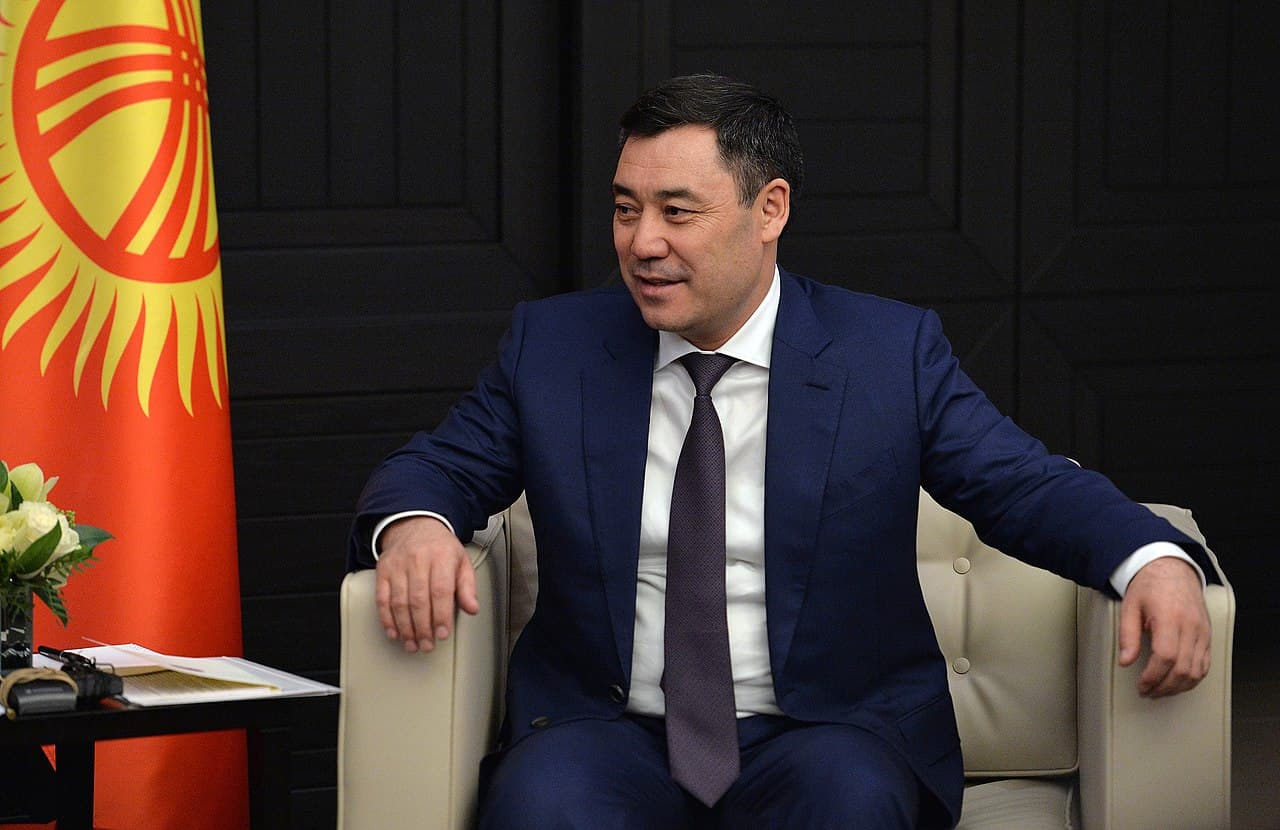
Bishkek (AsiaNews) - On 10 February, Kyrgyzstan's President Sadyr Žaparov dismissed his most important and closest collaborator, Kamčibek Tašiev, from his post as head of the Gknb security services to prevent him from being used to organise a coup to overthrow his regime five years after his election. This sparked a series of changes at the top of the most important state structures, including parliament and the government.
Tašiev was temporarily replaced by 56-year-old Žumgalbek Šabdanbekov, who was then confirmed on 19 February. Šabdanbekov is an inspector with the Revenue Agency and a counter-terrorism specialist, who went on to become deputy director of the Gknb. Other high-level officials in the security service were also replaced, including the director of the counter-terrorism centre, who is now 53-year-old Ališer Erbaev, a lawyer with the financial police and former director general of the national electricity grid.
The director of the border guard service, Abdikarim Alimbaev, was also dismissed on 10 February from the GKNB service, of which he was one of the vice-presidents, becoming president of the new state border service, detached from the security services.
On the same day, a new independent service was set up to protect the Kyrgyz presidency, headed by Syrgak Berdikožoev, who commented on Instagram that “it is necessary to respond to citizens” concerns expressed on social media about the security of the president and also of Kamčibek Tašiev', who returned to Germany for medical treatment after his resignation but was assigned an appropriate security detail.
The major shake-up at the top continued on 14 February with the appointment of Ulan Bijbosunov as head of security in the capital Bishkek, while his predecessor Eldar Žakypbekov was arrested the following day, and another GKNB official close to him, Sydyk Dujšenbiev, along with one of his collaborators in the Chuy region, known by the nickname Vazelin for his ability to “grease” all the powerful figures and mechanisms necessary to carry out control projects. As part of the investigation into Žakypbekov, five other GKNB members were arrested on 27 February, and six more were dismissed.
The director of security services in the Oš region, Salmoor Džumabekov, was also relieved of his duties on 16 February and replaced by Kanat Tabaldiev, the president of the province of Kara-Sujsk in the same region.
On 17 February, another deputy president of the GKNB, Timur Šabdanbekov, was dismissed and replaced by Akylbek Namazov. Major replacements were also made at the Ministry of the Interior, with Mirlan Ryskeldiev appointed head of the intelligence service in place of Ulan Bijbojsunov, who was transferred to head the Bishkek section, and several other officials were dismissed for their links to the Žakypbekov case, including his brother-in-law Rufat Abdurazakov and a close friend, the chief of staff of the Chuy region, Čyngyz Tokoldošev.
In the days that followed, the “internal revolution” also affected the Kyrgyzstan Attorney General's Office, from which the first deputy chairman, Bajmurza Maatov, was dismissed and replaced by Malik Bekturganov, and Tašiev's nephew, Nurgazy Matisakov, was dismissed from his position as head of the transport prosecutor's office.
There were also changes in the country's government, where a plenipotentiary representative of the president to the Jogorku Kenesh, Bektur Zulpiev, was appointed, and three ministers were dismissed: Transport Minister Absattar Syrgabaev, Natural Resources Minister Meder Mašiev and Civil Protection Minister Boobek Ažikeev, who were replaced by men considered more reliable.
On 24 February, the Deputy Prime Minister and Minister of Agriculture and Industry, Bakyt Torobaev, was also dismissed and replaced by Erlist Akunbekov, with a total replacement of his collaborators.
“Clean-up operations” were then carried out in parliament, with the resignation of MPs and a review of the election results, and with several changes in municipal administrations, replacing the mayors of large cities such as Oš, Manas, Tokmok and Karakol, and in many other state control bodies, including the leadership of the Olympic Committee. The great waltz of appointments and arrests should prevent the classic coup d'état that occurs almost every five years in Kyrgyzstan, giving stability to the Žaparov regime.