








Vicar of Arabia: In the war-torn Gulf, the Abrahamic Family House must remain a sign of ‘peace and coexistence’
From the Emirates, Bishop Martinelli reports a situation that "seems largely under control," although "apprehension" remains over the escalation between Israel and the United States against Iran. The Abrahamic Family House is temporarily but necessarily closed, but hopefully it “can be reopened soon.” Prayers are offered for the victims in the migrant population.
Milan (AsiaNews) – The recent closure of the Abrahamic Family House after the outbreak of war in the Middle East, particularly in the Gulf, is not "a metaphor for this escalation," because it is “temporary”, albeit “necessary”, said Bishop Paolo Martinelli, Apostolic Vicar of Southern Arabia (United Arab Emirates, Oman, and Yemen), commenting on the new conflict between Israel and the United States against Iran, amid unpredictable developments.
Still, for him, “the very existence of this complex is a positive challenge and a reminder of the value of dialogue between people of different faiths, which we must never tire of fostering;” above all, it remains “a sign of dialogue and peaceful coexistence.” At present, in the “Emirates, the situation appears largely under control," he said, although a certain degree of "apprehension" remains.
On its third day, the war now involves all the Gulf states as well as Lebanon, where Israeli strikes against Hezbollah targets have caused dozens of deaths with the risk of further escalation. Explosions have been reported in Bahrain and the United Arab Emirates (UAE), while in Saudi Arabia an oil refinery is on fire, although the blaze appears to be under control.
From Riyadh to Kuwait City, regional leaders are accusing Tehran and threatening retaliation for the Islamic Republic's attacks on US military targets or energy interests. Earlier, the Kuwaiti military said that “several” US fighter jets had crashed, possibly hit by friendly fire, with the crews managing to escape. According to the Red Crescent, the number of casualties in Iran has risen to over 550, in at least 130 towns and cities. The UK Royal Air Force base in Cyprus also is on high alert, with fighter jets scrambling against "a suspected drone attack”.
Below is the full interview with Bishop Martinelli:
We are on the third day of the war. What is the situation?
In the United Arab Emirates, the situation seems largely under control, although it varies across the country. There's greater concern in Abu Dhabi and Dubai, while in other parts of the country the repercussions are less severe. Essentially, all the attacks have been repelled, and the perception among the people is that the country has responded well and is capable of protecting its population. This, however, does not alleviate some apprehension.
Are religious celebrations still on schedule?
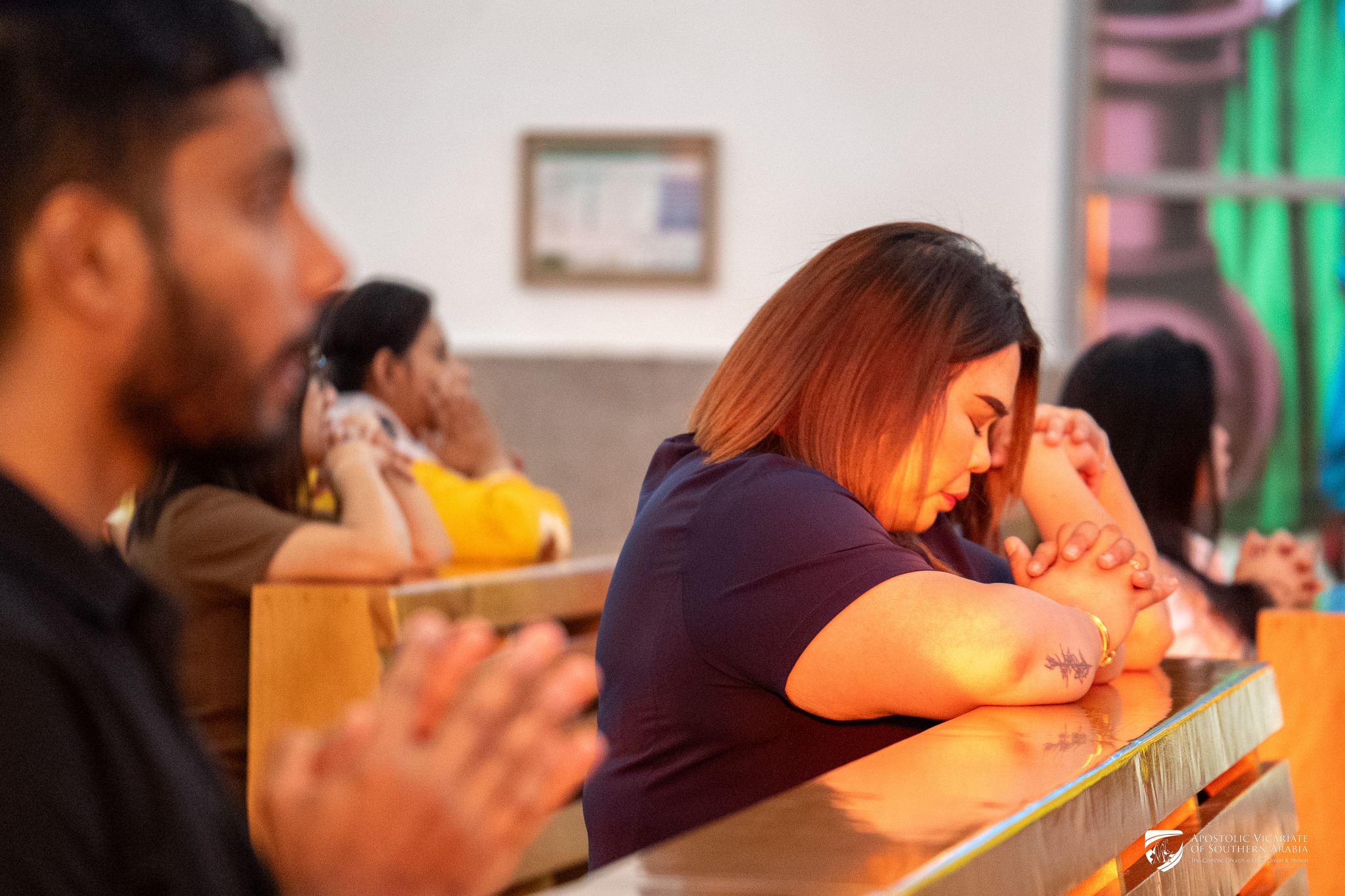
Yes, Masses were celebrated regularly in all the vicariate's churches; we avoid initiatives that involve crowds. I am in contact with all our parish priests, who confirmed that all Sunday services were held regularly.
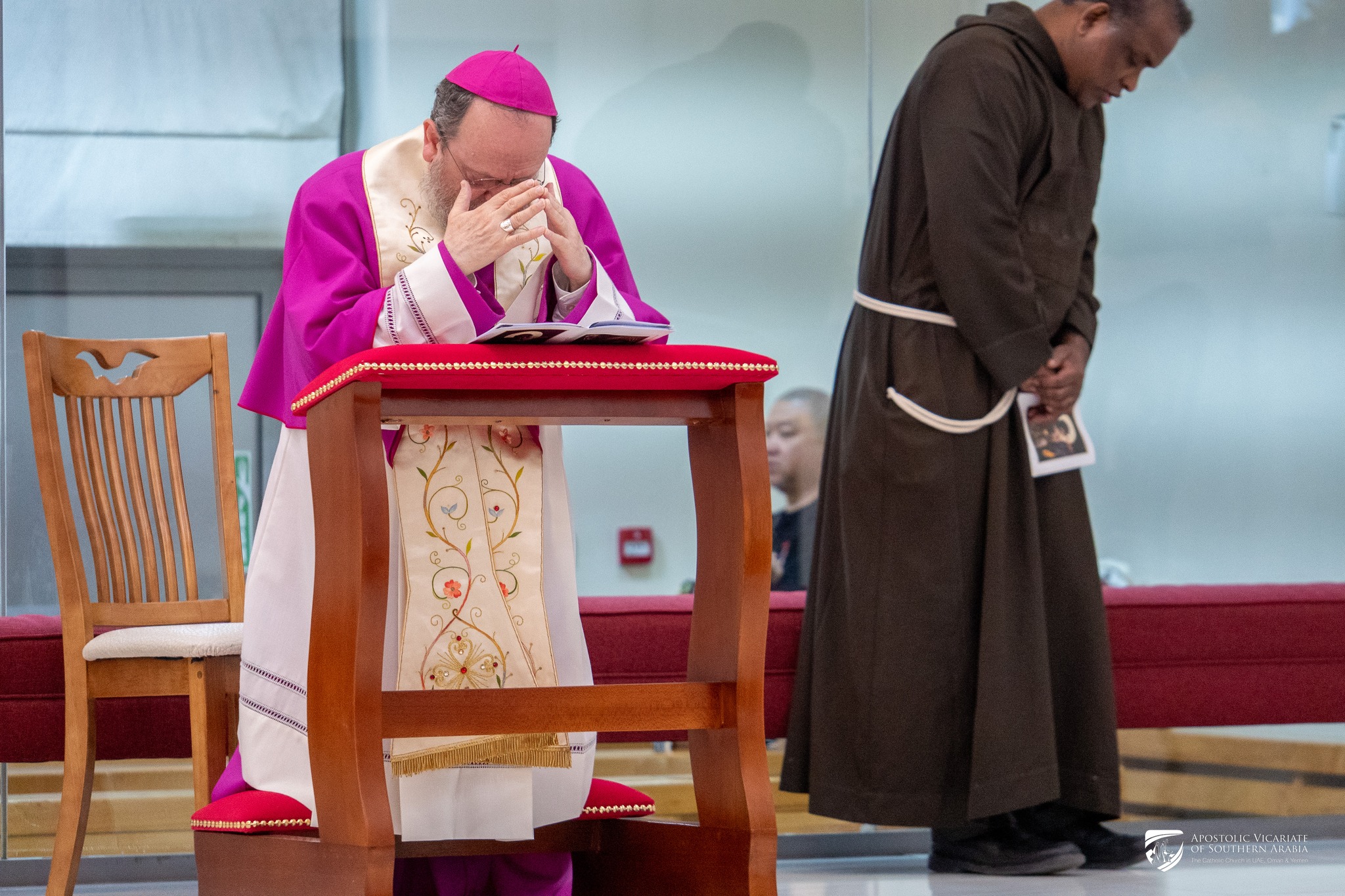
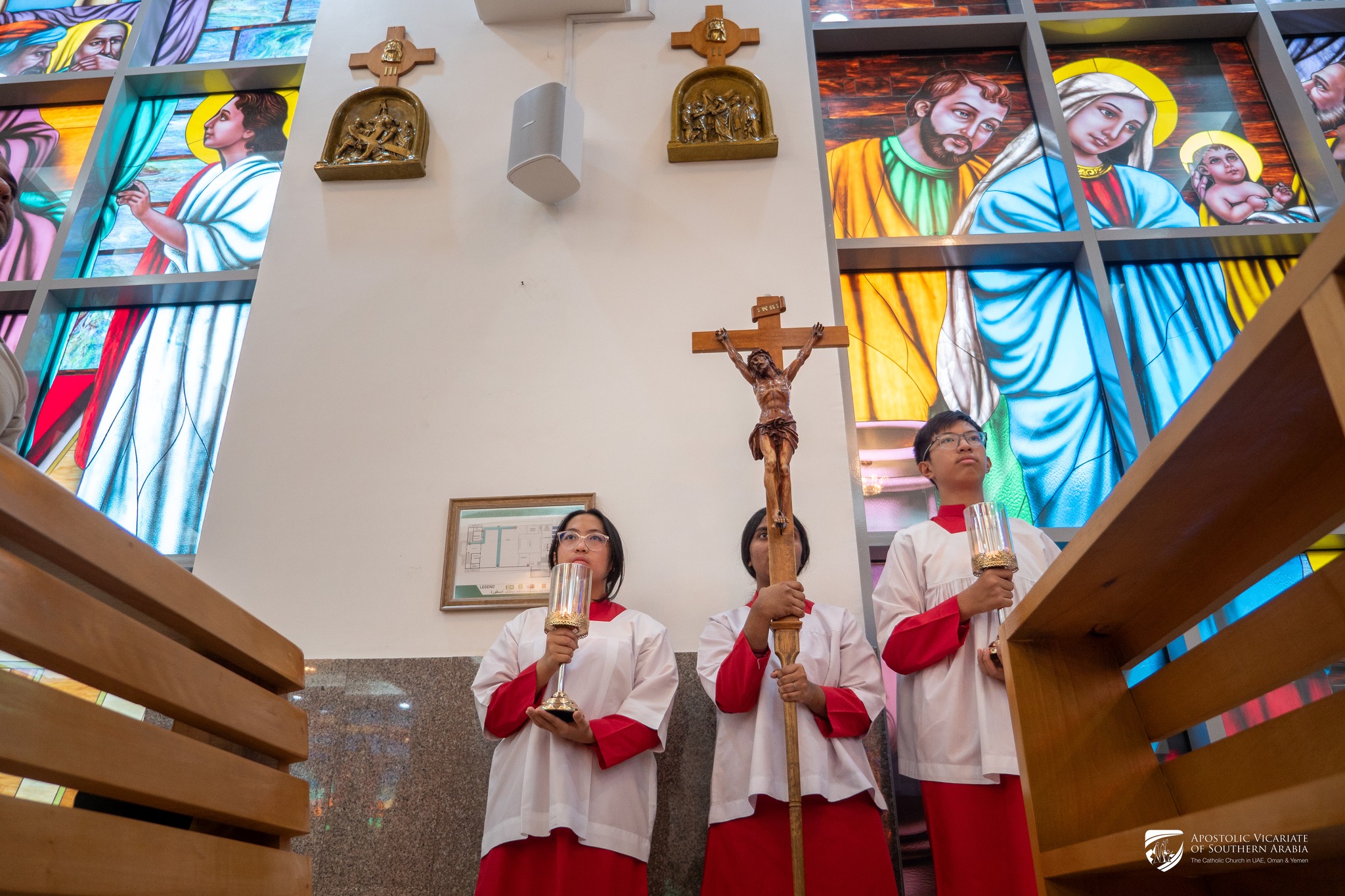
In the parish of Al Ain, near the border with Oman, where I was on a pastoral visit, all activities took place as scheduled (pictured). Otherwise, we are all following the instructions of the civil authorities.
Did you expect such a sudden escalation and, above all, the involvement of the Emirates in a conflict that is setting on fire the entire region?
An attack of this kind was bound to trigger a reaction against countries where US military bases are located. After all, it had already happened during the so-called 12-Day War last June.
What does it mean for the peoples of the Gulf to find themselves on the front lines?
We find ourselves directly involved in a situation that has long concerned us. What is happening these days further highlights the deep connections between the Gulf countries, which are indeed deeply rooted.
And what are the implications for the migrant population, which includes the first victims of the war?
At present, it is still too early to see the specific impact on the migrant population, which constitutes 90 per cent of the resident population. We pray for the three victims of this war and hope that no others will be added.
Above all, we hope that we can soon return to the path of dialogue and diplomacy to support "the well-being of the peoples, who yearn for peaceful coexistence”, as Pope Leo recommended at the end of yesterday’s Angelus.
What remains of the Abrahamic House in this conflict pitting the Shia Islamic Republic against the Jewish State, which has also affected the Sunni monarchies and emirates in the Gulf?
I don't believe the closure of the Abrahamic Family House is a metaphor for this escalation. It is a temporary closure, necessary at this point in time given the situation and the unpredictability of developments.
The very existence of this complex is a positive challenge and a reminder of the value of dialogue between people of different faiths, which we must never tire of fostering. We must fight against any exploitation of religions.
The Abrahamic Family House is indelibly linked to Pope Francis's visit to the United Arab Emirates in 2019 and the signing, on that occasion, of the Document on Human Fraternity, together with the Grand Imam of Al-Azhar (Ahmed el-Tayeb).
Even though it cannot be used at present, it remains a sign of dialogue and peaceful coexistence. We hope it can be reopened soon.
Are you in contact with the other Churches in the region, and what message do you want to send amid rising death, violence, and pain?
I immediately contacted the Apostolic Vicar of Northern Arabia, Bishop Aldo Berardi. The two vicariates are part of CELRA (Conference of the Latin Bishops of the Arabic Regions). In recent days, I have received messages of support from our president, the Latin Patriarch of Jerusalem, Cardinal Pierbattista Pizzaballa, and other members. It is very important for me not to feel alone, but to share responsibility with the other bishops present in this geographical area.
Right after attacks began, I wrote a letter to all our faithful, urging them to remain at peace in the Lord and to follow the instructions of the civil authorities. Above all, I asked them to remain united in prayer and show solidarity with one another, especially with those most in need.
I especially encouraged them to recite the rosary together. Prayers, in fact, renew our hope, our trust in God and in Providence, and prepare us to face difficulties with a positive spirit, open to charity and sharing.

.png)
04/07/2022 14:08










