








Vincent Gelot calls for “World Day for Christians in the East”
Amidst general silence, the cradle of Christianity is being emptied of its Christian population. Communities are now ultra-minorities. Vincent Gelot, representative in Lebanon, Syria and Jordan for the NGO, is launching a campaign to root the faithful in the land of their ancestors. Their disappearance is also a loss for the West and for the confessional mosaic of which they are a part.
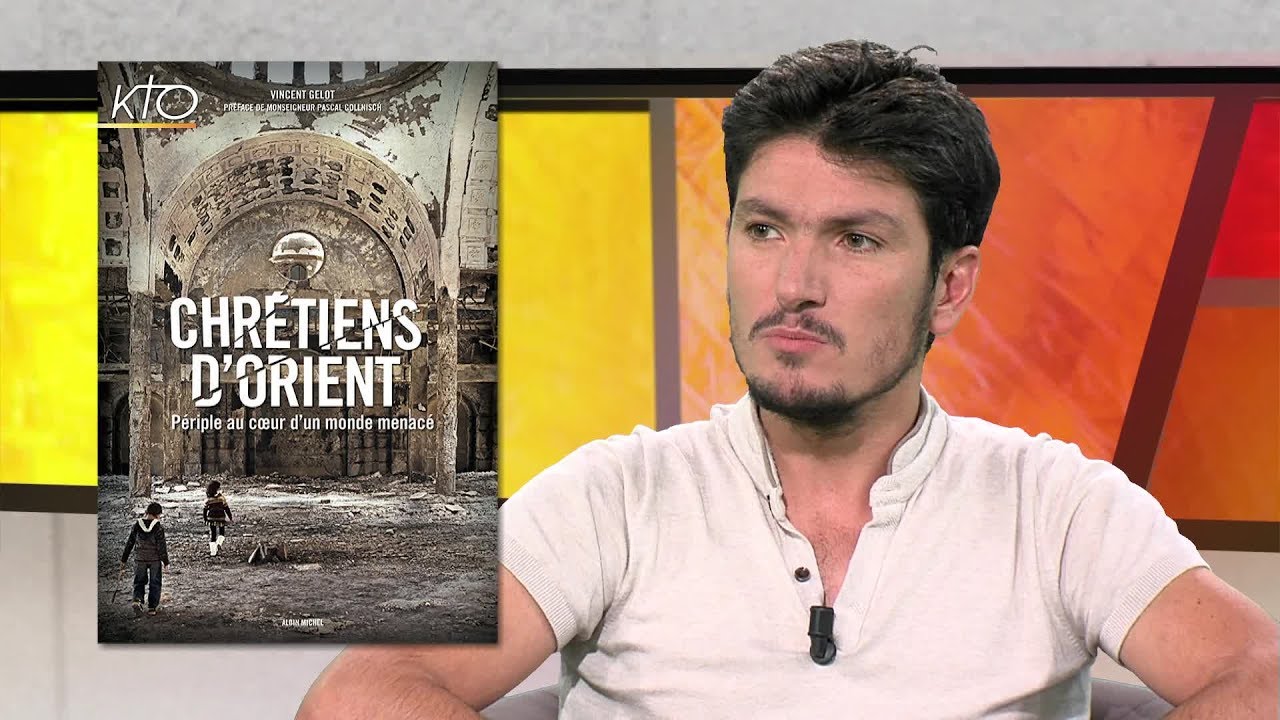
Beirut (AsiaNews) - "The fate of the East is being decided right now on a civil level: its original Christian communities, the first witnesses of the Resurrection, are abandoning it for various reasons, economic and otherwise. If nothing changes, in 10 or 15 years the Christians of Syria could have disappeared. We must imagine that in 14 years of war (2011-2025) we have lost 80% of the Christian community in Syria. This is a brutal decline, comparable only to episodes of genocide or ethnic cleansing. It is very rare for a local indigenous community, in this case Christian, to disappear in such a short time and in such a brutal manner!
The alarm was raised in AsiaNews by Vincent Gelot, regional manager for L'Œuvre d'Orient, a non-political association linked to the Church of France, which represents Lebanon, Syria and Jordan. Settled in Lebanon with his wife and father of four children, this 37-year-old Frenchman directs a thousand projects that nourish the social fabric of the entire region, and he did not arrive in the Middle East in a suit and tie. ‘At the age of 23, with little money in my pocket, I got into a 4L [a car], alone, to discover a Christian world in danger of extinction,’ he recalls. From the plains of Nineveh to the borders of Afghanistan, his journey lasted two years. ‘This adventure was like a journey of conversion,’ writes journalist Guyonne de Montjou, who dedicated a profile to him on the Aleteia website.
Since that first moment, he has made numerous personal and professional advances, so much so that today, from within L'Œuvre d'Orient, he distributes approximately £15 million annually in the region for which he is responsible. This money is used to keep hospitals, schools, dispensaries, refugee reception centres, discussion groups and nurseries for students running. However, he is convinced that ‘these funds are largely insufficient to keep Christians in their homeland and enable them to take on the admirable vocation of cultural and human leaven’.
Existential threats
‘I find that something existential is at stake in what is happening in the Near and Middle East, especially when I think of the Christians of Syria,’ says this adventurer in the field of humanitarian activism. "I agree, this community has suffered from the war like all Syrians, its exodus is due to economic causes. But it has also been targeted by ISIS [Islamic State]. It is a minority that has never benefited from any support, either religious or otherwise. It should also be remembered,‘ he continues, ’that the Syrian Christian community was one of the few that was not structurally armed. It has been abandoned, which explains why it has left in such a brutal manner."
"We are fighting, together with other Catholic Christian organisations united in ROACO [Reunion of Aid Agencies for the Oriental Churches, which includes ACS, Misèreor, Pontifical Mission Societies, among others], to try to keep it in Syria. But we depend entirely on our donors, mainly Western, for our funds, and we believe that, overall, given the gravity of what is happening, what is being done is largely insufficient. We need institutional funding, from the United Nations, Europe, America or elsewhere," says Vincent Gelot.
‘In order for these Christian communities to take root, they must be on the ground,’ continues the activist. "Moreover, they are irreplaceable witnesses to early Christianity. The Holy Places are here, in the Near and Middle East, and this is not an insignificant detail. Jesus and his apostles travelled throughout the region. Tyre and Sidon, now in Lebanon, are mentioned in the Gospels, St Paul was converted on the road to Damascus, St Peter went to Antioch, and Jordan is home to the place where Jesus was baptised by John the Baptist. Yet we see Christian communities in these regions packing their bags and leaving, which is unacceptable. I find that, in a sense, this rupture is almost theological. Of course, the departure of Christians does not call into question the Resurrection of Christ, but is it not a rupture for these communities not to have access to their Holy Places?
A loss for everyone
‘The disappearance of these communities,’ adds Vincent Gelot, ‘is not only a loss for them, but also for us Westerners, because part of our roots, our civilisation, our cultural, civil and religious roots come from here.’ ‘It is also a loss for Muslims,’ he warns. "We must help the countries of the Middle East to maintain their mosaic. This is what is currently at risk, particularly in Syria, but also elsewhere. We do not want to lose this treasure, but to share it.‘
’At ROACO,‘ emphasises the head of the Oeuvre d'Orient, ’we are trying to bring these considerations to the attention of the dicastery for the Eastern Churches and the Pope, with a view to establishing a World Day for Eastern Christians. We would like it to be a day of prayer, awareness-raising, but also fundraising.‘
’These missions - schools, hospitals, dispensaries, associations - serve the entire population," says Gelot, who is keen to emphasise that aid will not only go to Christians. ‘In Lebanon,’ he points out, ‘you only have to go to Christian schools to see that, beyond their essential educational role [around 200,000 pupils are enrolled each year], these schools play a fundamental role in dialogue, socialisation and inter-community rapprochement.’ In some regions, these schools often have a majority of non-Christian students. For example, among the 15 semi-free schools in the Maronite diocese of Tripoli (northern Lebanon), there are some in which no Christian students are enrolled. In the schools of Bab el-Tebbané and Jabal Mohsen, the students are Alawites or Sunnis. And the students of the schools of Aïn Ebel (southern Lebanon) are mostly Shiites.
‘This day could finally be an opportunity to support these institutions. It pains us to see that these immense needs, these admirable missions, which play a public service role, are threatened with extinction. What we would like to see,’ he hopes, "is for certain institutional structures such as the UN and the European Union to mobilise more to support the ethnic and religious diversity of the country to which Christians belong, particularly in Syria. Why is the West paralysed when it comes to religious issues, when its roots and history are also at stake?‘ Finally, even at the level of the Catholic Church itself, ’mobilisation should be more institutional. Thus, one Sunday a year would be dedicated to the Christian communities of the East. We need to discover them, express our solidarity with them, build bridges. Something existential is at stake in the Middle East. This is not a passing crisis that can be overcome, concludes Vicent Gelot. We must mobilise now so as not to miss this moment."

.png)










